The Problem: Preconstruction Time Sinks
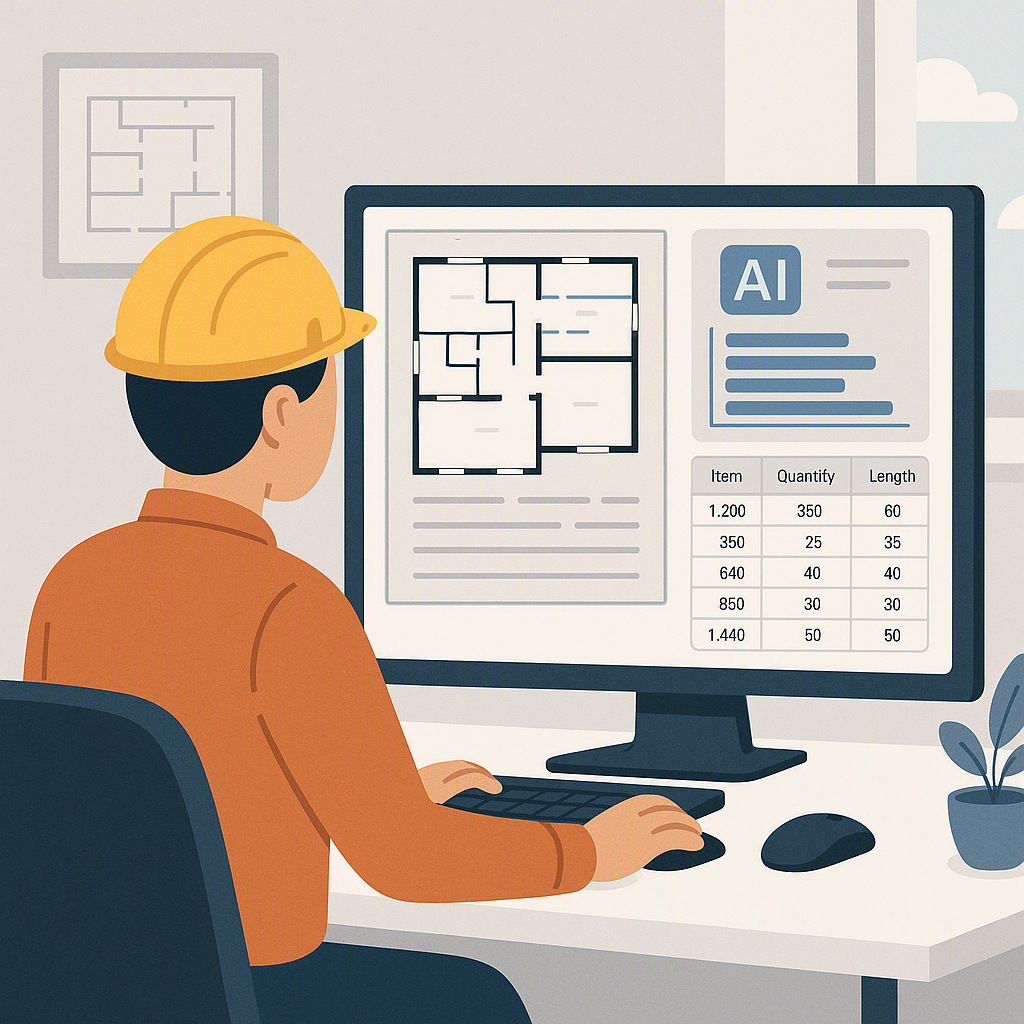
Let's be honest. Drawing takeoffs are a slow, manual process that no estimator enjoys. Estimators often spend significant time tracing PDFs just to measure areas, count doors, and calculate lengths. This repetitive work can add up quickly, consuming valuable time that could be spent on higher-value tasks.
Why is this still happening? Because many teams rely on tools like Bluebeam or even manual methods. While these methods can get the job done, they are time-intensive and prone to inefficiencies.
The Hidden Cost of Manual Takeoffs
Time isn’t the only thing you lose with manual takeoffs. Errors can creep in, such as missed quantities or double-counted items, which can throw off your entire bid. Fixing these mistakes later consumes even more time and can harm your credibility with clients.
Additionally, manual takeoffs can lead to burnout. Senior estimators often spend long hours on repetitive tasks instead of focusing on strategy and competitive pricing, which is a poor use of their expertise.
The AI Solution: Vision AI for Takeoffs
This is where AI-powered tools step in. These tools can extract quantities directly from PDF drawings in a fraction of the time it takes to do so manually. By automating the takeoff process, AI allows estimators to focus on higher-value tasks while reducing the risk of errors.
How It Works
- Upload Drawings: Start by uploading your PDF or CAD files into the platform.
- AI Extraction: The AI scans the drawings and identifies areas, lengths, counts, and more.
- Flagging for Review: The system flags uncertain quantities for manual review, so you can address potential issues upfront.
- Export to BOQ: Once verified, the quantities are automatically populated into your Bill of Quantities (BOQ).
It’s like having a junior estimator to handle repetitive tasks, while you focus on the strategic aspects of your projects.
Potential Benefits of AI in Preconstruction
AI tools can help reduce the time spent on takeoffs, improve accuracy, and allow teams to allocate their resources more effectively. By automating repetitive tasks, these tools can also help reduce the risk of burnout among senior estimators.
Addressing Common Concerns
You might be thinking, “Sure, AI is fast, but it doesn’t understand the nuances of construction.” That’s partially true—but it misses the point. AI doesn’t replace your expertise; it complements it. You’re still the one making judgment calls, negotiating with subcontractors, and deciding on markup. The AI just handles the repetitive tasks.
Many AI tools also include manual overrides and flagging systems to ensure accuracy. If the AI isn’t sure about a quantity, it flags it for you to review, keeping you in control of the final output.
Common Mistakes to Avoid
- Over-reliance on AI: Always double-check flagged quantities. AI is a tool, and human oversight is essential.
- Skipping Training: Most AI tools are intuitive, but a short training session can help your team use them more effectively.
- Ignoring Edge Cases: Unique project requirements might need custom adjustments. Ensure your team knows how to handle these scenarios.
Conclusion
AI-powered tools for preconstruction estimation offer a way to streamline the takeoff process, saving time and reducing errors. By automating repetitive tasks, these tools free up estimators to focus on strategic decision-making and improving bid competitiveness. If you’re looking to enhance efficiency and accuracy in your preconstruction workflows, exploring AI solutions could be a valuable step forward.


