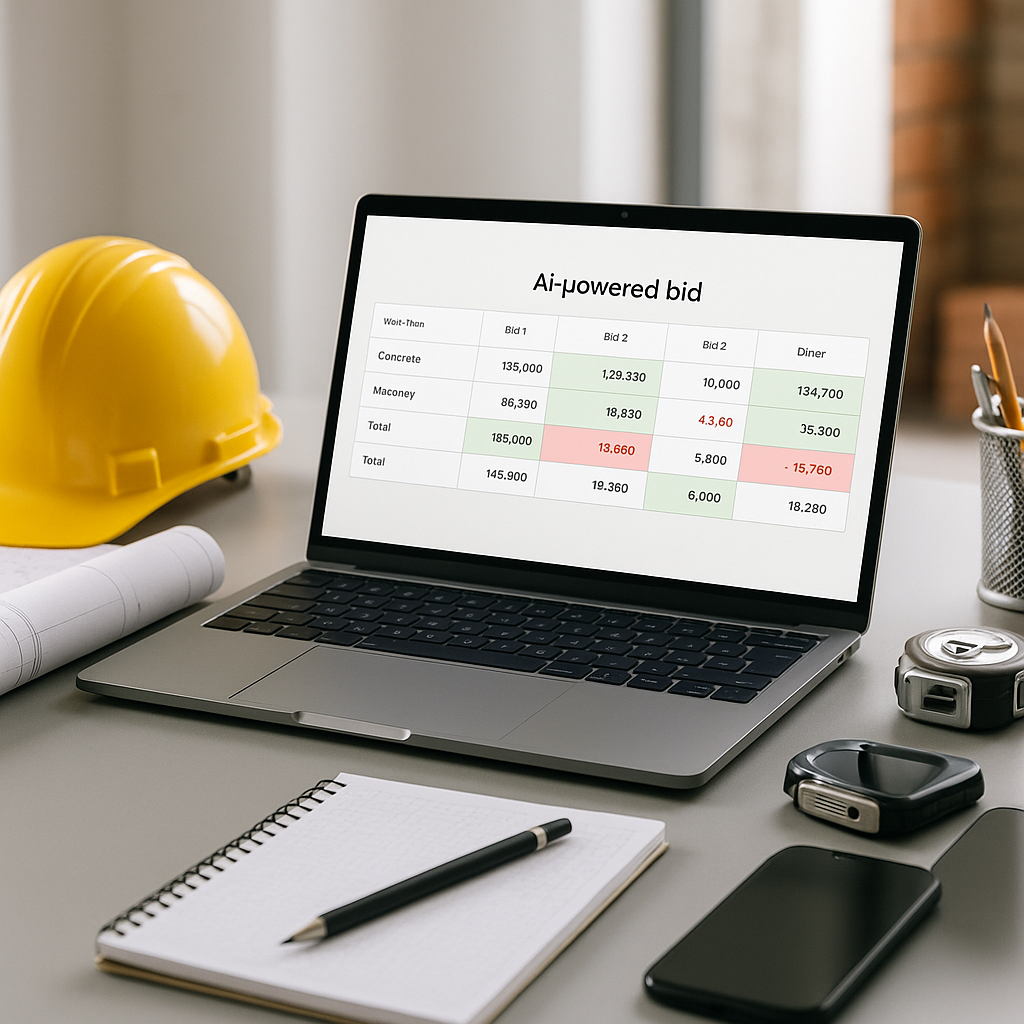
How AI Enhances Sub Bid Leveling in Preconstruction
Sub bid leveling is one of those tasks no estimator looks forward to. You’ve got multiple quotes from subcontractors, each formatted differently, with varying scope inclusions and exclusions. One might include site cleanup; another doesn’t. One lists labor costs, but the rest lump it all into a single line item. Sorting through this mess by hand takes significant time and effort.
And yet, it’s critical. Picking the wrong sub—or misinterpreting their bid—can blow your margins wide open. At best, you overspend. At worst, you’re stuck explaining to the client why their project is delayed because of a scope gap.
This is where AI-powered sub bid leveling tools come in, offering a way to streamline the process and reduce manual effort.
The Problem with Manual Sub Bid Leveling
Let’s break it down. Manual sub bid leveling typically involves these steps:
- Collecting Quotes: You’ve sent out your bid package to multiple subcontractors, and now you’re flooded with PDFs, Excel sheets, or even handwritten scans. No two are alike.
- Normalizing Scope: You’ve got to figure out what’s included and what’s missing in each quote. Did Sub A account for excavation? Did Sub B price in material delivery?
- Comparing Costs: Once you’ve normalized the scope, you need to compare costs across subs. This often involves creating a spreadsheet just to make sense of it all.
- Ranking and Decision-Making: Finally, you rank the bids to identify your top three choices. This step is often subjective, influenced by past experiences or gut feel.
This process can take hours or even days, depending on the complexity of the project.
How AI Makes It Faster and Smarter
AI tools take a completely different approach. Instead of you doing all the heavy lifting, the platform automates the most time-consuming steps.
1. AI-Powered Scope Normalization
The first hurdle is comparing apples to apples. AI tools analyze each sub’s bid and automatically identify scope inclusions and exclusions. For example:
- Sub A includes earthworks and drainage.
- Sub B excludes drainage but includes site grading.
- Sub C includes both but misses material delivery.
The AI flags these differences and presents them in a standardized format, so you’re not digging through PDFs to figure it out.
2. Cost Breakdown and Analysis
AI doesn’t just normalize scope; it breaks down costs into material, labor, and equipment categories. This level of granularity is crucial when you’re making decisions. If Sub A seems cheaper, is it because they’re underpricing labor? Or did they exclude a critical line item?
3. Automated Ranking
Once the bids are normalized, the AI ranks them based on your criteria. Maybe you care most about cost. Or maybe lead time is your priority. The platform lets you set these parameters and generates an L1/L2/L3 ranking automatically.
The result? The process becomes faster and more accurate. You’re less likely to miss a scope gap or overlook a red flag.
The Benefits of AI-Powered Sub Bid Leveling
Why does this matter? Because time is money in preconstruction. Faster bid leveling means you can respond to more projects, increasing your chances of winning new business. It also reduces the risk of costly mistakes, like awarding a bid to a sub who missed a critical scope item.
Common Objections (and Why They Don’t Hold Up)
“AI Can’t Replace Human Judgment”
True. And it’s not supposed to. AI handles the grunt work—normalizing scope, breaking down costs, ranking bids—so you can focus on high-value tasks like negotiating terms or assessing a sub’s track record.
“What If the AI Misses Something?”
AI tools often include features like manual overrides. If the system flags something as uncertain, you can review and adjust it before finalizing your decision.
“Our Projects Are Too Complex for AI”
Complex projects are exactly where AI shines. The more data points and variables you’re dealing with, the harder it is to manage manually. AI thrives on complexity, organizing and analyzing data in ways humans simply can’t.
Conclusion
AI isn’t here to replace estimators—it’s here to make them more effective. Sub bid leveling is a perfect example. By automating scope normalization, cost analysis, and ranking, AI saves you time, reduces errors, and lets you focus on what really matters: winning the job and delivering it profitably.
If you’re still spending hours leveling sub bids, it’s time to rethink your process. EstimateNext can help. Get started free →


