Streamlining Manual Takeoffs with AI
If you've ever spent hours measuring lengths, areas, and counts from PDF drawings, you know how tedious and error-prone the process can be. Manual takeoffs consume valuable time that could be better spent refining bids or negotiating with subcontractors. This bottleneck is a common challenge for both general contractors and subcontractors.
Manual takeoffs not only take time but also increase the risk of errors. Mistakes in quantity calculations can lead to inaccurate estimates, potentially impacting project margins and timelines.
AI-Powered Takeoffs: A Smarter Approach
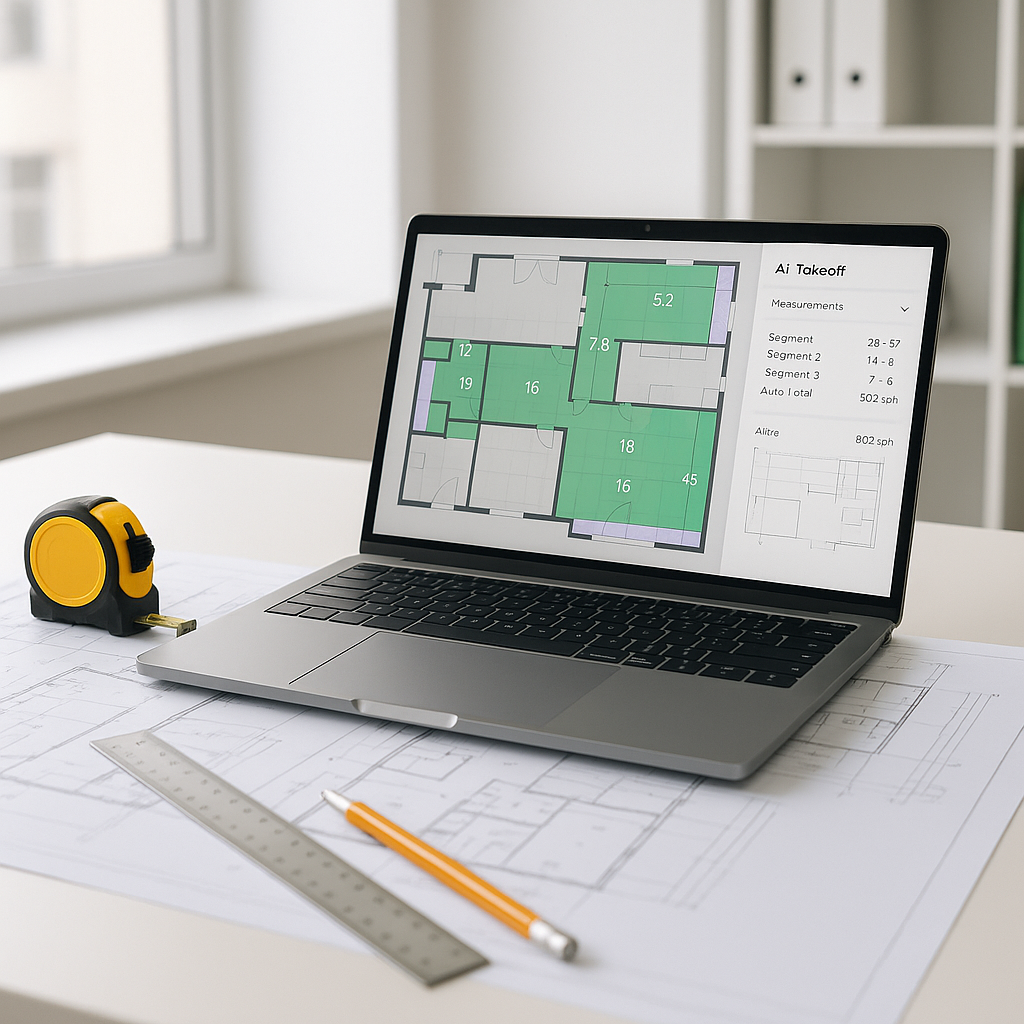
AI-powered tools are transforming the way construction professionals handle takeoffs. These tools can extract quantities from PDF drawings quickly and efficiently, significantly reducing the time required for manual measurements.
How it works:
- Upload your drawing set—floor plans, elevations, sections.
- The AI identifies and maps out quantities for common elements like room areas, wall lengths, and door counts.
| Drawing Element | Manual Takeoff Time | AI Takeoff Time |
|---|---|---|
| Room Areas | Hours | Minutes |
| Wall Lengths | Hours | Minutes |
| Door Counts | Hours | Minutes |
Illustrative example—actual times will vary by project complexity.
AI tools also flag measurements with low confidence, allowing users to review and adjust as needed. While not perfect, these tools significantly reduce the effort required for takeoffs.
Benefits of AI in Estimation
AI-powered tools offer several advantages:
- Time Savings: Automating takeoffs frees up estimators to focus on strategic tasks like refining bids and collaborating with stakeholders.
- Improved Accuracy: By reducing manual input, AI minimizes the risk of errors in quantity calculations.
- Scalability: AI tools can handle projects of varying sizes, from small renovations to large infrastructure developments.
Addressing Common Concerns
“Can AI replace human expertise?”
No, AI is not a replacement for human expertise. It handles repetitive tasks like takeoffs, allowing estimators to focus on decision-making and value-added activities.
“Is training required?”
Most AI estimation platforms are designed to be user-friendly, with minimal training required. Interfaces are intuitive, and onboarding typically takes a short amount of time.
Key Considerations
- Input Quality: Ensure your drawings are clear and complete for optimal AI performance.
- Human Oversight: Always review AI-generated outputs to ensure accuracy.
- Integration: Verify that the AI platform integrates smoothly with your existing software stack.
Getting Started
If you're considering AI-powered takeoffs, start with a smaller project to test the tool's capabilities. Compare the results to your manual process and scale up once you're confident in its performance.
Conclusion
AI-powered takeoffs are revolutionizing preconstruction estimation by automating repetitive tasks and improving efficiency. By adopting these tools, contractors can save time, reduce errors, and focus on strategic priorities. If you're ready to enhance your workflow, explore AI-powered estimation tools today.