The Hidden Cost of Manual Estimation
Preconstruction estimation can be a time-intensive process. For many general contractors and subcontractors, it often involves flipping through extensive rate books, manually tracing PDF drawings, and rebuilding spreadsheets from scratch whenever a client requests changes.
This traditional approach is not only slow but also costly in terms of labor and opportunity. Time spent on repetitive tasks like drawing takeoffs and rate lookups could be better utilized for refining bid strategies, negotiating with subcontractors, or pursuing new projects.
AI Takeoffs: Streamlining the Process
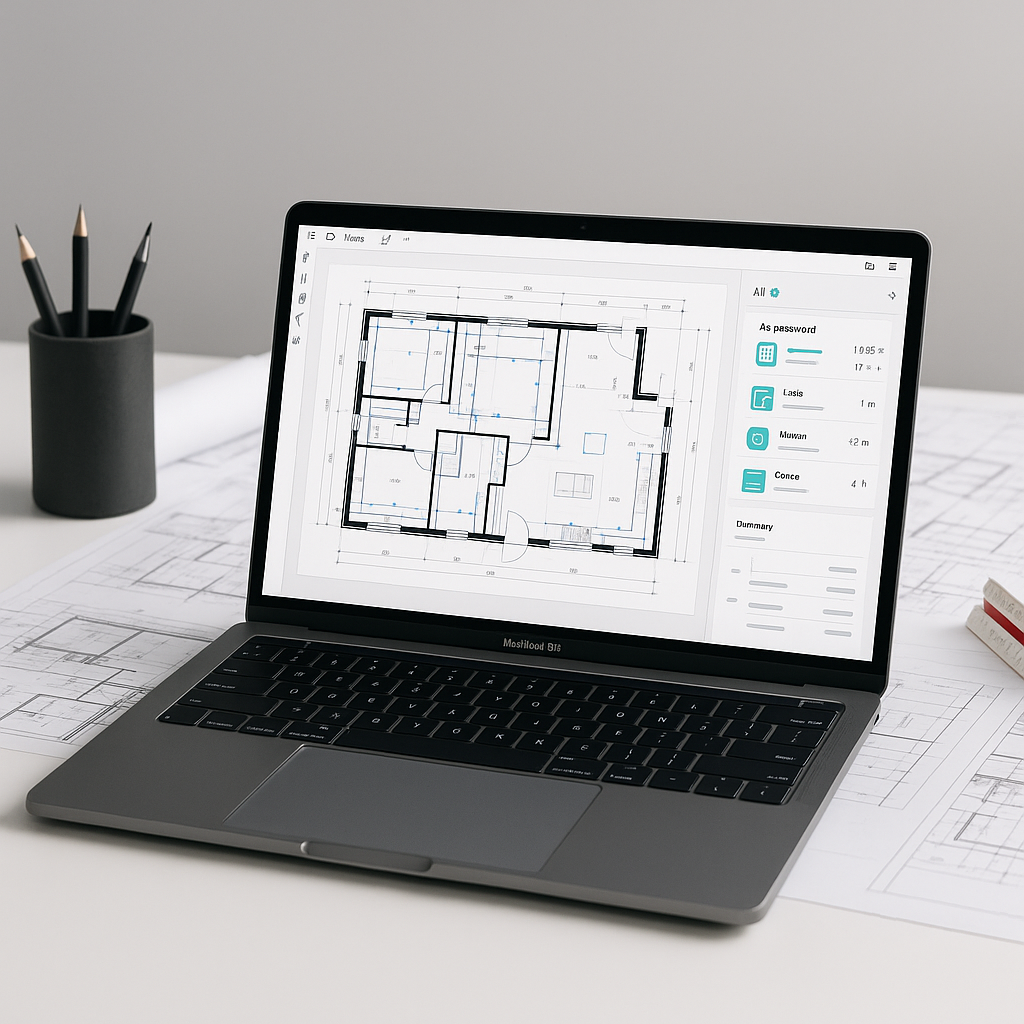
AI-powered tools are transforming the way takeoffs are performed. These tools use Vision AI to extract quantities directly from PDF drawings. By uploading a drawing set, the system can identify room areas, wall lengths, door/window counts, and more. This significantly reduces the time required for manual takeoffs.
Illustrative example — A contractor working on a large-scale project could save significant time by automating takeoffs with AI. While manual takeoffs might take several days, AI tools can complete the task in a fraction of the time. Additionally, these tools often flag areas of low confidence, allowing human estimators to focus their efforts where they are most needed.
Smarter Rate Matching
Rate lookup is another area where AI tools provide significant efficiency gains. Instead of manually searching for line items in extensive catalogs like CPWD DSR or RSMeans, AI-powered platforms use semantic search to quickly match BOQ items with relevant rates.
This approach not only speeds up the process but also reduces the likelihood of errors. Over time, these tools can learn from past selections, improving their accuracy and relevance for future projects.
Simplifying What-If Scenarios
Handling client requests for alternative materials or designs can be cumbersome in traditional workflows, often requiring extensive manual adjustments to spreadsheets. AI-powered estimation platforms simplify this process by allowing users to make changes to a single rate or parameter, with the system recalculating the entire workbook in real-time. This ensures accuracy and saves time, while also providing an audit trail for transparency.
The Benefits of AI in Preconstruction
AI-powered tools offer several advantages for preconstruction workflows:
- Time Savings: By automating repetitive tasks like takeoffs and rate lookups, teams can focus on higher-value activities.
- Improved Accuracy: AI tools reduce errors in takeoffs and rate matching, ensuring more reliable estimates.
- Scalability: Faster workflows enable teams to handle more bids, potentially increasing opportunities for project wins.
- Customization: Many AI platforms allow users to upload custom rate catalogs or define project-specific parameters, ensuring estimates align with actual costs.
Common Questions About AI in Estimation
Q: How accurate are AI-powered estimates?
AI tools are designed to improve accuracy by reducing manual errors. However, the quality of input data remains critical, and human oversight is essential for final validation.
Q: Will AI replace estimators?
No. AI tools are meant to augment the work of estimators by automating repetitive tasks, allowing them to focus on strategic decision-making and quality control.
Q: How hard is it to implement?
Most AI platforms are user-friendly and integrate easily with existing tools like Bluebeam and Procore. Training requirements are typically minimal.
Q: What if my rates are custom?
AI tools often allow users to upload their own rate catalogs or define custom rates, ensuring estimates reflect actual project costs.
A Few Things to Watch For
- Data Quality: Ensure that BOQs and other input data are clean and well-structured to maximize the effectiveness of AI tools.
- Review Flagged Areas: Pay attention to low-confidence zones identified by the AI, as these may require manual review.
- Customization: Take the time to configure the tool to reflect your specific costs and requirements, especially for unique materials or labor rates.
Final Thoughts
AI-powered tools are revolutionizing preconstruction estimation by automating time-consuming tasks like takeoffs, rate matching, and scenario analysis. These platforms enable teams to work more efficiently, reduce errors, and focus on crafting competitive bids.
If you’re looking to streamline your estimation workflows and improve accuracy, exploring AI-based solutions could be a valuable step forward.


