The Hidden Cost of Manual Rate Lookup
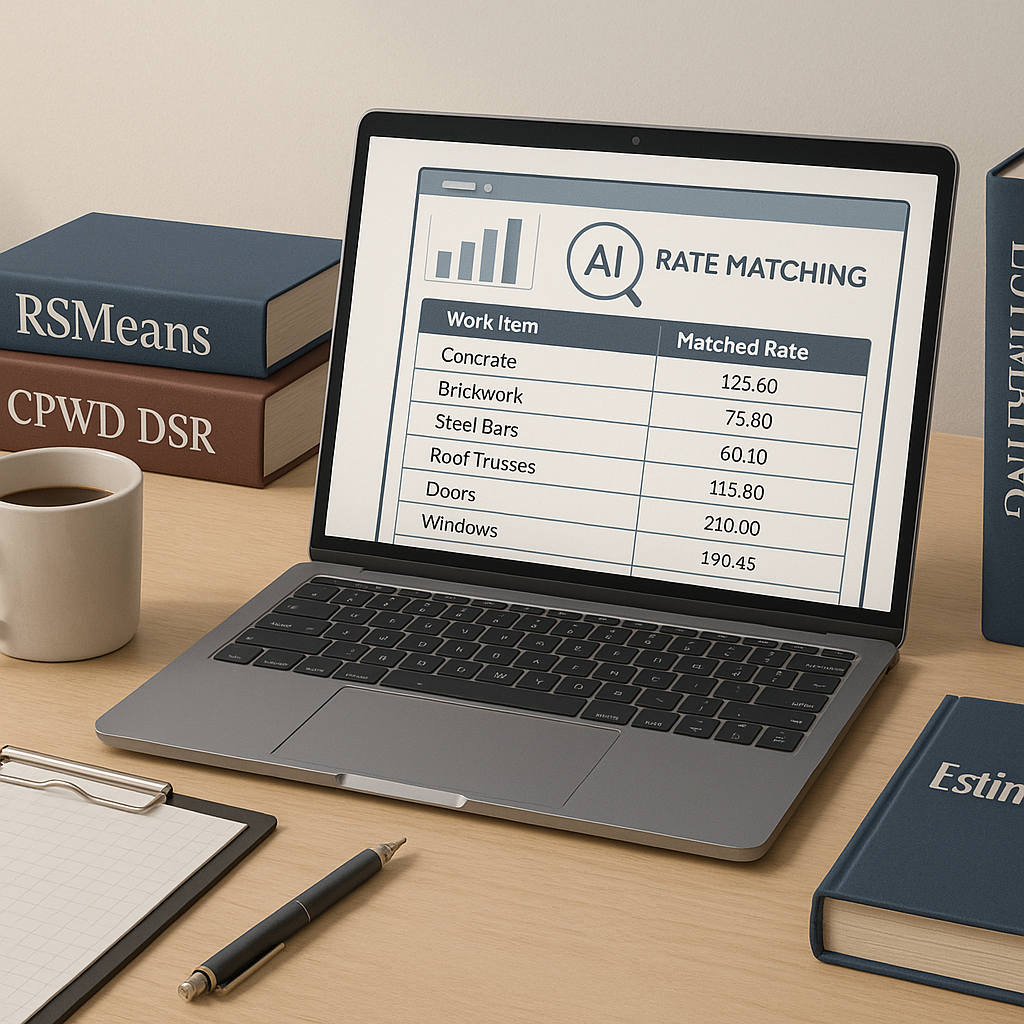
If you’ve ever spent hours flipping through a massive rate book like RSMeans or CPWD DSR, you know the challenges. Searching for the right labor rate for installing structural steel or the material cost for pre-stressed concrete girders can be tedious, error-prone, and time-consuming.
Manual rate lookup doesn’t just waste time; it also risks accuracy. When rates are miscalculated or overlooked, bids can either be overpriced (leading to lost opportunities) or underpriced (causing financial strain during execution). Neither scenario is ideal.
How AI Rate Matching Changes the Game
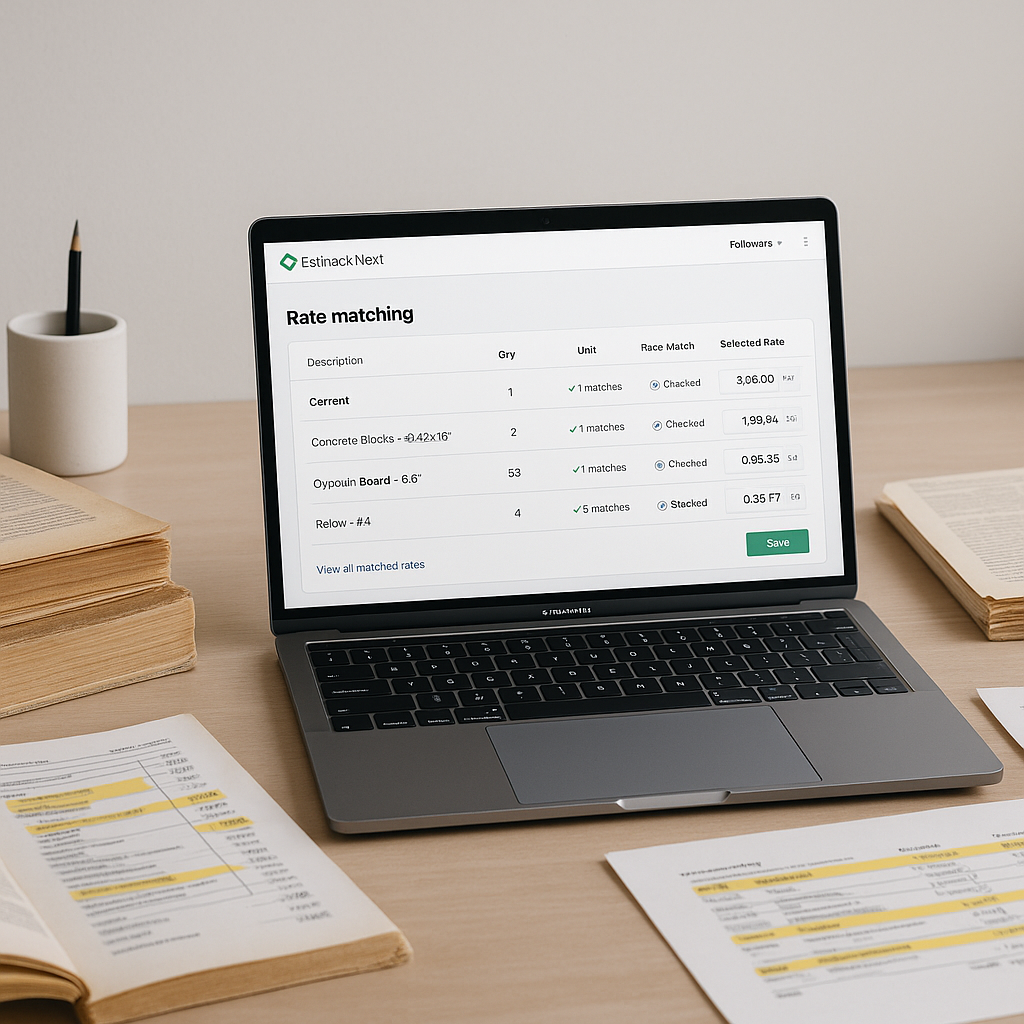
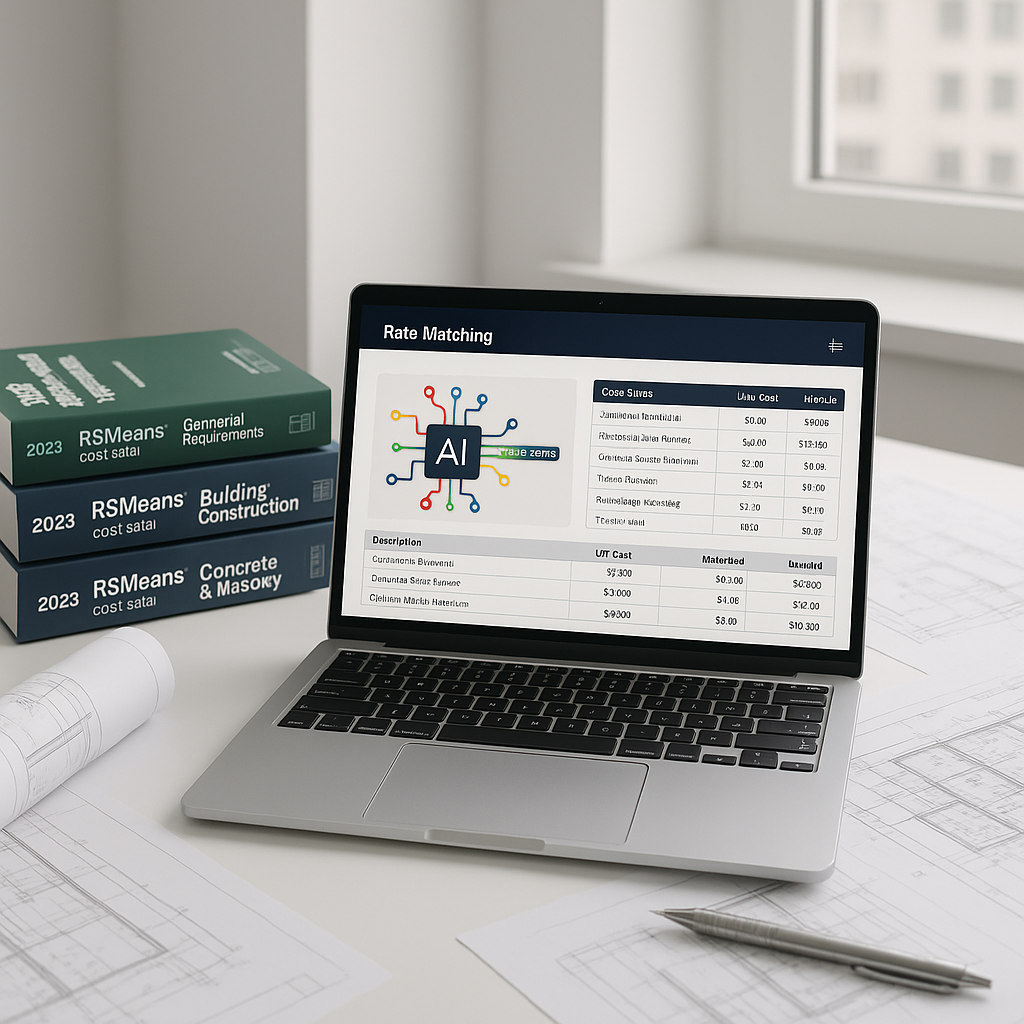
AI-powered tools address this problem by automating rate lookup. Instead of flipping pages or scrolling endlessly through PDFs, you can type what you’re looking for. The AI runs a semantic search across its database of standard rate items, pulling the most relevant rates quickly.
For example, if you’re pricing ductwork installation, you might type “HVAC duct install labor rate.” The AI doesn’t just match keywords—it understands context. It can pull rates tagged with similar scopes, like sheet metal forming or duct insulation, enabling better comparisons.
Why Accuracy Matters
Speed is important, but accuracy is critical. AI tools improve accuracy by applying consistent logic and validated data. They also incorporate feedback loops, refining their algorithms based on user inputs over time. This ensures that rate matching becomes more precise with continued use.
In high-stakes bids, such as infrastructure projects requiring hundreds of rates from approved catalogs, even a single manual error—like applying the wrong inflation factor—can have significant financial consequences. AI helps mitigate these risks by ensuring consistent and accurate rate application.
The ROI of AI Rate Matching
Illustrative example — Consider a scenario where a general contractor estimator spends significant time on rate lookup for multiple bids annually. By automating this process with AI, the time spent can be drastically reduced, freeing up resources for higher-value tasks. While there may be a cost associated with the AI tool, the potential savings in time and improved bid accuracy can provide substantial value over time.
Common Objections (and Real Answers)
“AI doesn’t understand construction nuances.”
AI doesn’t replace human expertise—it complements it. Estimators still make critical decisions, such as applying markup percentages and negotiating with subcontractors. The AI handles repetitive tasks like rate lookup and recalculations.
“What if my rates are custom?”
Many AI tools allow users to upload custom catalogs. Once integrated, the system remembers these rates for future projects. Users can also tag rates with variables like inflation or regional adjustments.
“Is it hard to learn?”
Most AI tools are designed with user-friendly interfaces and include training resources to help users get up to speed quickly.
Common Mistakes to Avoid
- Blind Trust in AI: Always review the rates suggested by the AI to ensure they align with project requirements.
- Skipping Customization: Upload custom rates to improve accuracy and relevance.
- Ignoring Feedback Loops: Provide corrections to the AI system to enhance its learning and future performance.
FAQ
Q: How does AI handle inflation rates? A: AI applies adjustments based on catalog-year inflation indices and can suggest inflation percentages if needed.
Q: Can I use this tool with other preconstruction software? A: Many AI tools integrate seamlessly with popular preconstruction platforms like Procore or Bluebeam.
Q: Does it cover international catalogs? A: Some tools support a wide range of catalogs, including those used in various regions, but it’s essential to verify the specific catalogs supported by the tool you choose.
Conclusion
AI-powered rate matching offers a way to streamline construction estimation by automating tedious tasks and improving accuracy. By reducing manual effort, these tools allow estimators to focus on strategic aspects of bidding and project planning. If you’re looking to enhance your preconstruction process, exploring AI solutions could be a valuable step forward.