What I Used to Think
AI in construction estimation? Overrated. If you'd asked me last year, I would've told you it was a flashy gimmick—nice for demos but impractical for real-world projects. My reasoning was simple: construction is messy. Rates vary across regions, subcontractor quotes are inconsistent, and manual takeoffs require judgment. How could an algorithm handle all that?
The Thing That Changed It
A general contractor shared their experience during a preconstruction workshop I attended. They used AI-powered tools to bid on a high-rise project and highlighted significant time savings on takeoffs and rate matching. When I dug deeper, they explained how AI tools could drastically reduce the time spent on manual tasks.
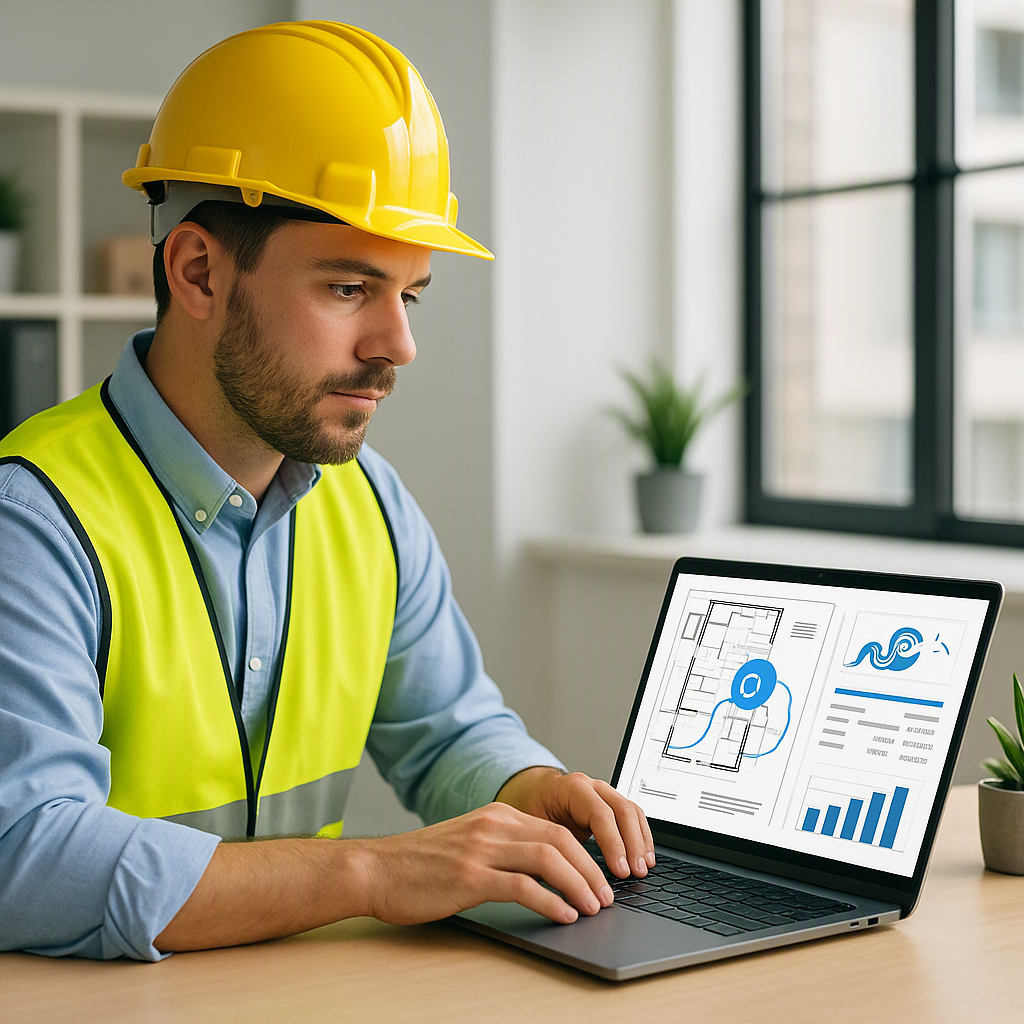
I wasn’t ready to believe it. But when I saw a demo later that month, it clicked. The AI scanned a PDF drawing set, extracted room areas, wall lengths, and fixture counts in minutes. No tracing lines in Bluebeam, no manual recalibration. It wasn’t just faster—it removed the most tedious parts of the process altogether.
Why I Held Onto the Old Belief
The skepticism wasn’t baseless. Construction estimation has always been a human-driven process. You need judgment to interpret ambiguous specs, adjust for local labor rates, and account for edge cases. AI, for all its promise, seemed too rigid. How could it handle the quirks of a CPWD tender or adapt to a subcontractor’s unique scope notes?
Then there was the learning curve. Tools like RSMeans already required hours of training, and most preconstruction teams are stretched thin. Adding another tool felt like piling on. And let’s be honest, the pace of construction tech adoption isn’t exactly brisk.
What I Do Differently Now
Now, we test AI tools on smaller projects first. Instead of jumping straight to a large bid, we use them for smaller renovations or mid-sized projects. This lets us gauge accuracy without risking a major pursuit.
Second, I pair junior estimators with AI tools. The AI handles the grunt work—takeoffs, rate matching, scope normalization—while the estimator focuses on judgment calls. It's like giving them a supercharged assistant.
Finally, we evaluate tools based on ROI. If the AI saves time and reduces manual effort, it pays for itself over time.
What Being Wrong Cost
Holding onto my old belief cost us time. Manual takeoffs for projects can take significant hours. Had we used AI, we could have completed the work much faster. That’s time we could’ve spent refining the bid, negotiating with subs, or preparing for the next pursuit.
I’m still not sure about edge cases. AI tools are great for standard scopes and repetitive tasks, but what happens when you need custom rates for something niche, like seismic retrofits or heritage restorations? I haven’t seen AI crack that yet. Maybe it’s coming, but for now, human oversight is non-negotiable.
If you're dealing with slow takeoffs or unreliable rate matching, AI tools can help streamline your workflow and save valuable time.


