How AI Is Transforming Preconstruction Estimation
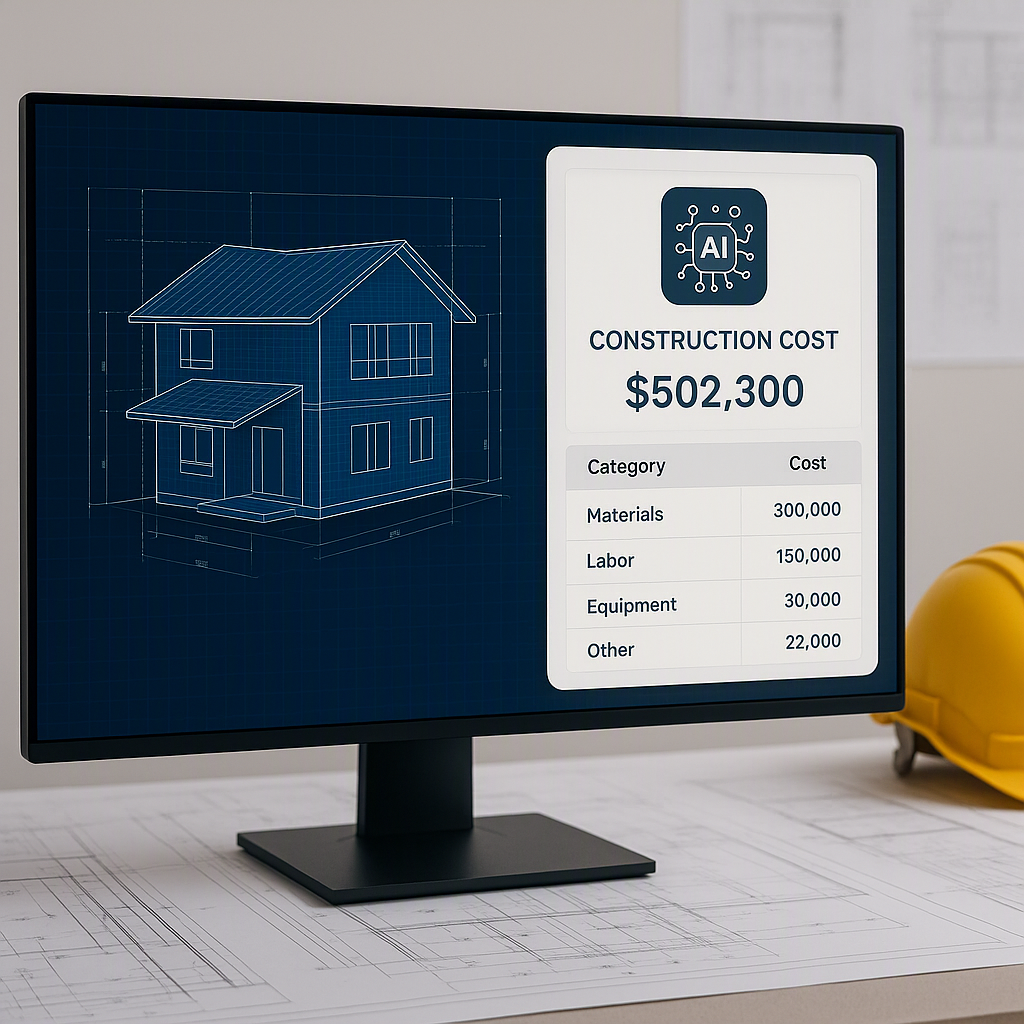
If you’re in preconstruction, you know the challenges of manual takeoffs. The process of tracing lines on PDF drawings to calculate quantities is time-consuming and repetitive. However, AI-powered tools are changing the game, particularly in quantity takeoff. Let’s explore how this works.
The Problem with Manual Takeoffs
Manual takeoffs are slow, repetitive, and prone to errors. The typical workflow often involves:
- Receiving large PDF files with architectural and MEP drawings.
- Spending significant time calibrating scales and tracing areas manually or using software.
- Entering quantities into spreadsheets, which can take hours or even days.
- Restarting the process when revisions are made to the drawings.
This process not only consumes valuable time but also leaves little room for focusing on strategic tasks.
AI-Powered Takeoffs: A New Approach
AI tools are designed to automate and streamline the takeoff process. Here’s how they work:
- Upload Your Drawings: The AI processes PDF drawings, whether they are single-page or multi-file sets, without requiring pre-formatting.
- Automated Quantity Extraction: The AI identifies and extracts quantities for walls, doors, windows, room areas, and more. It can also provide detailed breakdowns, such as wall areas by type and thickness or slab volumes.
- Review and Adjust: The tool flags areas where manual review might be needed, allowing you to make adjustments as necessary.
- Export to Your Workflow: Once the takeoff is complete, the data can be exported into Excel, Procore, or other estimating software.
Why Does This Matter?
Automating takeoffs with AI frees up significant time that can be redirected to higher-value tasks, such as refining bid strategies, vetting subcontractors, or improving internal processes. By reducing the manual workload, teams can focus on tasks that require expertise and judgment.
What About Accuracy?
AI tools are not designed to replace human expertise but to complement it. While they handle repetitive tasks, human estimators are still essential for making judgment calls, pricing strategies, and client negotiations. AI systems are trained on extensive datasets and improve over time as they process more projects. However, it’s crucial to review and verify critical measurements to ensure accuracy.
Common Questions About AI Takeoff Tools
Q: Will AI tools work with custom drawings?
Yes. Most AI tools are designed to handle a wide range of document formats and can adapt to various input types.
Q: What if I need to make revisions?
AI tools can compare revised drawings and highlight changes, saving time on manual checks.
Q: Is it hard to learn?
No. These tools are typically user-friendly, and training teams to use them effectively is straightforward.
Q: Does AI replace human estimators?
No. AI is a tool to assist estimators, not replace them. Human expertise remains critical for decision-making and finalizing bids.
What to Watch For
- Input Quality Matters: Ensure your drawings are complete and well-formatted for the best results.
- Don’t Skip the Review: Always double-check critical measurements, even when using AI.
- Start Small: Test AI tools on smaller projects to understand their capabilities and limitations.
The Bottom Line
AI-powered takeoff tools are transforming preconstruction estimation by automating repetitive tasks and improving efficiency. By adopting these tools, teams can focus on strategic work, ultimately improving project outcomes and competitiveness in the bidding process.