The Takeoff Problem Nobody Talks About
Ask any preconstruction director what eats up the most time during bidding, and they'll likely mention takeoffs. It’s the unglamorous, manual process of measuring quantities from drawings. And it’s a bottleneck. A big one.
Manual takeoffs are also error-prone. Human fatigue sets in. A missed line or inaccurate measurement can ripple through the entire estimate, inflating costs or eroding margins. Sound familiar?
Enter AI-Powered Takeoffs
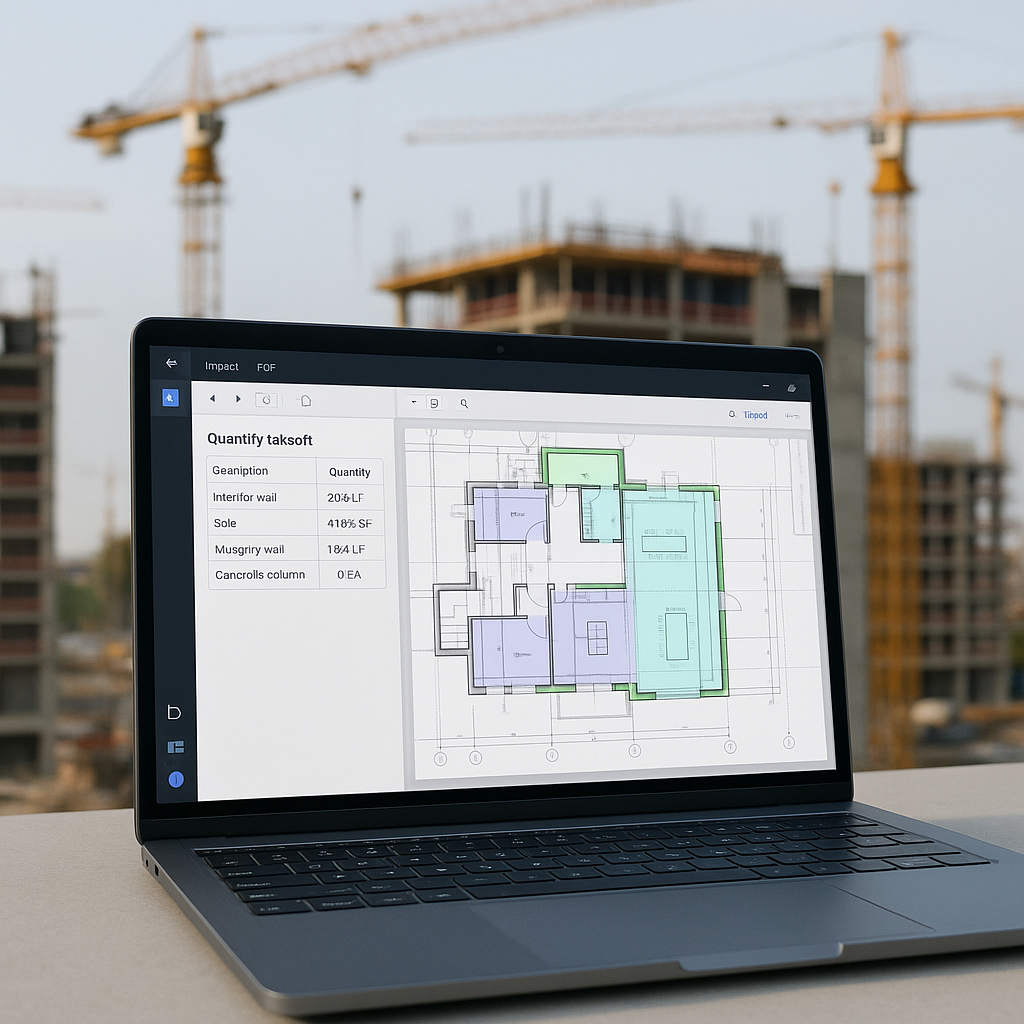
This is where AI-driven construction ERPs change the game. Tools equipped with Vision AI technology reduce takeoff time significantly by automating the process of extracting quantities from PDF drawings or CAD files. These tools can identify square footage, wall lengths, and counts for windows and doors, while also flagging low-confidence areas for manual review.
AI tools don’t just scan for lines; they understand the context, recognizing room layouts and potential errors. This combination of automation and human oversight can lead to more accurate and efficient takeoffs.
Why Speed Changes Everything
It’s not just about saving time. Faster takeoffs mean:
- More bids submitted: If your team can process multiple bids in the time it used to take for one, your chances of winning work increase.
- Tighter deadlines met: In today’s competitive market, delays at the preconstruction stage can cost you the job.
- Better accuracy: AI doesn’t get tired. It doesn’t miss lines. And when paired with human oversight, error rates decrease.
Common Pushback: “Can I Trust AI?”
It’s a fair question. Many estimators are hesitant to trust software with something as critical as takeoffs. But here’s the reality: AI tools don’t replace humans; they augment them. Think of it as a supercharged assistant that handles the repetitive tasks while you focus on fine-tuning the bid.
Plus, these tools improve over time. Every correction or adjustment you make feeds a self-learning algorithm, so the system becomes more accurate with continued use.
What to Watch For
AI takeoff tools aren’t perfect (yet). Here’s what you need to keep an eye on:
- Low-confidence areas: Most tools flag measurements they’re unsure about. Always review these manually.
- Complex drawings: Older or poorly scanned PDFs can trip up even the smartest AI. Test your tool on a variety of file types.
- Learning curve: The system gets better as you use it, but the first few projects might need extra oversight.


