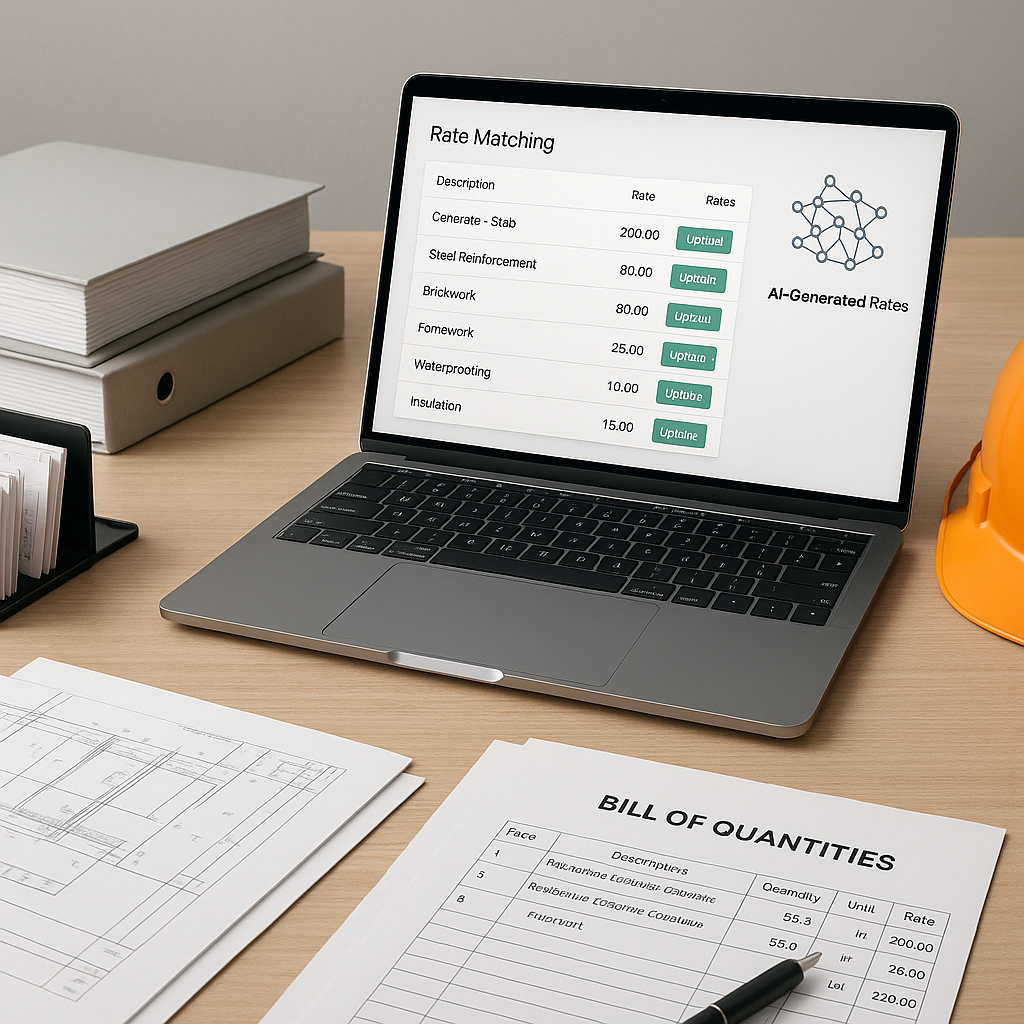
The Challenge of Manual Rate Matching in Construction Estimation
Manual rate matching can be a tedious and time-consuming process. Estimators often juggle multiple resources, such as BOQs (Bill of Quantities), extensive rate books, and calculators, to cross-reference material costs, labor rates, and equipment charges for every line item. This process is not only slow but also prone to errors, which can lead to costly rework and missed deadlines.
AI-powered rate matching offers a solution by automating this process. Instead of manually searching through PDFs or spreadsheets, you can upload your BOQ into an AI platform, which scans rate catalogs, applies semantic search, and suggests the most relevant matches. This significantly reduces the time and effort required for accurate estimation.
How AI Rate Matching Works
AI-powered tools use advanced algorithms to understand the context of your BOQ items. For example, if your BOQ specifies "Plastering 12mm thick with cement mortar," the AI can recognize variations such as "Plastering 1:4 mix" or regional terminology in state-specific SORs (Schedule of Rates).
Here’s a general workflow:
- BOQ Upload: Import your Excel or CSV file into the tool.
- Semantic Search: The AI cross-references items across multiple rate catalogs.
- Rate Suggestions: It provides suggested rates, including material, labor, and equipment breakdowns.
- Custom Adjustments: You can modify these rates based on project-specific factors, such as inflation or regional labor costs.
Illustrative example — By automating rate matching, estimators can save significant time that would otherwise be spent manually cross-referencing rates, allowing them to focus on refining their bid strategies.
Why Manual Rate Matching Falls Short
Manual rate matching is not only slow but also error-prone. Estimators often work under tight deadlines, and even minor mistakes can lead to significant cost overruns.
AI-powered tools address these challenges by:
- Ensuring Consistency: Rates are sourced from verified and up-to-date catalogs.
- Reducing Overhead: Junior estimators can handle rate matching tasks, freeing senior staff to focus on strategic aspects of the bid.
- Avoiding Missed Items: The AI flags BOQ lines without matching rates, ensuring nothing is overlooked.
Common Misconceptions About AI in Rate Matching
Some estimators may hesitate to adopt AI tools due to misconceptions. Here’s why those concerns are often unfounded:
Objection 1: My rates are too custom.
AI tools allow you to upload your own rate catalogs or define project-specific adjustments. For instance, if you have a unique supplier discount, you can integrate it into the system.
Objection 2: What if the AI gets it wrong?
Most platforms include manual override options, allowing you to review and adjust any suggestions. Over time, the AI learns from your corrections, improving its accuracy.
Objection 3: It’s only for large projects.
AI tools are scalable and can be used for projects of any size, from small residential renovations to large infrastructure developments. Smaller teams, in particular, benefit from the efficiency gains.
Practical Tips for Using AI Rate Matching
- Start Small: Test the tool on a single BOQ or a smaller project to understand its capabilities.
- Customize Early: Upload your own rate catalogs or set inflation factors at the beginning to avoid rework.
- Review Outputs: Always cross-check AI suggestions for critical line items.
- Use Feedback Loops: Many tools improve over time as you provide corrections and approvals.
The Bottom Line
Manual rate matching is a time-consuming and error-prone process that can hinder your ability to submit competitive bids. AI-powered tools streamline this process, saving time and reducing the risk of costly mistakes. By automating routine tasks, these tools allow estimators to focus on strategic decision-making, ultimately improving the quality and competitiveness of their bids.


