The Hidden Time Sink in Construction Estimation
If you’ve ever spent hours flipping through a rate book or digging through Excel sheets trying to find the labor cost for something as specific as “installing pre-stressed concrete girders,” you know how frustrating—and slow—traditional rate lookup can be. It’s not just tedious; it’s expensive. Every hour spent hunting for rates is an hour you’re not pricing bids, evaluating subcontractors, or refining your margins.
According to McKinsey’s 2023 report on construction productivity, the construction industry has one of the lowest productivity growth rates of any sector. Manual processes are a big reason why.
But what if you could get those rate matches in seconds instead of hours? That’s where AI-powered tools come in.
How AI-Powered Rate Matching Works
Let’s break it down. Traditional rate lookup involves:
- Opening a PDF or physical rate book (like RSMeans or CPWD DSR).
- Scanning for the right section (labor, material, or equipment).
- Finding and cross-referencing the rate with your project specs.
- Manually entering it into your estimate.
AI doesn’t just do this faster—it skips most of these steps entirely. Here’s how:
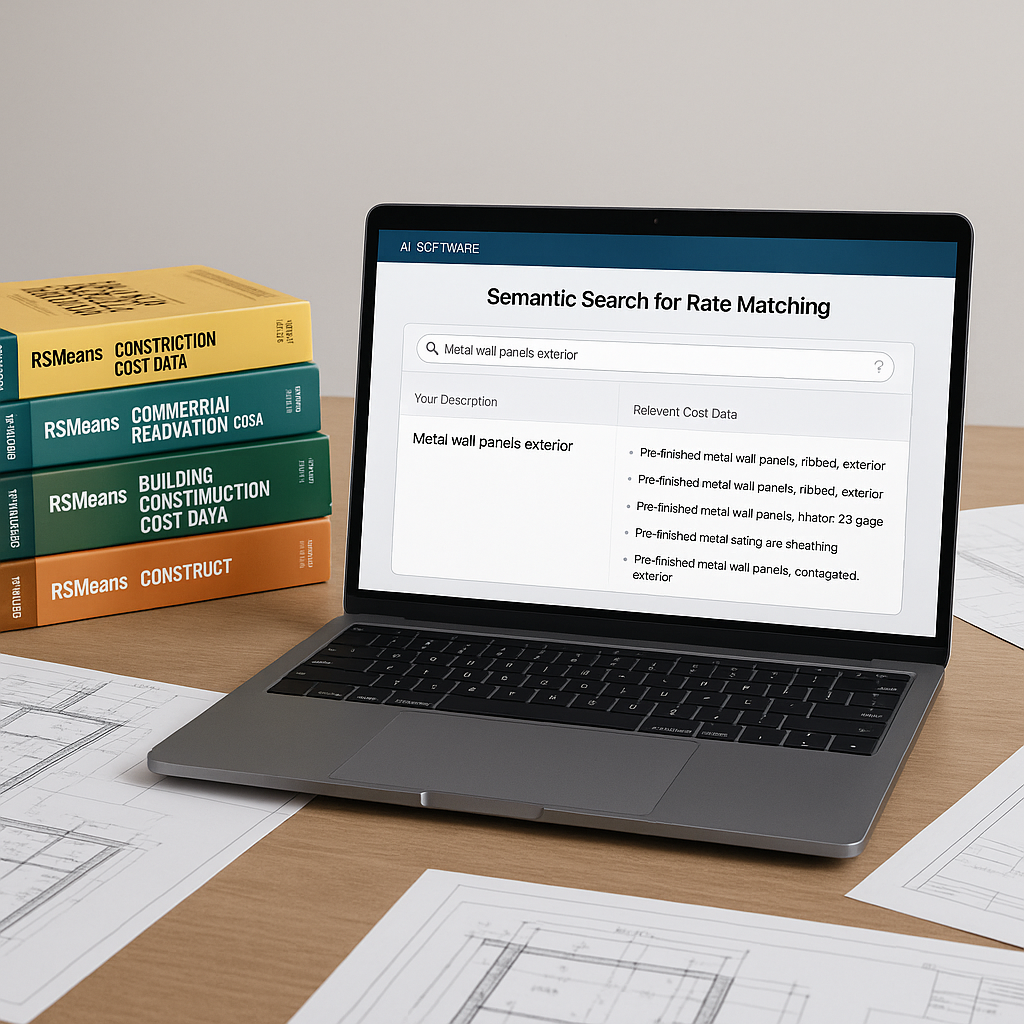
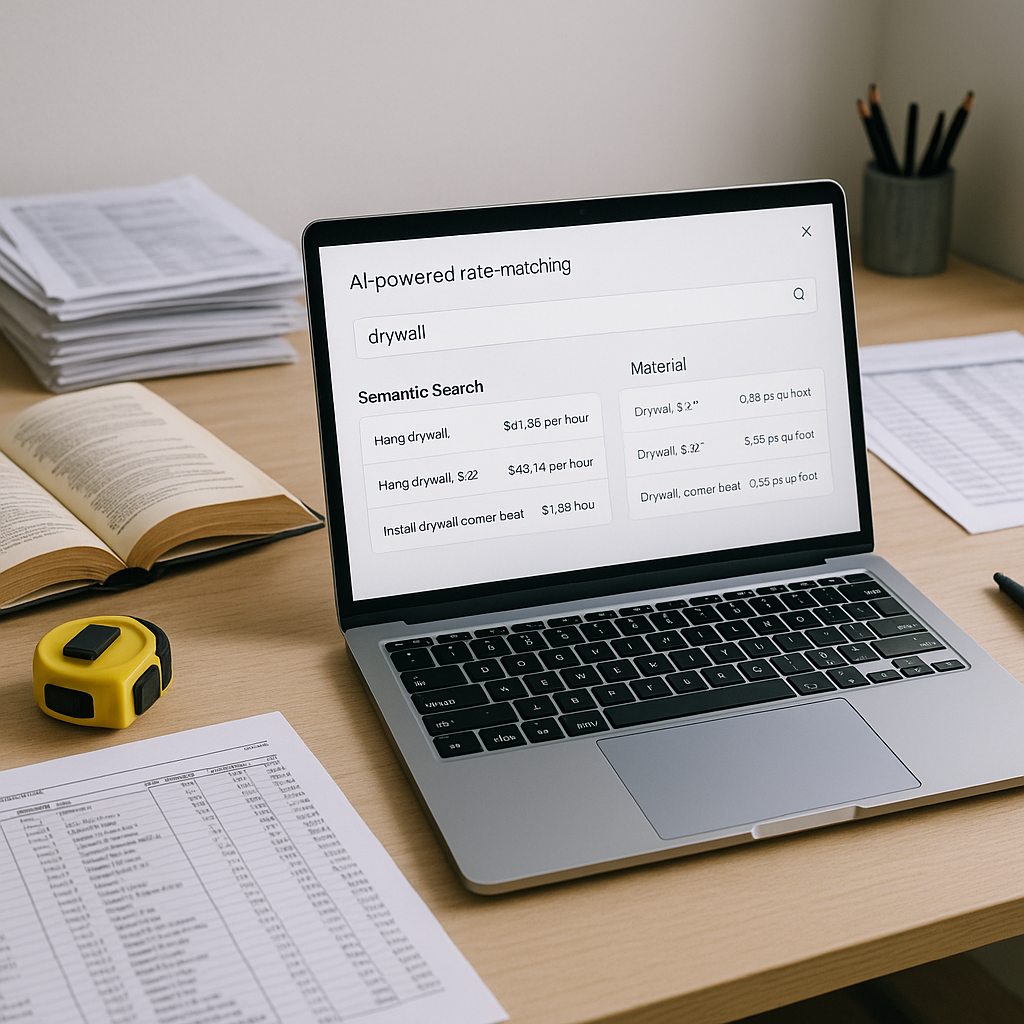
- Semantic Search: Instead of flipping through pages, you type a query like “poured concrete slab labor cost” into the tool. AI scans thousands of rate items (e.g., RSMeans, CPWD DSR) and delivers the best matches in seconds.
- Custom Catalogs: Got project-specific materials or labor rates? Upload them. The AI learns from your inputs and prioritizes them next time.
- Contextual Matching: AI considers factors like location, inflation adjustments, and even labor classifications to give you the most accurate rate for your project.
This isn’t just faster—it’s smarter. AI learns from every search and every correction you make, so it gets better over time.
Illustrative Example — How AI Saves Time
Imagine you’re an estimator working on a mixed-use development project. You’ve got a Bill of Quantities (BOQ) with 2,000 line items and a bid deadline in three days. The project requires rates for everything from reinforced concrete to specialty finishes, sourced from multiple catalogs and adjusted for local labor costs.
Manually, rate lookup for this BOQ could take a significant amount of time—and that’s assuming you don’t make any errors. With AI, the process can be completed in a fraction of the time. This time savings allows you to focus on other critical tasks like refining your bid strategy, negotiating with subcontractors, or improving your project margins.
Why Accuracy Matters Just as Much as Speed
You might be thinking, “Sure, it’s fast, but can I trust it?” That’s a fair concern. AI isn’t perfect, and it won’t replace your judgment. But what it can do is provide a solid starting point.
Here’s how AI tools build trust:
- Confidence Indicators: AI highlights results that may require additional review so you can adjust as needed.
- Audit Trails: Every rate suggestion comes with a breakdown—source, location adjustment, and inflation factor—so you know exactly how it was calculated.
- Human Oversight: You’re still in charge. AI handles the repetitive work, but you make the final call.
Common Mistakes to Avoid
- Blind Trust in AI: Always review AI-suggested rates, especially for high-cost line items. Garbage in, garbage out.
- Ignoring Inflation: Rates from older catalogs might not reflect current costs. Make sure your tool supports inflation adjustments.
- Skipping Customization: If your projects use unique materials or labor rates, upload them. AI learns from your data.
- Underestimating Setup Time: While AI tools are easy to use, plan for a short learning curve. Most users report significant accuracy gains after a few projects.
FAQ
Q: Can AI tools handle project-specific rates?
Absolutely. Many tools let you upload custom catalogs. The AI prioritizes these rates in future matches.
Q: How reliable are AI-generated rates?
AI tools are highly accurate but rely on good input data. Confidence indicators and audit trails help ensure reliability.
Q: Is AI worth it for smaller projects?
Yes. Whether it’s a small renovation or a large infrastructure project, the time savings scale proportionally.
Q: Do AI tools integrate with existing software?
Yes. Most platforms integrate with tools like Bluebeam, Procore, and Excel.
The Bottom Line
AI-powered rate matching isn’t just about speed—it’s about freeing up your team to focus on what really matters: strategy, negotiation, and value engineering. The repetitive work? Leave that to the AI.
If you’re tired of losing hours to manual rate lookup, consider exploring AI-powered tools to streamline your estimation process.