Why Rate Matching is a Time Sink
If you’ve ever had to dig through a 2,000-page CPWD DSR or flip through an outdated RSMeans manual, you know how tedious rate lookup can be. It’s not just about finding the right line item; it’s about making sure it’s accurate and applicable to your project. Get it wrong, and you’re either overspending or underbidding—neither of which is ideal.
Manually matching rates to BOQ line items can take significant time, especially for large projects with thousands of items. This repetitive, manual work is prone to errors, creating a bottleneck in preconstruction estimation that can delay projects and impact profit margins. AI is now offering solutions to address these challenges.
The AI Solution: Smarter, Faster Rate Matching
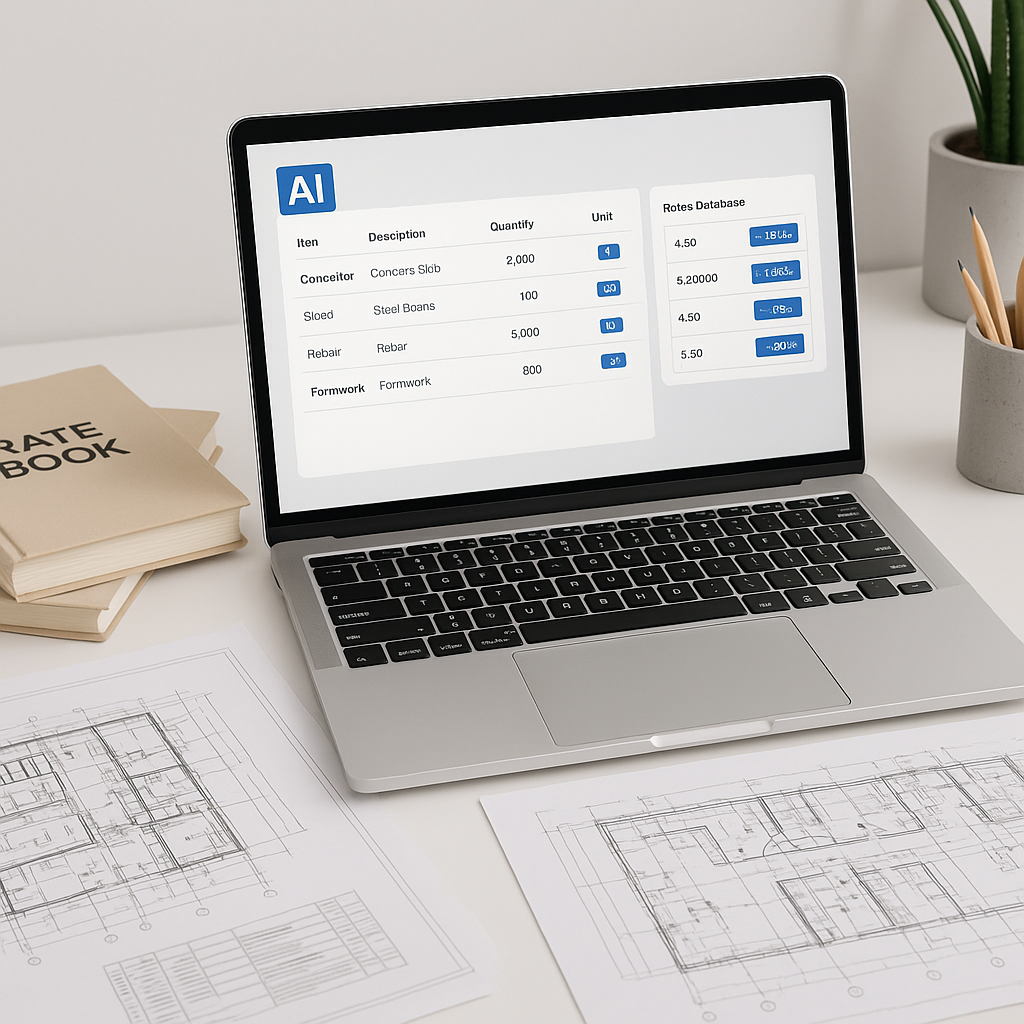
AI-powered tools are transforming rate matching by automating the process. These platforms use semantic search to match BOQ line items to a database of standard rates. Instead of flipping through PDFs or Excel sheets, you can input a description, and the system suggests a match within seconds.
Here’s how the process typically works:
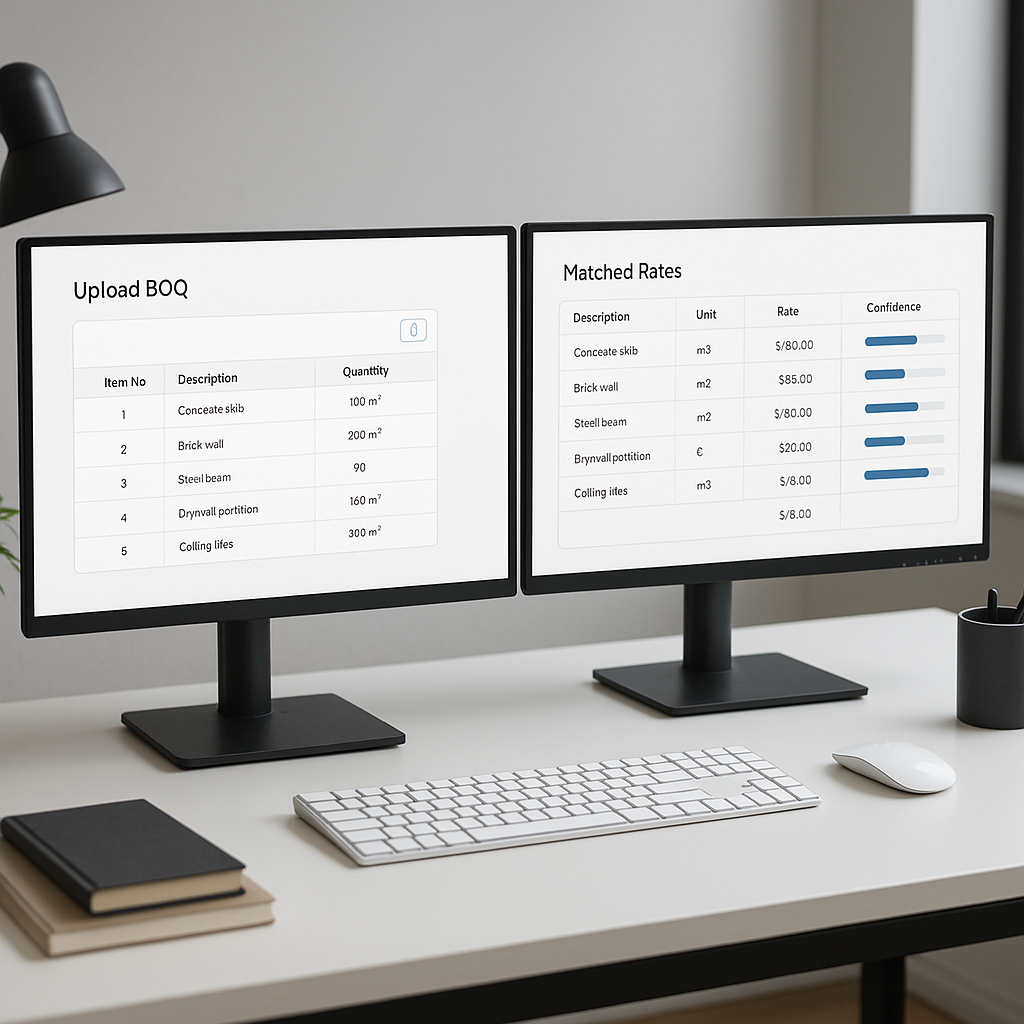
- Upload Your BOQ: Drag and drop your Excel or CSV file into the platform. Smart parsers detect merged cells, section headers, and hierarchies.
- Search for Rates: Type in a line item description like “10mm rebar installation.” The AI scans its database to suggest the most relevant matches.
- Audit and Adjust: Review the AI’s suggestions. Many platforms provide an audit trail, so you can see how each rate was derived.
- Save for Future Projects: Once you confirm a match, the system learns from it, improving accuracy for future estimates.
Illustrative example — Automating rate matching for a mid-sized project could save significant time compared to manual methods, allowing estimators to focus on refining bids or other critical tasks.
Why Accuracy Still Matters
AI doesn’t replace your judgment—it enhances it. You’re still the expert who knows whether a rate for a specific material or labor category feels right. The AI simply reduces the initial workload, enabling you to make smarter decisions.
For example, a project might require custom finishes or region-specific labor rates. With traditional methods, you’d have to manually adjust each line item—a process prone to error. AI tools can handle these adjustments by allowing you to upload custom rate catalogs or define project-specific rates, ensuring your estimates reflect real-world costs.
Common Challenges and How AI Overcomes Them
Challenge 1: Outdated Rate Data
Using outdated rates can lead to inaccurate estimates. AI-powered tools often include regularly updated rate databases, incorporating inflation adjustments and live feeds for standard rate sources like CPWD DSR or U.S. DOT rates.
Challenge 2: Multi-Market Complexity
Working across geographies introduces complexity due to varying standards like CSI in the U.S., CPWD in India, or CESMM3 in the UK. AI tools adapt to these standards, reducing the need for multiple tools.
Challenge 3: Vendor Quote Integration
Normalizing vendor quotes can be time-consuming. AI tools can ingest vendor data in various formats and convert it into a unified structure, saving hours of manual rework.
FAQs About AI-Powered Rate Matching
Q: How accurate is the AI at matching rates? A: AI tools improve accuracy over time through feedback loops and self-learning algorithms, but human oversight remains essential.
Q: Can I use my own custom rates? A: Yes, most platforms allow you to upload custom catalogs or define project-specific rates for seamless integration.
Q: Does this work with existing tools like Bluebeam or Procore? A: Many AI platforms offer API integrations with popular construction software, enabling smooth workflows.
Q: How steep is the learning curve? A: Most users find these tools intuitive, with training typically taking a short period.
Q: What happens if the AI gets it wrong? A: You can manually override suggestions, and the system logs these changes to improve future recommendations.
Why This Matters
In construction, time is money. Every hour spent on manual rate lookup is an hour not spent on refining bids, negotiating with subcontractors, or planning project execution. AI-powered rate matching isn’t just a time-saver; it’s a competitive advantage.
If you’re still relying on manual methods, consider how much efficiency you could gain by adopting AI tools for rate matching. These tools are becoming essential for staying competitive in the industry.
Ready to Streamline Your Estimation Process?
If you’re looking to save time and improve accuracy in your construction estimates, explore AI-powered rate matching tools to see how they can transform your workflow.