The Problem: Manual Rate Lookups Are a Time Sink
If you’ve ever flipped through a 2,000-page rate book like RSMeans or CPWD DSR, you know the pain. Need the labor rate for installing a standard 10x10 duct? Set aside significant time. Now multiply that by every line item in your BOQ. That’s a considerable amount of time wasted on a task that’s as exciting as watching paint dry.
But here’s the kicker: even after spending all that time, there’s no guarantee you’ve got it right. Rates vary by region, project type, and even the year of publication. If you miss an escalation or pick the wrong rate, your estimate suddenly veers wildly off course. In competitive bidding, that’s the difference between winning a project and losing it—or worse, winning and losing money on execution.
Enter AI-Powered Rate Matching
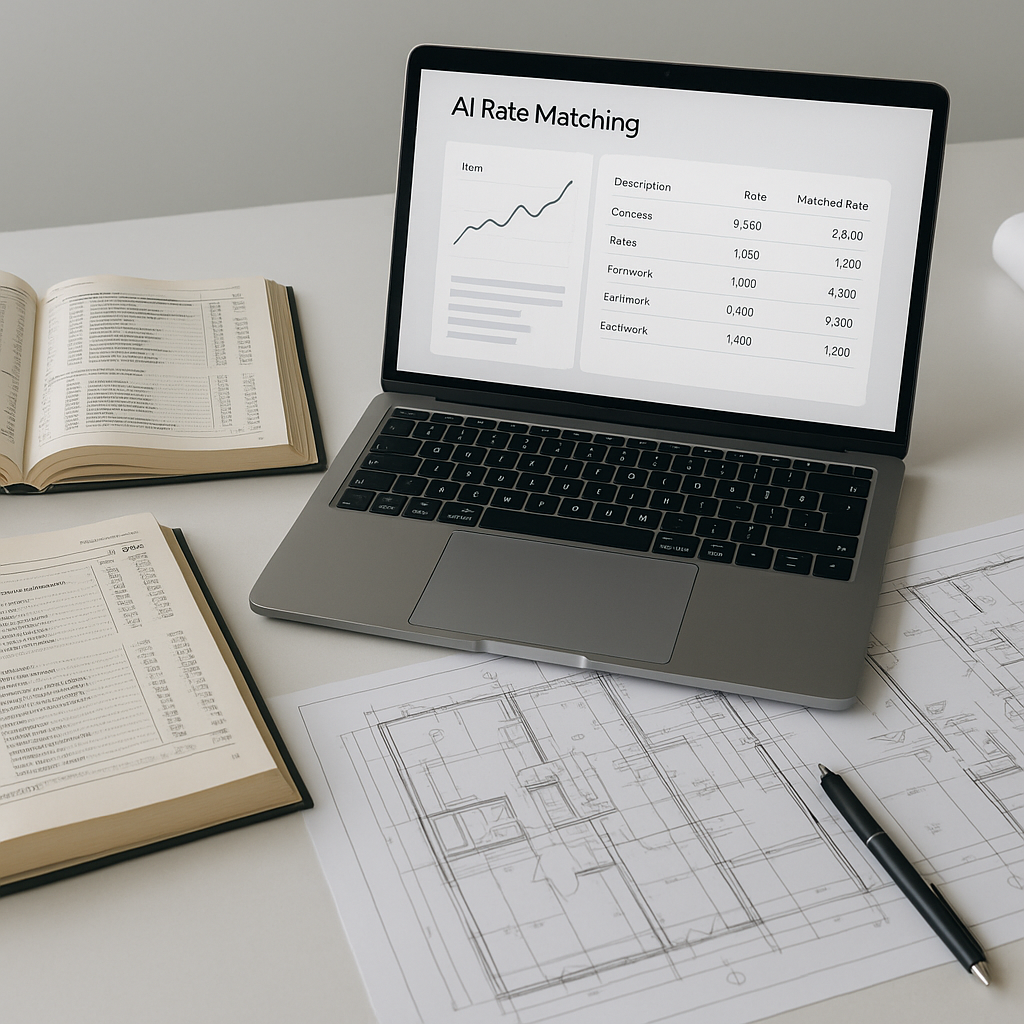
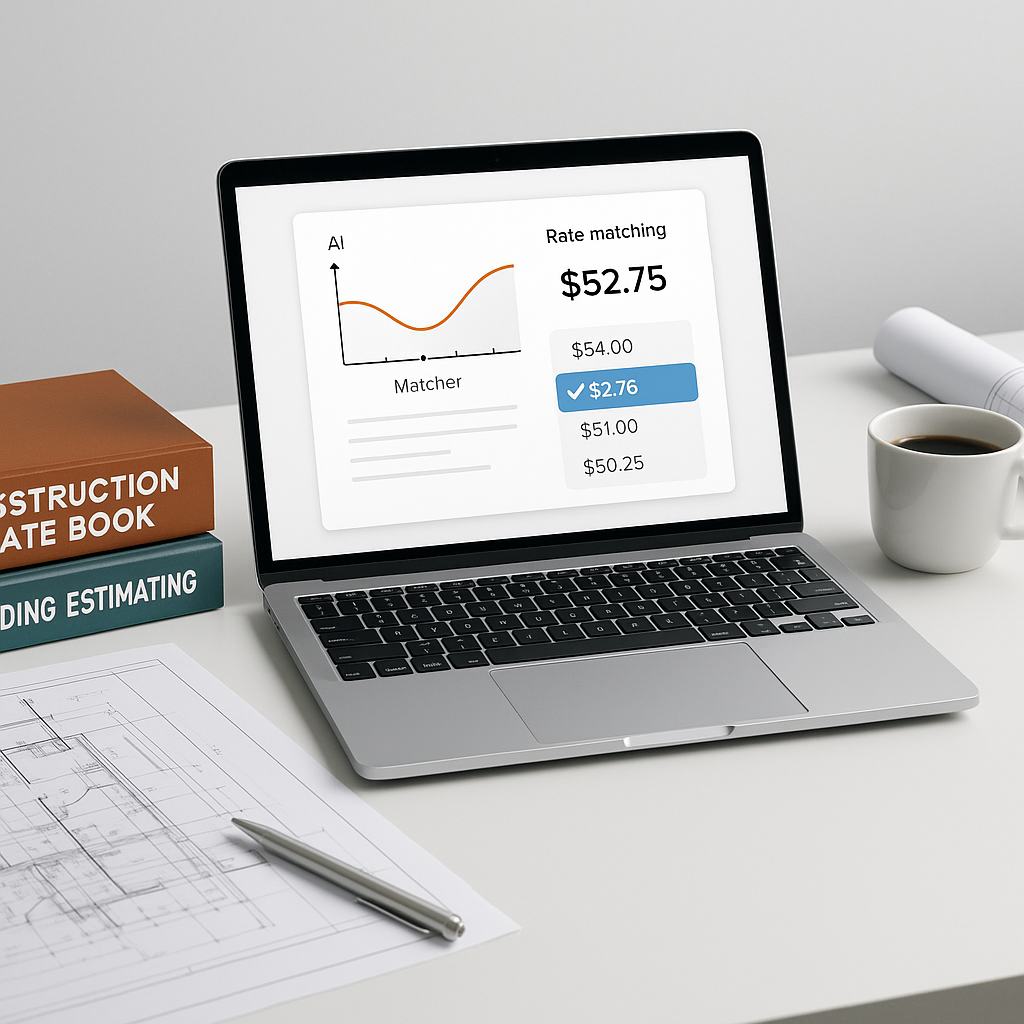
AI changes the game. Instead of flipping through pages or scrolling endlessly through PDFs, AI-powered tools like EstimateNext let you search for what you need in seconds. Type “10x10 duct installation labor rate” into the search bar, and the AI returns relevant matches from a large database of SOR (Schedule of Rates) items.
How does it work? The system uses semantic search. That means it understands the intent behind your query, even if you don’t phrase it perfectly. For instance, if you search for “concrete grade M30,” it’ll know to show you options for both materials and associated labor. It doesn’t stop there. EstimateNext also allows you to upload your own custom rate catalogs, so the tool is tailored to your specific business. Over time, it learns from your selections, getting smarter with every project.
Why Accuracy Matters as Much as Speed
You might be thinking, “Sure, AI is fast, but is it accurate?” Fair question. Here’s the thing: AI-powered rate matching doesn’t just throw random numbers at you. It provides an audit trail for every rate it suggests, showing where it came from (e.g., CPWD DSR 2021, Page 345, Item 12.3). That transparency builds trust.
And because the system learns from feedback, it gets more accurate over time. If you reject a suggested rate and manually input your own, the AI takes note. Over multiple projects, the system becomes increasingly aligned with your preferences.
Common Misconceptions
Misconception 1: “AI replaces expertise.”
Not true. AI handles grunt work, but you still need human oversight. Think of it as an assistant—not a decision-maker. You’re still in control of markup, scope, and negotiation.
Misconception 2: “AI can’t handle custom rates.”
Wrong again. Tools like EstimateNext let you upload custom catalogs or define project-specific rates. Whether you’re working on a high-rise in Mumbai or a highway in Texas, the system adapts.
Misconception 3: “It’s hard to learn.”
Actually, most AI tools are intuitive. If you can use Excel, you can use this.
What to Watch For
- Garbage In, Garbage Out: AI is only as good as the data you feed it. If your rate catalogs are outdated or incomplete, the results will reflect that. Always audit your inputs.
- Overreliance: Don’t blindly trust the AI. Use its suggestions as a starting point, but verify critical rates manually—especially on high-value items.
- Lack of Training: AI tools are easy to use, but they’re even more powerful when teams are trained to maximize their potential. Invest in training sessions.
FAQ
Q: Does AI work for smaller projects?
Yes. Whether you’re estimating a small renovation or a large infrastructure project, AI scales. The ROI becomes more obvious on larger bids, but even small contractors benefit from the time savings.
Q: Can AI handle multi-market complexity?
Yes. Tools like EstimateNext support multiple standards (CSI MasterFormat, CPWD, CESMM3), currencies, and tax regimes. This makes them ideal for contractors operating in different regions.
Q: What if I need rates not in the system?
You can upload custom catalogs or manually input rates. The AI will incorporate these into future matches.
Final Thoughts
Manual rate lookups are a relic of the past. AI-powered rate matching doesn’t just save time—it improves accuracy, builds trust, and lets your team focus on higher-value tasks. In a competitive market, those advantages stack up fast.
If you’re tired of wasting hours on rate lookups, it might be time to try AI-powered estimation. Get started free →