The Problem: Manual Rate Lookup Is a Nightmare
If you've ever spent hours flipping through a 2,000-page rate book, you're not alone. Estimators worldwide face this pain—matching BOQ items with standard rates is slow, error-prone, and frankly exhausting. Imagine you're pricing a large-scale hospital project. You need labor rates for installing reinforced concrete, material costs for HVAC ducting, and equipment charges for scaffolding. Now multiply that by hundreds of line items.
Rate lookup isn't just tedious; it's risky. A single mistake—like mismatching a labor rate—can tank your bid competitiveness or erode project margins. And it gets worse when you're dealing with custom rates or country-specific standards like RSMeans in the U.S. or CPWD DSR in India.
The Solution: AI-Powered Rate Matching
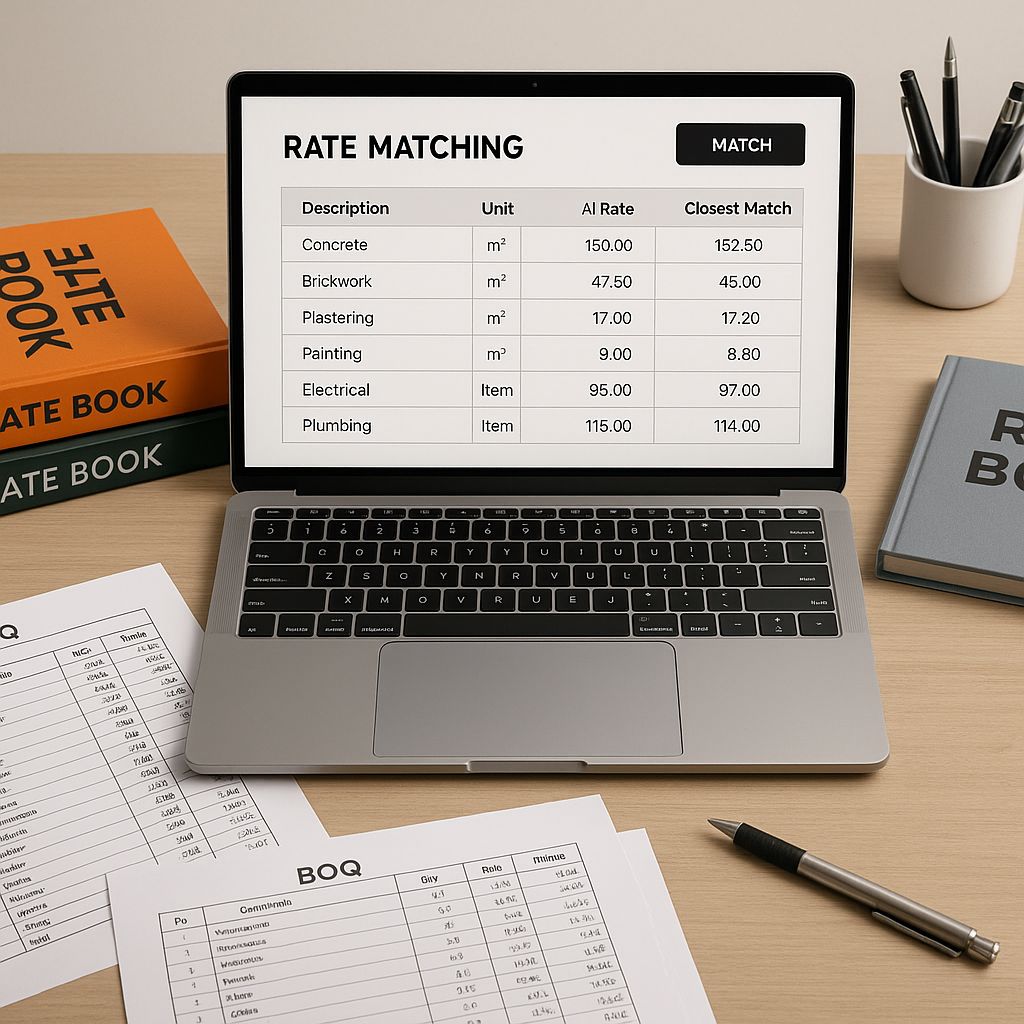
AI tools like EstimateNext tackle this head-on. Instead of manually searching rate books, you upload your BOQ, and the system matches each item to the correct rate in seconds. How does it work?
-
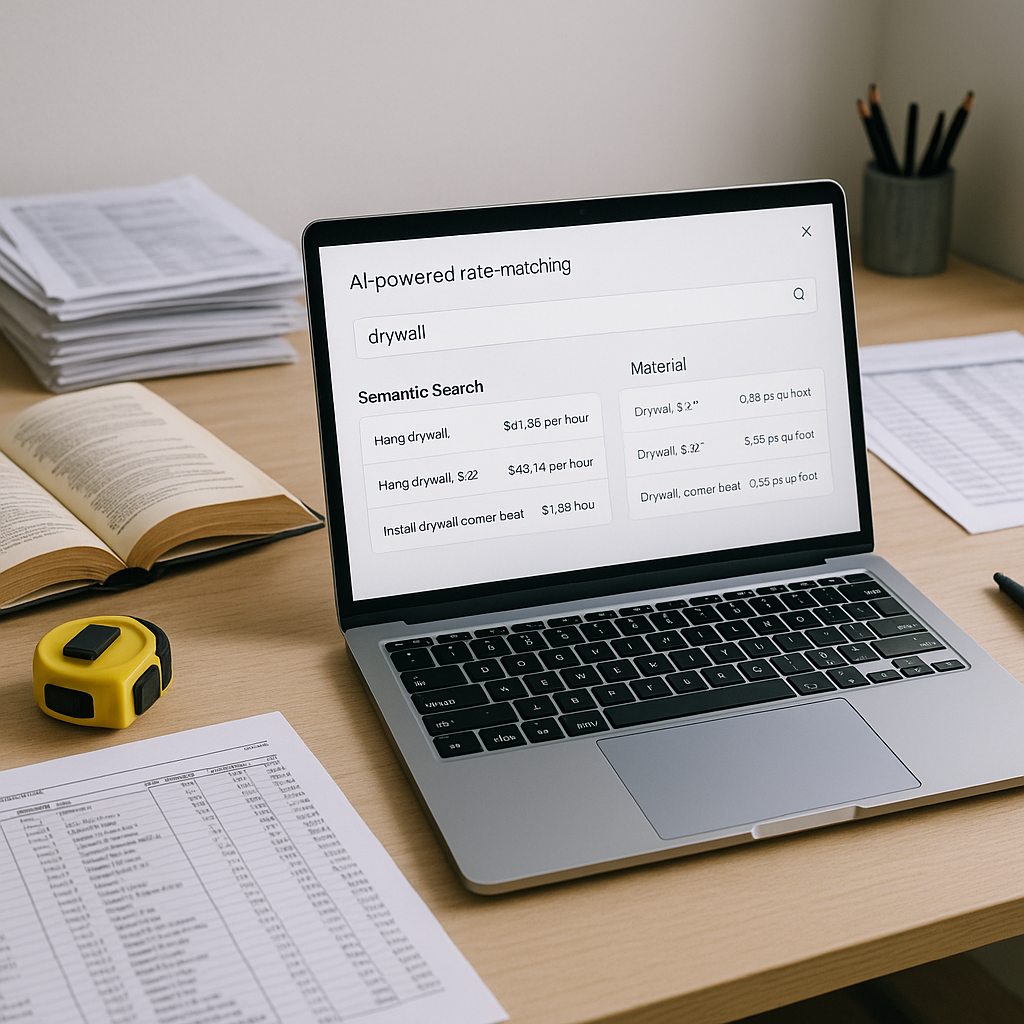
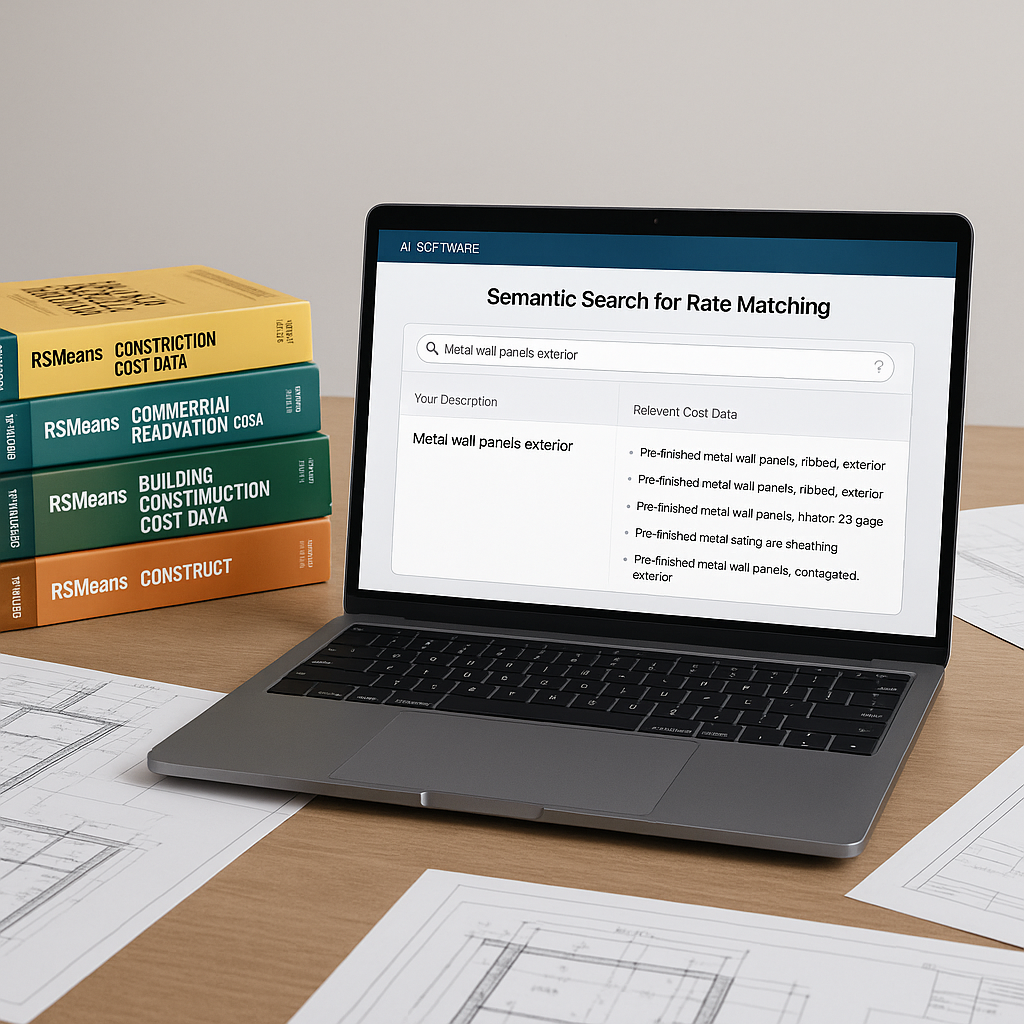
Semantic Search: The AI understands natural language. Type "concrete column reinforcement" or "HVAC duct installation," and it pulls matches from its extensive database of SOR items.
-
Custom Catalogs: Got project-specific rates? You can upload them, and the AI integrates these seamlessly into future estimates.
-
Feedback Loops: The system improves with use. Reject incorrect matches? It learns. Accept new rates? It remembers.
Real Impact: Time and Accuracy
Manual rate lookup can consume significant time per estimate. AI reduces this effort dramatically by automating the process. By eliminating human error, AI ensures that rates are matched accurately, and the system’s audit trail provides traceability for every match.
What About Edge Cases?
You might be thinking, "What if my rates aren't standardized?" Good question. Here's where custom catalogs shine. Whether you're pricing a data center with proprietary FF&E or an industrial plant with bespoke machinery, you can upload your rates, and the AI handles the rest.
Another objection: "What about country-specific standards?" EstimateNext supports multiple standards like CSI MasterFormat in the U.S., NRM2 in the UK, and CESMM3 in GCC countries. It's built to handle regional complexity.
Common Mistakes and How to Avoid Them
-
Blind Trust in AI: AI isn’t perfect. Always review high-impact items like structural steel or bulk concrete—these can make or break a bid.
-
Ignoring Feedback Loops: The system improves with your input. If you skip the accept/reject process, you're losing the AI’s learning advantage.
-
Overloading Custom Catalogs: Don’t upload every rate under the sun. Focus on high-frequency or high-value items.
FAQ
Q: How accurate are AI-powered rate matches?
A: AI accuracy depends on the quality of input data and human review. Feedback loops further enhance precision over time.
Q: Can AI tools handle multi-country projects?
A: Yes. Many AI tools support regional standards, currencies, and tax regimes, making them suitable for international projects.
Q: How long does it take to train staff on AI tools?
A: Most platforms are designed for ease of use, and training typically takes a short amount of time.
Q: What if I need to update my rates mid-project?
A: AI tools propagate rate changes instantly across the BOQ, saving you from manual updates.
Call to Action
If you're tired of wasting hours on manual rate lookup, EstimateNext can help. Get started free →