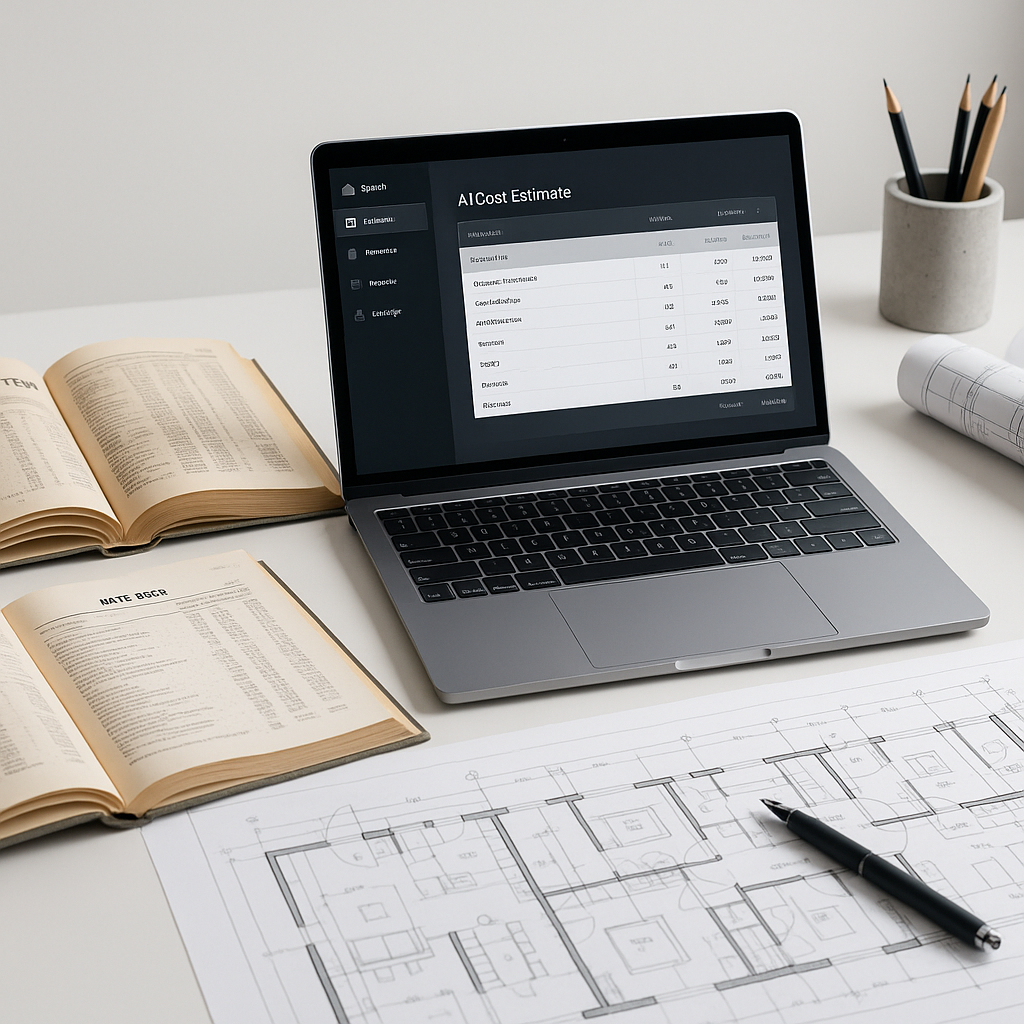
The Hidden Time Sink in Construction Estimation
Every estimator knows the drill: hours spent flipping through rate books, PDFs, or Excel sheets, hunting for the right rate. It’s mind-numbing, error-prone, and brutally slow. Need the labor cost for installing pre-stressed concrete girders? That could mean sifting through a 2,000-page RSMeans catalog or a CPWD DSR manual. Misplace a decimal or overlook a column, and you’ve just sabotaged your bid.
Why does this matter? Because rate lookup isn’t just tedious—it’s expensive. On a typical bid, estimators spend 10–12 hours just finding and validating rates. Multiply that across multiple bids per year, and you’re bleeding time and money. Worse, inconsistent or outdated rates can lead to underbidding (and eating losses) or overbidding (and losing the job).
Here’s the good news: AI-powered rate matching is solving this bottleneck. Tools like EstimateNext cut this task from hours to seconds, with accuracy that improves over time. Let’s dig into how it works, why it’s a game-changer, and how you can implement it effectively.
How AI-Powered Rate Matching Works
AI rate matching combines three things: a massive database, semantic search, and a learning loop. Let’s break this down step by step:
1. The Database
Platforms like EstimateNext house tens of thousands of Schedule of Rates (SOR) items. These databases aggregate industry-standard catalogs, including RSMeans, CPWD DSR, WSDOT, and user-uploaded custom rate sheets. For example:
- RSMeans: Covers U.S.-based construction costs across labor, materials, and equipment, updated annually.
- CPWD DSR: Standardized rates for government projects in India.
- Custom Catalogs: Many contractors have their own rate books based on historical data or local price trends.
The sheer scope of these databases means the rates you need for virtually any project—whether it’s a high-rise in New York or a municipal project in Delhi—are already stored and ready to use.
2. Smart Search
Manual search is frustrating. Type “concrete labor” into a PDF and you could spend 20 minutes scanning irrelevant results. AI search eliminates the guesswork by understanding the context of your query. Here’s how it works:
- Contextual Matching: Type “reinforced beam installation labor cost,” and the AI pulls the most relevant, exact match. It understands phrases, synonyms, and industry jargon, unlike PDFs or Excel.
- Confidence Ratings: AI assigns confidence scores to search results, flagging items that might require manual review.
3. Learning Over Time
AI improves with every project. Let’s say you adjust a rate for premium imported tiles based on a supplier quote. The system remembers this adjustment and applies it to similar items in future bids. This “learning loop” ensures accuracy improves over time, eliminating repetitive corrections.
Why This Matters for Real Projects
The Time Savings
On a typical mid-sized bid, estimators can spend 12–16 hours just looking up rates. Multiply that across dozens of bids a year, and you’re losing hundreds of hours on a repetitive task. AI-powered tools like EstimateNext cut this task down to minutes. Imagine reclaiming 15 hours per bid to:
- Refine your bid strategy.
- Negotiate better terms with subcontractors.
- Work on more bids and scale your business.
Minimizing Errors
Human error is inevitable in manual processes. Forgetting to update a rate for a custom material, misplacing a decimal point, or misreading a column can have ripple effects across your bid. AI minimizes these errors by:
- Flagging Anomalies: If a rate seems inconsistent with historical data or industry standards, the system alerts you.
- Standardizing Data: AI ensures consistency across all rate entries, eliminating discrepancies caused by manual input.
Cost Impact
A misplaced rate doesn’t just hurt your bid—it can tank your profit margins. Underbidding means absorbing unexpected costs, while overbidding risks losing the project altogether. AI helps you hit the sweet spot by ensuring rates are accurate and competitive.
The Obvious Objection: “But AI Can’t Think Like an Estimator”
It’s true—AI doesn’t replace your expertise. It doesn’t know that your local supplier charges 10% less for structural steel or that your crew is faster than industry averages. But that’s not the goal. AI amplifies your expertise by handling the manual grunt work, letting you focus on high-value tasks like:
- Adjusting rates for project-specific factors.
- Negotiating terms with subcontractors and suppliers.
- Strategizing markup and risk contingencies.
Think of AI like structural analysis software. You don’t calculate loads manually anymore—you use tools that process the data faster and more accurately. Rate matching tools function the same way.
Common Mistakes to Avoid
1. Blind Trust
AI tools are accurate, but they’re not infallible. Always double-check critical rates, especially for:
- Custom materials.
- Unusual scopes of work.
- High-cost items that could swing your bid totals significantly.
2. Ignoring Feedback Loops
If your AI tool lets you adjust rates or flag errors, make it a habit. Every adjustment improves the tool’s accuracy over time.
3. Not Updating Catalogs
Rate catalogs evolve. Labor costs change, material prices fluctuate, and new standards are introduced. Ensure your tool syncs with the latest industry data to avoid outdated estimates.
Comparison: Manual vs. AI Rate Matching
| Feature | Manual Rate Lookup | AI-Powered Rate Matching |
|---|---|---|
| Time Required | 10–16 hours per bid | < 1 hour per bid |
| Error Rate | High (human error) | Low (automated checks) |
| Customization | Manual adjustments | Automatic learning loops |
| Scalability | Limited (labor-intensive) | High (quick processing) |
| Cost Impact | Risk of over/underbidding | Optimized for competitiveness |
What’s Next?
If you’re tired of wasting hours on manual rate lookup, it’s time to consider AI-powered tools. EstimateNext offers a free tier to get you started—no credit card required. Upload your first BOQ and see the difference for yourself.


