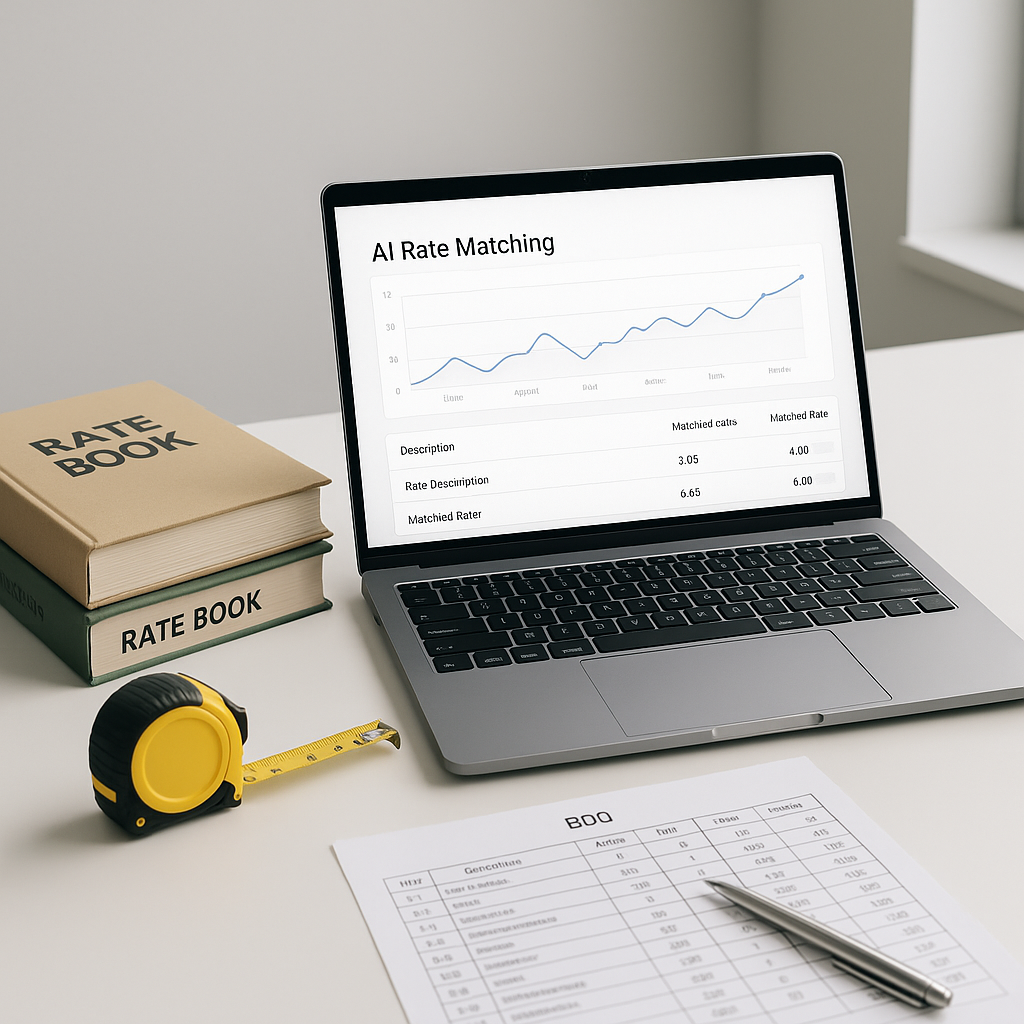
The Bottleneck Every Estimator Knows
Rate lookup might not sound like a big deal, but if you’ve ever spent hours flipping through a 2,000-page RSMeans book or a government DSR PDF, you know how tedious it really is. It’s slow, repetitive, and prone to errors. Worse, it drags down the entire estimation process.
Consider a common scenario: You’re pricing a bid for a high-rise. The client wants everything by Monday, but your rate catalog hasn’t been updated since last year. You spend hours trying to find the right labor rate for curtain wall installation, only to realize halfway through that you missed the inflation adjustment for steel.
Sound familiar? It’s a challenge for anyone trying to hit tight deadlines or respond to last-minute changes.
How AI Fixes This
AI-powered rate matching flips the script. Instead of manually searching for rates, you simply upload your BOQ and let the AI do the work. Tools like EstimateNext use semantic search to match BOQ items against extensive SOR entries. Need the labor rate for installing pre-stressed concrete girders? Type it in, and you’ll get a match in seconds.
This isn’t just about speed—it’s about accuracy. By pulling rates directly from approved catalogs (like RSMeans, CPWD DSR, or state DOT schedules), AI eliminates the guesswork. You can also configure inflation adjustments, markup percentages, and custom rates, ensuring every estimate reflects actual costs.
Why This Matters
Manual rate lookup is not only time-consuming but also prone to errors. AI-powered tools streamline this process, freeing up your team to focus on high-value tasks like subcontractor negotiations or margin strategy. By automating repetitive tasks, AI allows estimators to allocate their time more effectively, improving overall productivity.
Common Mistakes in Manual Rate Matching
Manual rate lookup isn’t just slow—it’s risky. Here are the top mistakes often encountered:
- Inflation Ignored: Forgetting to adjust rates for CPI uplifts leads to underpricing.
- Wrong Units: Mixing up “per SF” vs “per LF” or other measurement standards.
- Outdated Catalogs: Using last year’s rates instead of current approved schedules.
- Human Error: Typos, skipped items, or missed scope inclusions.
AI eliminates these pitfalls by validating rates against current data and flagging anomalies for review.
Call-to-Action
If you’re tired of wasting hours on manual rate lookup, EstimateNext can help. Upload your BOQ and get priced estimates in minutes. Get started free →


