Why Manual Rate Lookups Are Challenging
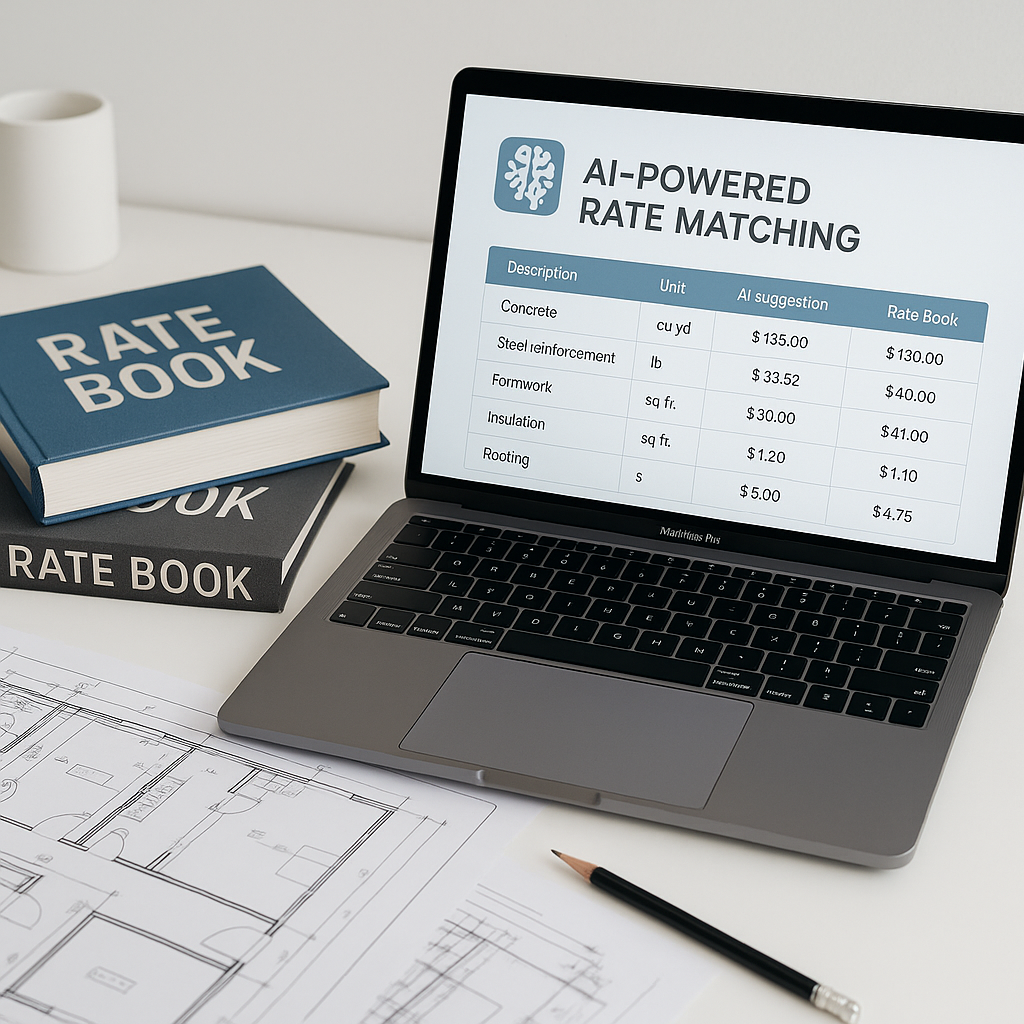
If you’ve ever spent hours flipping through RSMeans or CPWD DSR to find the right rate, you know the frustration. It’s not just time-consuming — it’s error-prone. One wrong match, and you’re staring at a busted bid margin.
Manual rate lookup doesn’t scale well. Estimators are decision-makers, but when you’re stuck hunting rates, you’re not making decisions — you’re just burning hours on repetitive tasks.
How AI Changes the Game
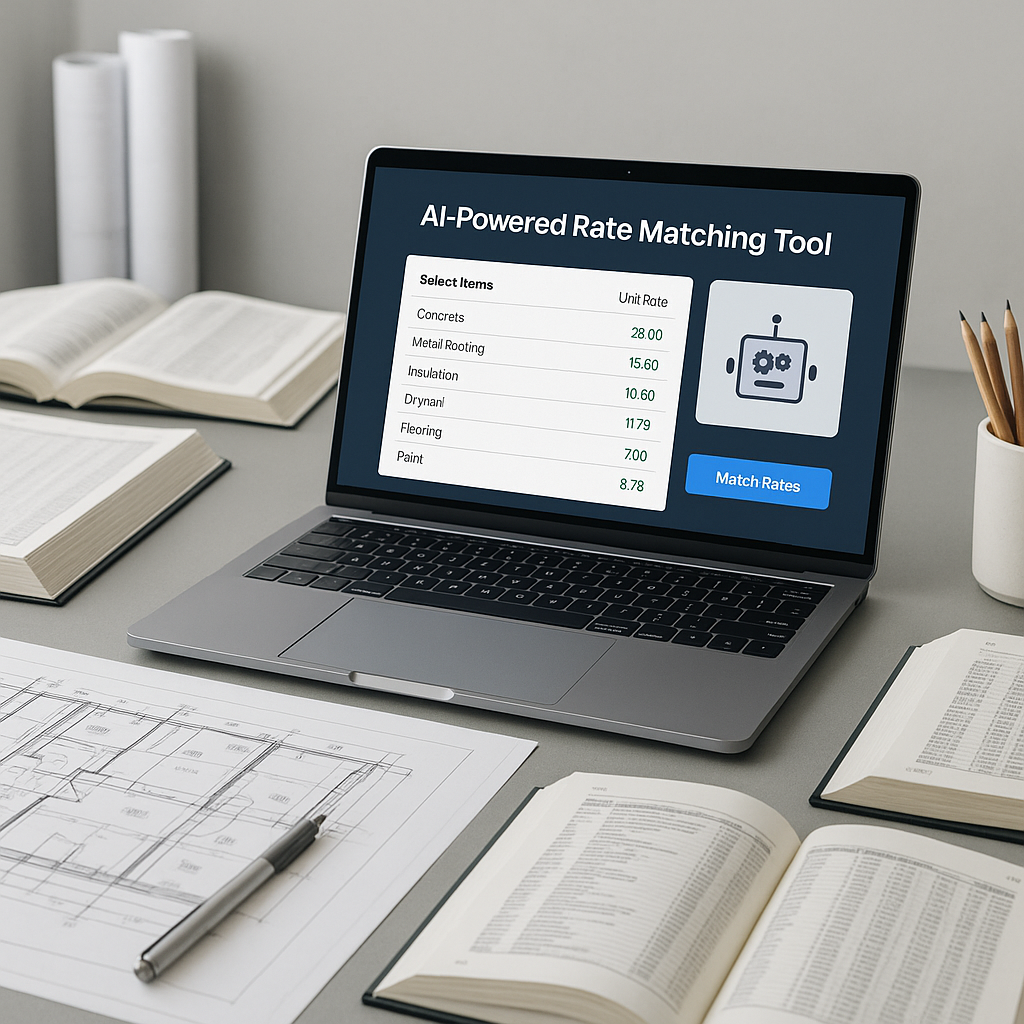
AI-powered rate matching tools like EstimateNext aim to address these inefficiencies. Here’s how they work:
-
Semantic Search Across Thousands of Items
Instead of flipping through PDFs or Excel sheets, you type in natural language. Need the labor rate for a post-tension slab? Type it in. AI finds the closest match in seconds. -
Custom Catalogs and Local Rates
Got your own material prices or state-specific labor rates? AI integrates those seamlessly. It even learns from your past projects, so it gets better the more you use it. -
Audit Trails for Every Match
Worried about accuracy? Every rate match includes a breakdown: material, labor, equipment, and markup. You can trace back every dollar to its source. No surprises.
Illustrative Example — How AI Streamlines BOQ Pricing
Imagine you’re pricing a mid-rise residential project. You need rates for concrete, rebar, and waterproofing. Instead of manually sifting through rate books, you upload your BOQ into an AI-powered tool. Here’s what happens:
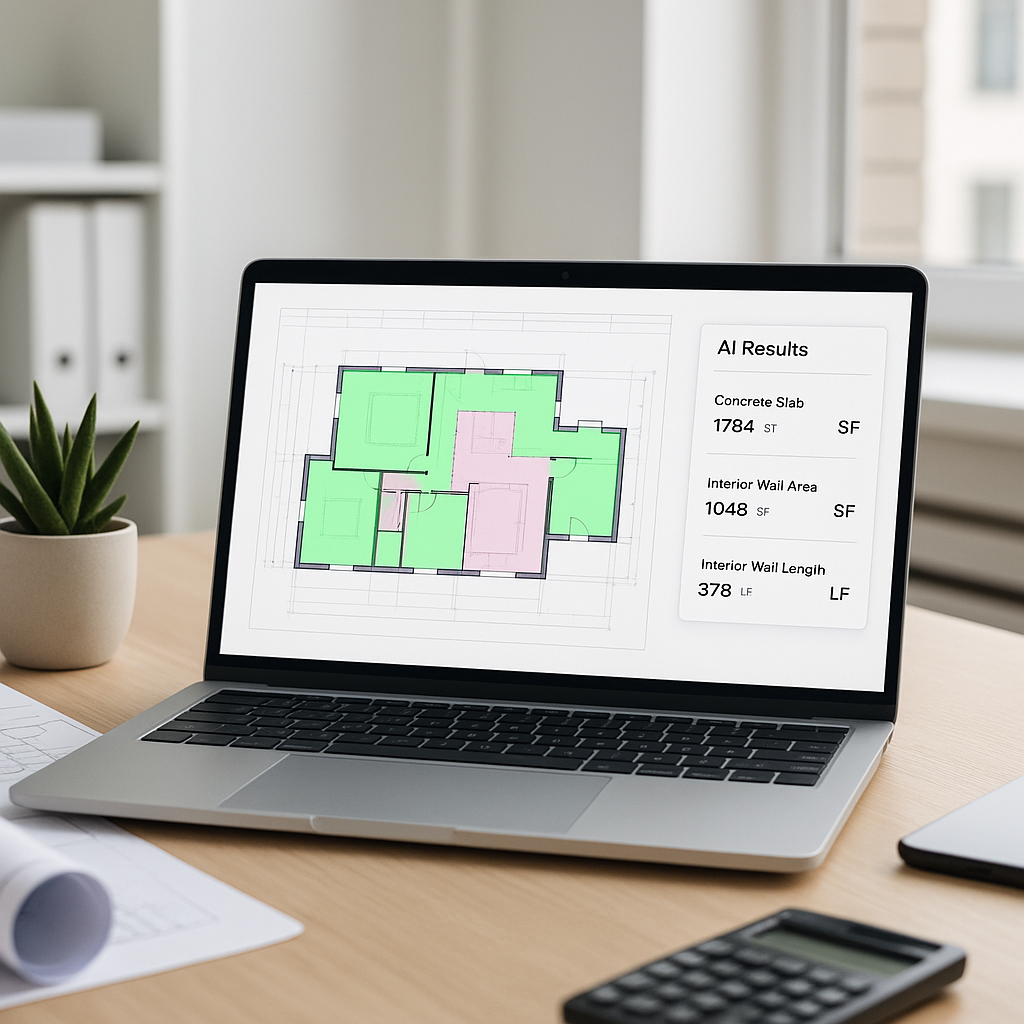
- The system parses the BOQ, identifies line items, and matches them to its database of standard rates.
- For each rate, it runs through a multi-step process: tenant history, user catalogs, regional adjustments, and AI fallback.
- Within moments, you have a fully priced BOQ ready for review.
This approach significantly reduces the time spent on repetitive tasks, allowing you to focus on higher-value activities like decision-making and strategy.
Benefits of AI Rate Matching
- Time Savings: Automating rate lookup frees up valuable hours for other tasks.
- Improved Accuracy: AI tools reduce the likelihood of human error in rate matching.
- Scalability: Whether you’re working on small projects or large-scale developments, AI tools can handle the workload efficiently.
Common Questions About AI Rate Matching
Q: Can I use my own rates instead of preloaded ones?
Yes. Tools like EstimateNext let you upload custom catalogs, so your rates are always accurate.
Q: What if the AI gets a match wrong?
You can override any suggestion, and the system learns from your feedback to improve future recommendations.
Q: Does this work for small projects too?
Absolutely. Whether you’re pricing a small fit-out or a large infrastructure project, AI tools can adapt to your needs.
The Obvious Objection
“But AI doesn’t understand construction.” True, AI isn’t an estimator. It won’t tell you if the architect’s spec is unrealistic or if a subcontractor’s price feels off. That’s your job. What it does is handle the repetitive, manual tasks that don’t require human creativity. It’s a tool, not a replacement.
What to Watch For
- Over-reliance: AI tools are fast, but they’re only as good as the data you feed them. Garbage in, garbage out.
- Initial Learning Curve: Like any new software, there’s a learning phase. Expect to spend some time getting used to the interface.
- Edge Cases: Not every rate will have a perfect match, especially for niche materials or custom specs. Be ready to tweak.
Final Thoughts
Rate matching isn’t glamorous, but it’s critical. If you’re stuck doing it manually, you’re wasting time and leaving money on the table. AI-powered tools like EstimateNext aim to fix this by automating repetitive tasks, improving accuracy, and scaling to meet your project needs.
If you’re dealing with rate lookup headaches, AI-powered tools can help streamline your workflow and improve efficiency.