The Problem: Manual Rate Lookup Is a Time Sink
If you've ever flipped through a 2,000-page rate book to price every line item in a BOQ, you know how exhausting it is. Estimators spend hours matching rates—and that's assuming the rates are even accurate. Worse, every time there's a change, you’re back to square one, rebuilding spreadsheets and hoping nothing gets missed.
For context, a typical mid-sized construction estimate requires matching hundreds of line items. Labor rates, material costs, equipment pricing—each line has to be precise, traceable, and defensible. And if you're working across multiple geographies, you can add different SOR catalogs, currencies, and tax rules to the mix. It's like solving a puzzle where every piece moves constantly.
The Solution: AI-Powered Rate Matching
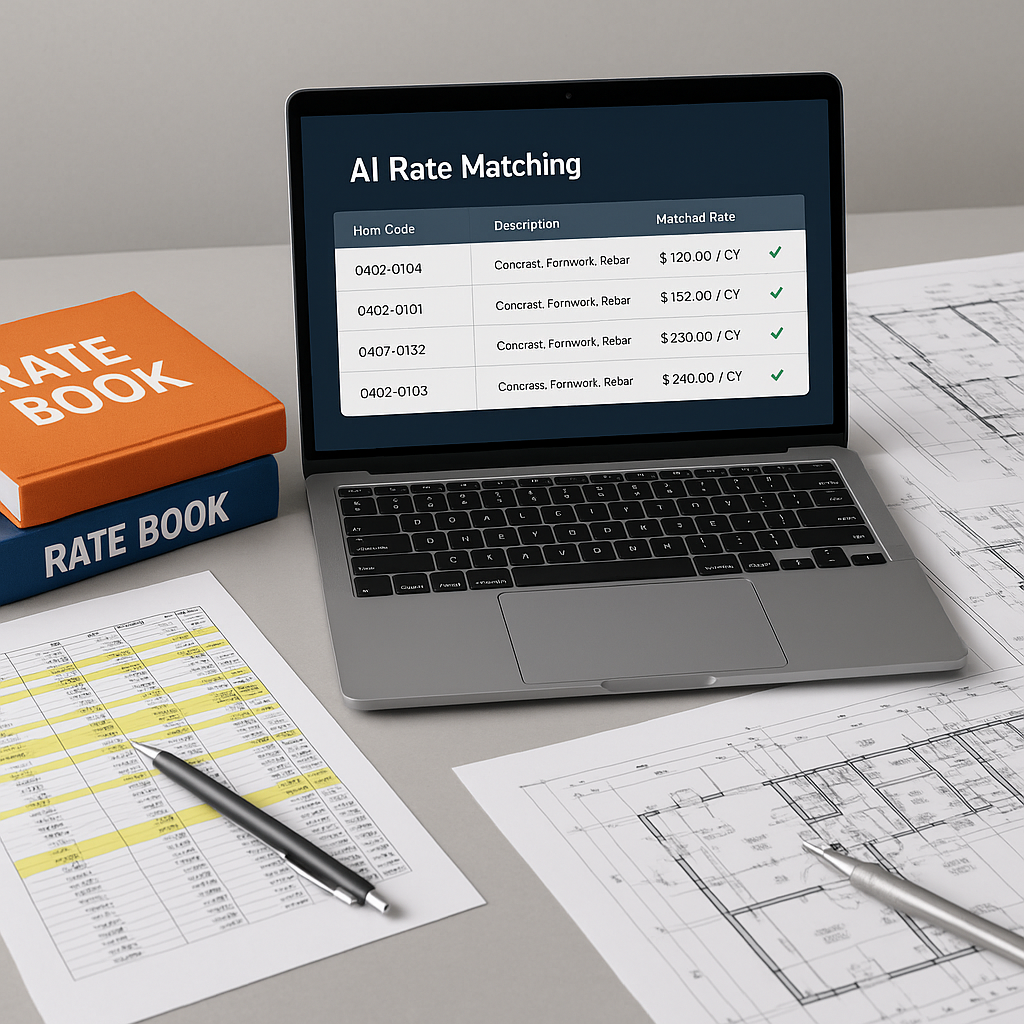
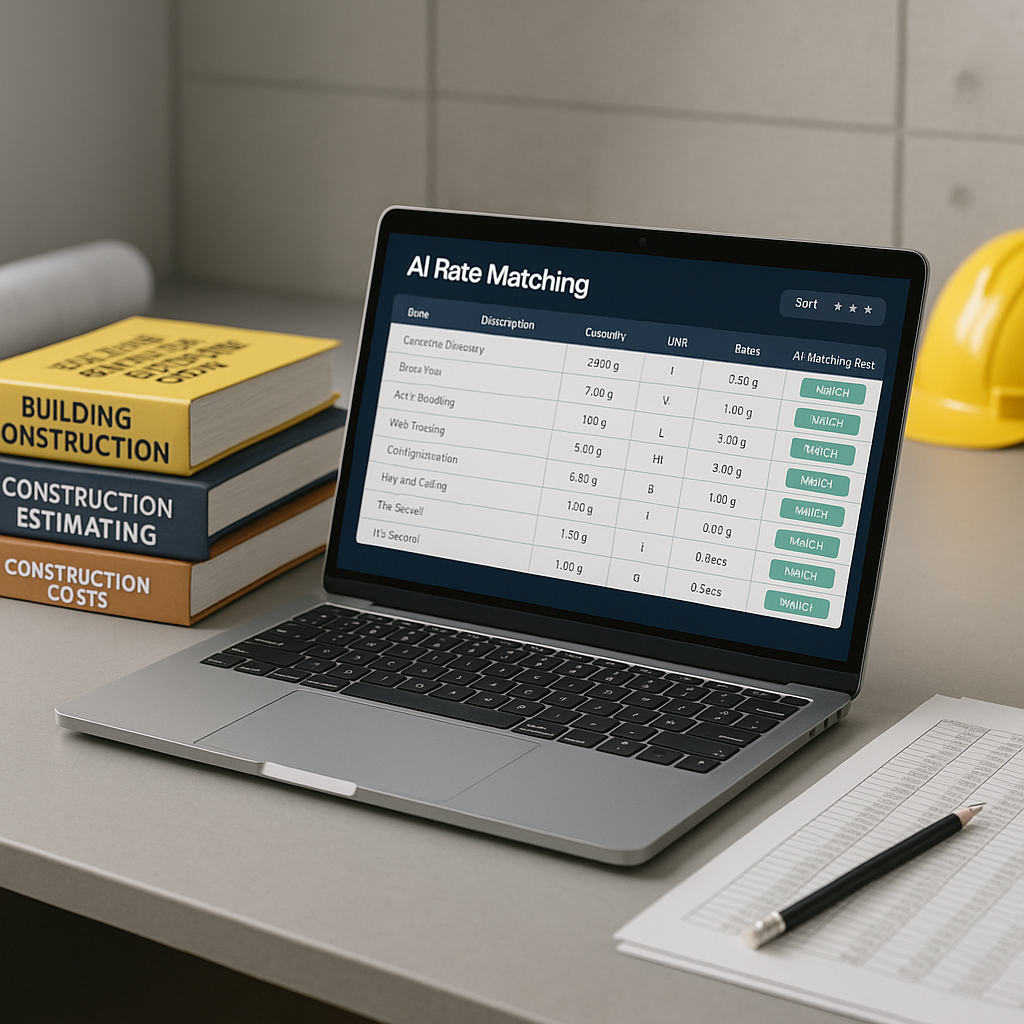
AI rate matching is a game changer. Platforms use semantic search across large SOR item databases, pulling rates from catalogs like CPWD DSR, RSMeans, or state-specific databases in seconds. Here's how it works:
- BOQ Upload: Upload your tender's BOQ (Excel, CSV, or ODS). The platform auto-detects merged cells, hierarchies, and section headers to structure the data properly.
- Matching Process: AI scans the BOQ line items and matches them to the relevant rates. It uses a combination of tenant history, user catalogs, country-level data, and AI fallback mechanisms to ensure precision.
- Customization: If your project has custom rates or materials, no problem. You can upload your own catalog, and the system integrates them seamlessly for future use.
- Audit Trail: Every rate match comes with a detailed breakdown—material, labor, equipment, and overhead—so you can easily spot errors or adjust margins.
Why It Matters: Speed + Accuracy = Better Bids
You might be thinking, “Okay, but what does this actually mean for my bottom line?” The answer is twofold:
- More Time for Strategy: By automating rate lookup, your team can focus on the bigger picture—like bid strategy, subcontractor negotiations, and risk analysis.
- Fewer Mistakes: Manual effort breeds errors. If you miscalculate just one rate in a large bid, you could lose the contract—or worse, win it and lose money during execution. AI minimizes these risks by eliminating human error in repetitive tasks.
A Common Misunderstanding: AI Doesn’t Replace Expertise
Some estimators worry that AI might oversimplify complex decisions. Fair concern, but it's misplaced. AI isn't here to replace your expertise; it's here to complement it. You're still the one making judgment calls and deciding on the final numbers. The AI just does the tedious grunt work—you review and refine the results. And if something looks off, you can override it manually.
What About Custom Rates?
A frequent question is: "What if my rates are project-specific?" AI platforms let you upload custom catalogs, adjust rates manually, and even suggest inflation uplifts based on historical data. This ensures your estimates are tailored to your project needs.
The Competitive Edge
Every hour spent on manual rate lookup is an hour you're not spending on bid optimization or subcontractor alignment. For subcontractors especially, where speed is critical, AI rate matching can significantly reduce quote turnaround time. This means responding to more bids—and increasing your chances of winning work. According to a McKinsey report, early adopters of AI tools in construction see cost savings and efficiency improvements across projects.
FAQ: Common Questions About AI Rate Matching
Q: How accurate are AI rate matching tools?
AI tools improve with user feedback, but human oversight is still essential for edge cases.
Q: Can AI handle multi-market complexity?
Yes. Many platforms support multiple catalogs across geographies, adjusting for currencies, taxes, and labor rules automatically.
Q: What if my rates change mid-project?
AI platforms propagate changes across the entire estimate in real-time. No more rebuilding spreadsheets.
Q: Is AI hard to learn?
Not really. Most tools are designed for ease of use. Training typically takes a short time, and you can integrate them with existing software like Procore or Excel.
Q: Does AI work for smaller projects?
Absolutely. Whether you're pricing a small renovation or a large infrastructure project, the process scales to fit.
Common Mistakes to Avoid
- Blind Trust in AI: Always review the AI's output, especially for custom or edge cases.
- Skipping Training: Invest time in learning the tool. A poorly trained team won’t see the full benefits.
- Ignoring Feedback Loops: AI gets smarter with use. Your team should actively provide feedback to improve accuracy.
Call to Action
If you're tired of wasting hours on rate lookup and manual spreadsheets, AI-powered rate matching tools can help streamline your process. Learn more →