Streamlining Preconstruction Estimation with AI Tools
Preconstruction estimation, particularly takeoffs, is often slow, tedious, and prone to errors. Manual processes, such as tracing PDFs to extract quantities, consume significant time and effort, leaving teams stretched thin and under pressure.
The Role of AI in Preconstruction
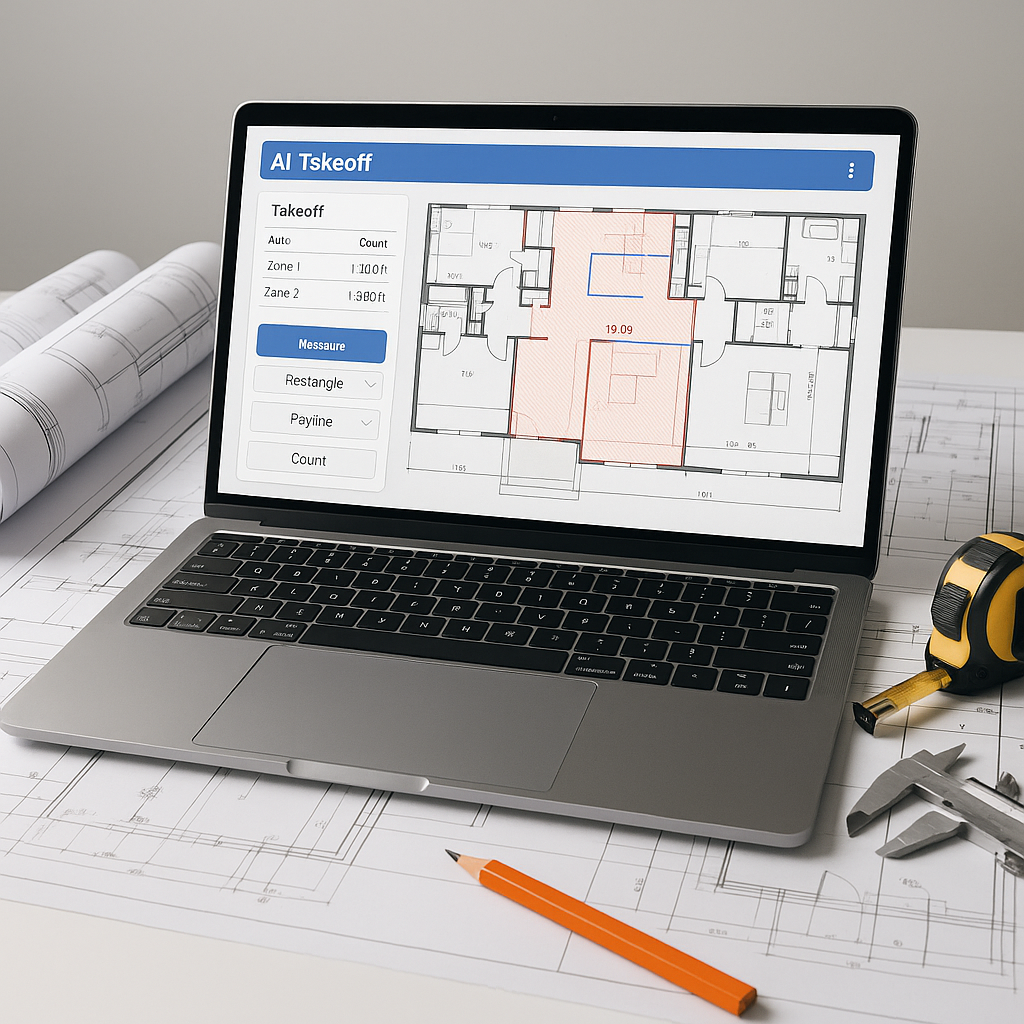
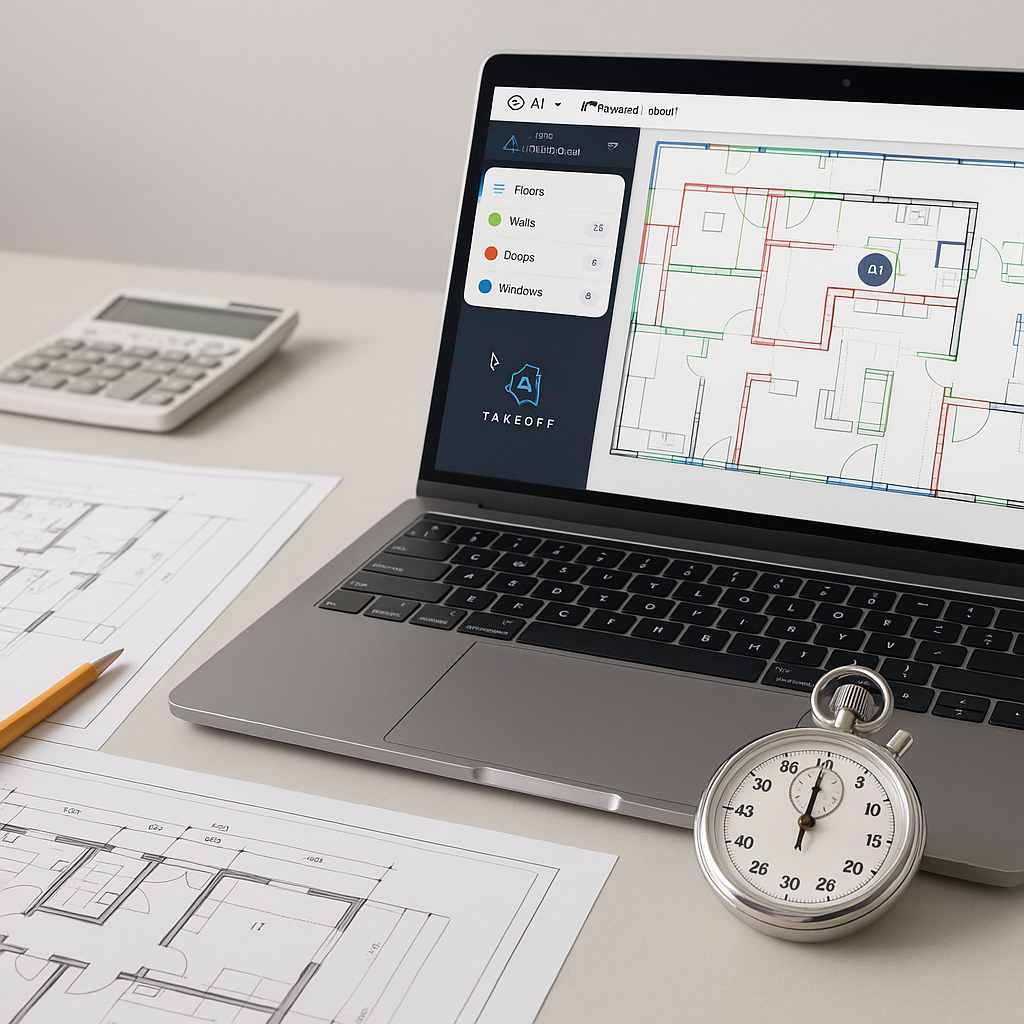
AI-powered tools, like EstimateNext’s Vision AI, are designed to automate and simplify the takeoff process. Instead of manually tracing lines, these tools scan PDF drawings and extract areas, lengths, and counts automatically. Users can upload a drawing set, calibrate the scale, and let the tool identify elements such as walls, floors, doors, and windows.
Illustrative Example — Automating Takeoffs
Imagine a scenario where a team traditionally spends hours manually extracting quantities from drawings. With AI tools, they can upload the drawings, confirm the extracted quantities, and proceed to pricing in a fraction of the time. This automation not only speeds up the process but also reduces the likelihood of human error.
AI tools also offer features like revision management, allowing users to upload updated drawings and compare changes instantly. This ensures that teams can adapt quickly to project updates without starting from scratch.
Why Speed and Accuracy Matter
Faster takeoffs enable teams to handle more bids and focus on high-value tasks, such as negotiating with subcontractors or refining project margins. By automating repetitive tasks, AI tools free up senior estimators to concentrate on strategic decision-making.
Additionally, AI tools help reduce errors. Features like confidence scoring and manual overrides allow users to identify and address potential inaccuracies, ensuring reliable outputs.
Common Questions About AI Takeoffs
Q: How accurate are AI-generated takeoffs?
AI tools are designed to be highly accurate, but no system is perfect. Features like confidence scoring and manual overrides allow users to verify and adjust outputs as needed.
Q: Do AI tools work for small projects?
Yes, AI tools are scalable and can be used for projects of various sizes, from small renovations to large infrastructure developments. Smaller teams, in particular, benefit from the efficiency gains.
Q: How long does it take to learn an AI tool?
Most AI platforms are user-friendly and require minimal training. Teams can typically become proficient within a few weeks, making the transition seamless.
Choosing the Right AI Tool
Not all AI tools are created equal. Some may require clean and standardized input data, while others handle complex drawings and irregular shapes more effectively. Before investing, test the platform on sample projects to evaluate its performance and suitability for your needs.
Remember, AI tools are designed to enhance your expertise, not replace it. They provide a strong starting point, but final decisions and adjustments remain in your hands.
Conclusion
AI-powered tools are transforming preconstruction estimation by automating takeoffs, saving time, and reducing errors. By adopting these technologies, teams can streamline their workflows, focus on strategic tasks, and improve overall efficiency. If you're looking to modernize your preconstruction process, exploring AI solutions like EstimateNext could be a valuable step forward.