The Problem: Manual Takeoffs Are Sinking Estimators’ Time
If you’re an estimator, you know the drill: PDFs, rulers, and hours (sometimes days) of painstaking tracing to measure areas, lengths, and counts. For a mid-size bid, manual takeoff can consume significant labor hours.
But it’s not just the time. Manual takeoffs are riddled with opportunities for error. Missed dimensions, misread drawings, or simple fatigue can lead to costly mistakes. And when deadlines are looming, nobody has time for a full recheck.
This isn’t a niche issue. A 2023 McKinsey report found that a large portion of preconstruction work is still done manually, even in firms with access to advanced tools. The cost of this inefficiency adds up fast: fewer bids, thinner margins, and burnt-out teams.
So, how do we fix this? Enter AI-powered tools.
The Fix: AI-Powered Takeoff in Minutes
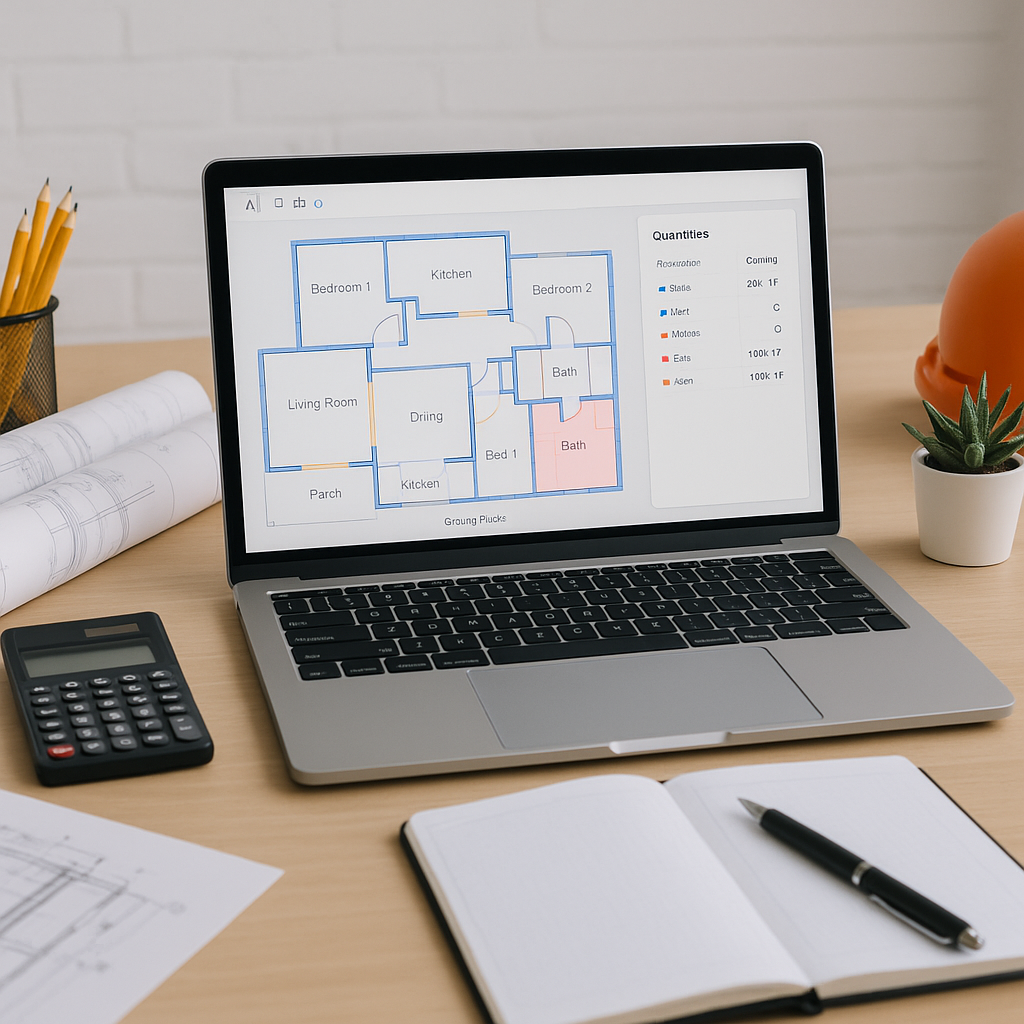
AI-powered takeoff tools don’t just automate the process—they redefine it. With these tools, you can upload a PDF drawing set and let the system extract room areas, wall lengths, door/window counts, and more. The kicker? It does all of this in a fraction of the time compared to manual takeoffs.
Here’s how it works:
-
Upload the Drawings
Drag and drop your PDF or CAD files. No need to clean up the file—AI can handle layers, partial scans, and even low-quality drawings. -
AI Extraction
The system identifies and measures key elements based on pre-trained models. For example, it can distinguish between a wall and a column or recognize different types of openings. -
Flagging Ambiguities
Ambiguous measurements are flagged for review, so you can override or confirm as needed. -
Export to BOQ
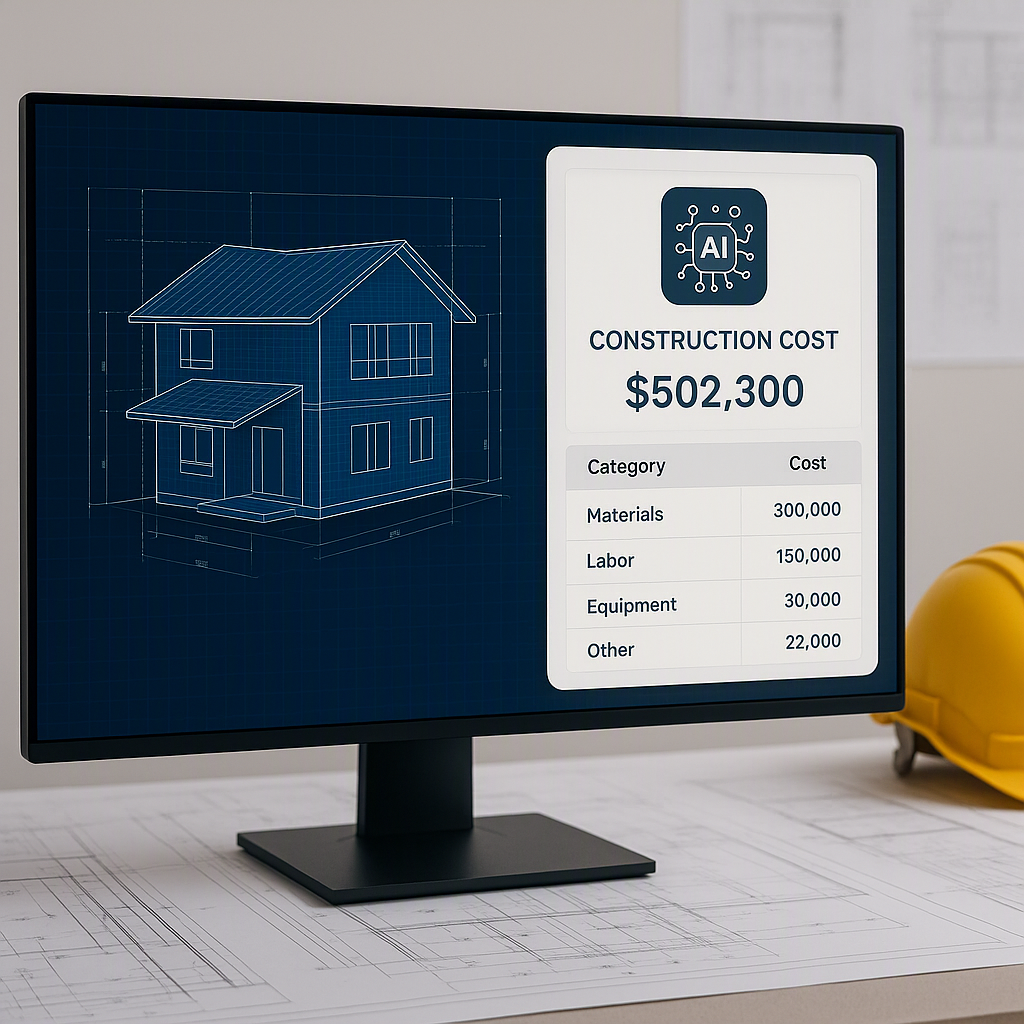
Once the quantities are extracted, they’re automatically mapped to your Bill of Quantities (BOQ) format, ready for pricing.
Illustrative example — A takeoff process that might take dozens of hours manually can be completed in a fraction of that time using AI, freeing up resources for other tasks.
Why This Matters (Hint: It’s Not Just About Speed)
Sure, saving time is great. But the real value of AI-powered takeoffs goes deeper:
-
Accuracy and Consistency: With AI, human error is reduced dramatically. The system doesn’t get tired or distracted. And because it learns with every project, it only gets better over time.
-
Freeing Up Talent: Senior estimators shouldn’t be stuck doing manual measurements. With AI handling the grunt work, they can focus on high-value tasks: reviewing assumptions, negotiating with subs, and refining pricing strategies.
-
More Bids, Better Margins: Faster takeoff means more bids submitted, which increases your chances of winning work. Plus, accurate numbers mean fewer surprises down the line.
This isn’t just about technology; it’s about changing how teams work. Imagine a scenario where junior estimators handle AI tools to complete the initial takeoff, while senior staff focus on strategy and risk assessment. It’s a better use of everyone’s time and expertise.
Common Pushbacks (and Why They’re Wrong)
“AI Can’t Match Human Judgment”
True, AI won’t catch everything. That’s why most tools include manual override features. AI handles the repetitive tasks, leaving you to make the critical judgment calls. It’s a partnership, not a replacement.
“What If My Drawings Are Too Complex?”
Modern AI tools are designed for complexity. They are trained on diverse real-world projects, from simple residential builds to large-scale infrastructure jobs. These tools are built to handle messy, incomplete, or multi-layered drawings.
“It’s Too Expensive”
While AI tools require an upfront investment, the time saved and the reduction in errors can lead to significant cost savings over time.
What to Watch For
-
Garbage In, Garbage Out
AI is only as good as the data you feed it. Poor-quality drawings or incomplete BOQs will still require cleanup, even with the best tools. -
Overreliance
AI doesn’t replace expertise. Always review flagged items and double-check critical measurements. -
Learning Curve
While most tools are user-friendly, expect a short adjustment period. Training your team for optimal use is worth the investment.