The Time Sink of Manual Takeoffs
If you’ve been in construction estimation long enough, you’ve probably spent significant time doing manual drawing takeoffs. It’s tedious, error-prone, and often a poor use of an experienced estimator’s time. Manual takeoffs can lead to human errors, which may result in missed quantities or incorrect pricing, impacting project outcomes. So, why are many firms still relying on this outdated method?
The answer often lies in inertia. Many firms are stuck in the “this-is-how-we’ve-always-done-it” mindset. However, with tighter deadlines and increasing competition, this approach is becoming less viable. AI-powered tools are offering a new way forward by automating the takeoff process.
How AI Streamlines the Takeoff Process
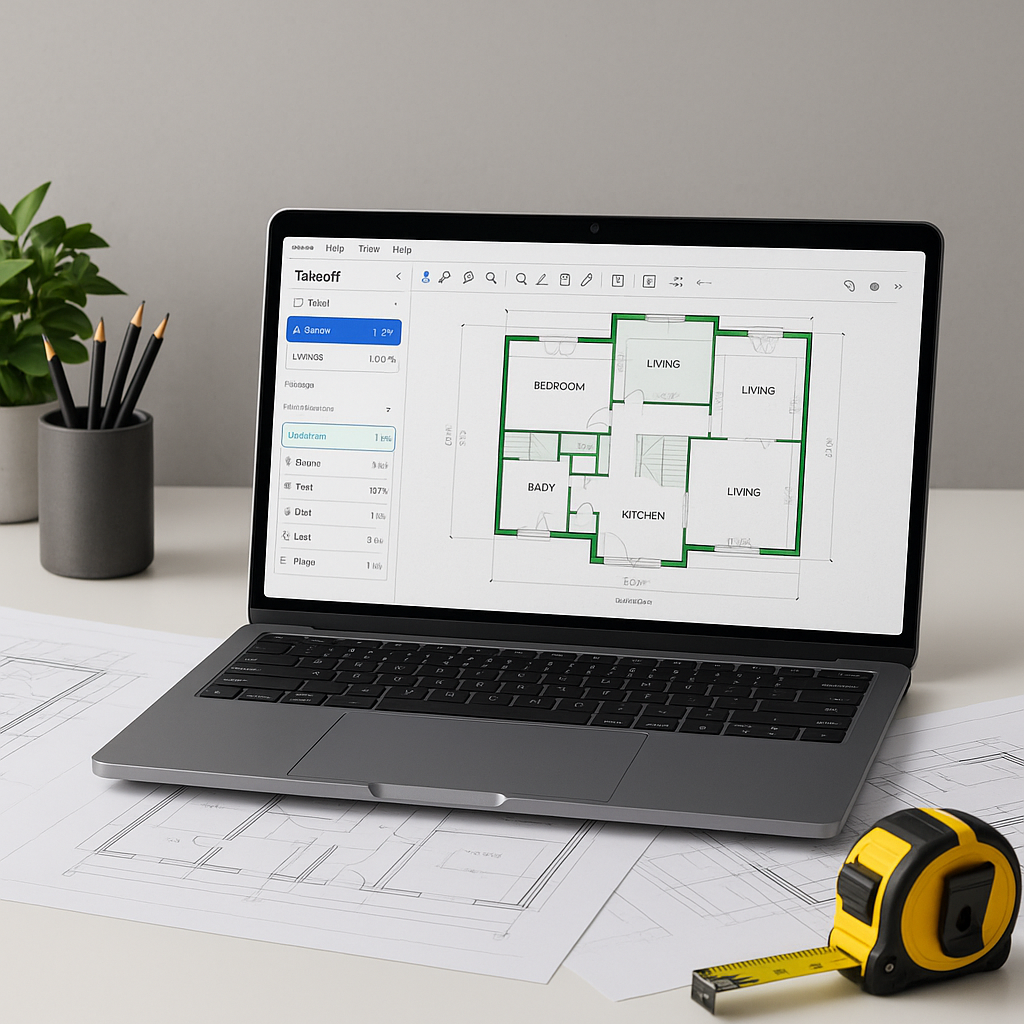
AI-powered tools automate the process of extracting quantities from drawings. Instead of manually measuring wall lengths, counting fixtures, or calculating areas from a flat PDF, these tools can handle the task automatically. Users upload the drawing set—whether calibrated or not—and the tool extracts quantities such as room areas, wall lengths, and door and window openings. This process can significantly reduce the time required for takeoffs.
Illustrative example — A general contractor working on a large project could save substantial time by using AI for takeoffs. Instead of spending days manually extracting quantities, the process could be completed in a fraction of the time, allowing estimators to focus on higher-value tasks like refining bid strategies or negotiating with subcontractors.
While AI tools are not perfect, they often include features like flagged low-certainty measurements, enabling users to double-check specific areas. Even with some manual review, the time savings can be significant.
Evaluating the ROI of AI-Powered Takeoffs
Manual takeoffs require considerable labor hours, which can add up over multiple projects. By automating this process, firms can reallocate those hours to more strategic tasks. AI tools are often priced affordably compared to the potential savings in labor costs, making them a cost-effective solution for many construction firms.
Illustrative example — If a team handles multiple projects annually, automating takeoffs could save hundreds of hours. Even if only a portion of those hours are saved, the return on investment could be substantial when considering both time and labor cost reductions.
Addressing Common Concerns
-
“AI can’t replace human judgment.”
That’s true—AI is not about replacing estimators but about freeing them from repetitive tasks so they can focus on decision-making, relationship management, and bid strategy. -
“What if the AI makes mistakes?”
While errors can occur, AI tools often flag uncertain measurements for review. Human oversight remains essential, but AI provides consistency and efficiency. -
“It sounds complicated to learn.”
Most AI platforms are designed for ease of use, with intuitive interfaces and minimal training requirements. Many teams can become proficient within a short period.
Choosing the Right AI Tool
Not all AI tools are created equal. Some may struggle with uncalibrated PDFs or require perfectly formatted inputs. When evaluating tools, look for those that can handle real-world challenges, such as misaligned drawings or hand-marked revisions.
Integration is another critical factor. Ensure the tool integrates seamlessly with your existing software stack, such as Bluebeam, Procore, or Excel, to avoid creating additional workflow challenges.
The Bottom Line
Manual takeoffs are becoming a thing of the past. AI-powered tools offer faster, more consistent, and efficient methods for extracting quantities, allowing estimators to focus on higher-value tasks. By adopting these tools, firms can improve their competitiveness and better allocate their resources.
If you’re looking to modernize your estimation process, consider exploring AI-powered solutions to see how they can benefit your team.


