The Takeoff Problem Nobody Talks About
Takeoffs are the backbone of any construction estimate, but they’re a massive time sink. If you’ve ever spent hours tracing PDFs, manually measuring beams, or cross-checking drawings against your quantity takeoff sheet, you know the drill. It’s tedious, error-prone, and—let’s be honest—feels like a waste of talent.
The industry standard involves significant manual effort, with estimators dedicating substantial time to complete a single takeoff. This process can delay project timelines and increase the risk of errors.
And mistakes? They’re inevitable. Misreading a dimension or skipping a line item can throw off your bid significantly—or worse, lose the job entirely.
How AI Changes the Game
AI-powered takeoff tools like EstimateNext are flipping this process on its head. Instead of spending days manually measuring and double-checking drawings, AI tools can extract quantities from PDFs in a fraction of the time.
Here’s how it works:
- Upload Your Drawings: Whether it’s a single PDF or a full set of plans, the AI reads them all.
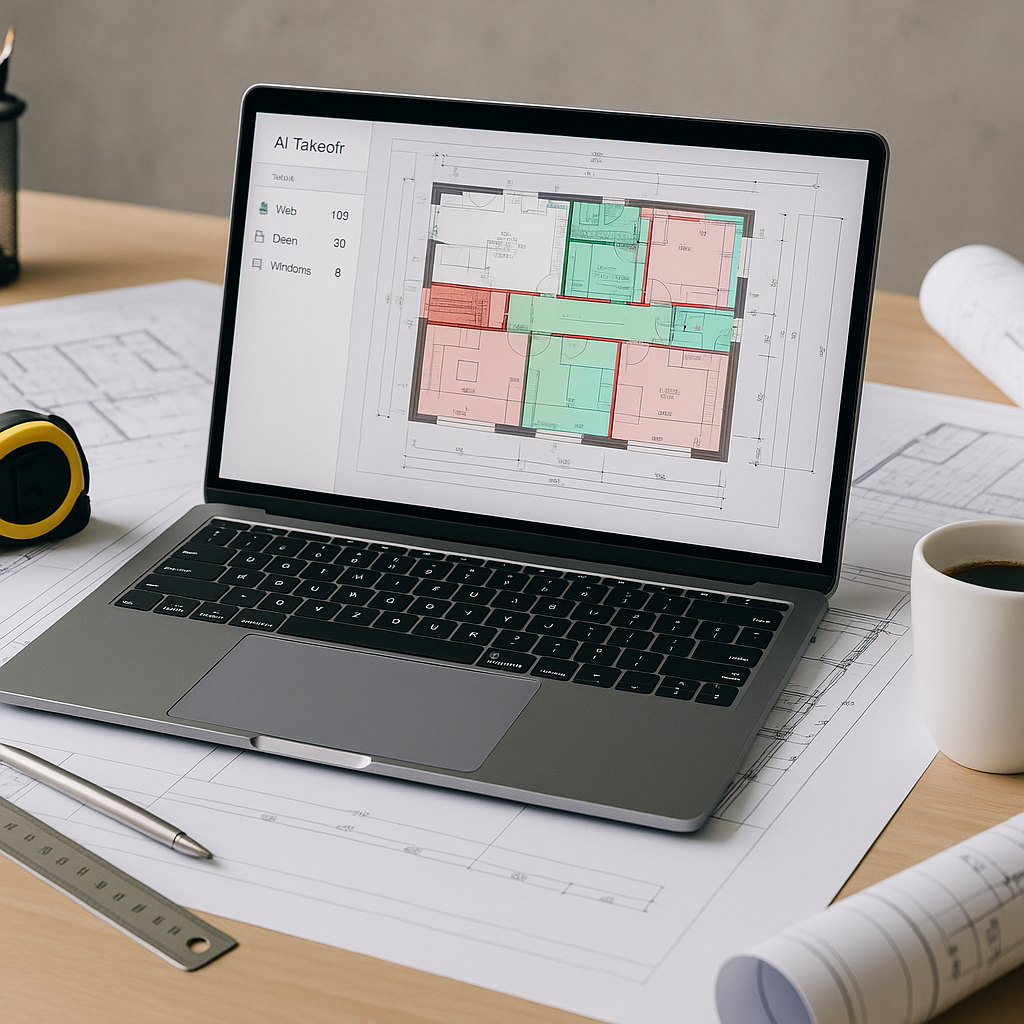
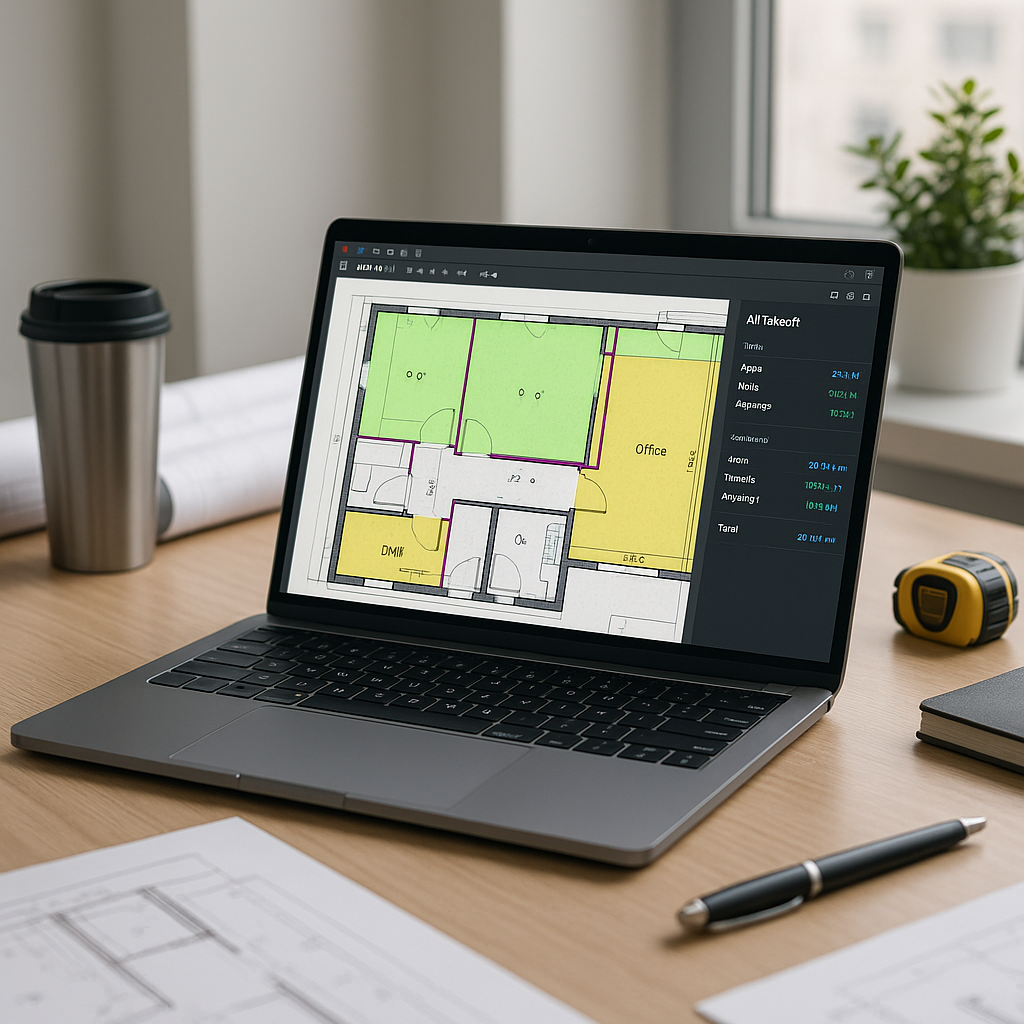
- Automated Quantity Extraction: The tool identifies and measures key elements—room areas, wall lengths, door/window counts, and even complex elements like beams or columns.
- Confidence Scoring: The AI flags any low-confidence measurements for manual review, so you’re not flying blind.
- Exportable Data: Once verified, the quantities are ready to drop directly into your BOQ or estimating software.
This isn’t just faster. It’s smarter. AI removes the grunt work, so your team can focus on strategy—reviewing scope, negotiating with subs, or refining your bid margins.
The Obvious Objection: “AI Can’t Think Like an Estimator”
I hear this a lot. And it’s true—AI doesn’t understand the nuances of construction. It won’t know why you’re choosing steel over concrete or why you’re padding your labor rates for a job in Manhattan.
But that’s not the point. AI isn’t here to replace your expertise; it’s here to amplify it. You’re still in the driver’s seat, making the big calls. The AI just handles the repetitive, time-consuming tasks. Think of it like hiring a junior estimator who works at lightning speed and never complains.
Common Mistakes to Avoid
Even with AI, there are pitfalls to watch for:
- Bad Input = Bad Output: If your drawings are incomplete or mislabeled, the AI won’t magically fix them. Garbage in, garbage out.
- Skipping the Review Step: Confidence scoring exists for a reason. Always review flagged items before finalizing.
- Under-Training Your Team: AI tools are intuitive, but they still require onboarding. Make sure your team knows how to use the software effectively.
FAQs
Q: How accurate are AI takeoffs compared to manual ones?
A: AI tools are highly accurate, but they’re not infallible. That’s why features like confidence scoring and manual overrides are crucial.
Q: Can AI handle complex projects?
A: Absolutely. AI-powered tools can scale from small renovations to large infrastructure projects. The key is quality input data.
Q: How much time can I realistically save?
A: While time savings vary, AI tools significantly reduce the manual effort required for takeoffs, allowing teams to focus on higher-value tasks.
Why This Matters
In a world where bid deadlines are tighter than ever, every hour counts. AI-powered takeoffs give you a leg up, enabling you to bid more projects without adding staff. And with tools like EstimateNext, you’re not just saving time—you’re improving accuracy and reducing risk.
If you’re tired of wasting hours on manual takeoffs, EstimateNext can help. Get started free →