The Time Sink No One Talks About
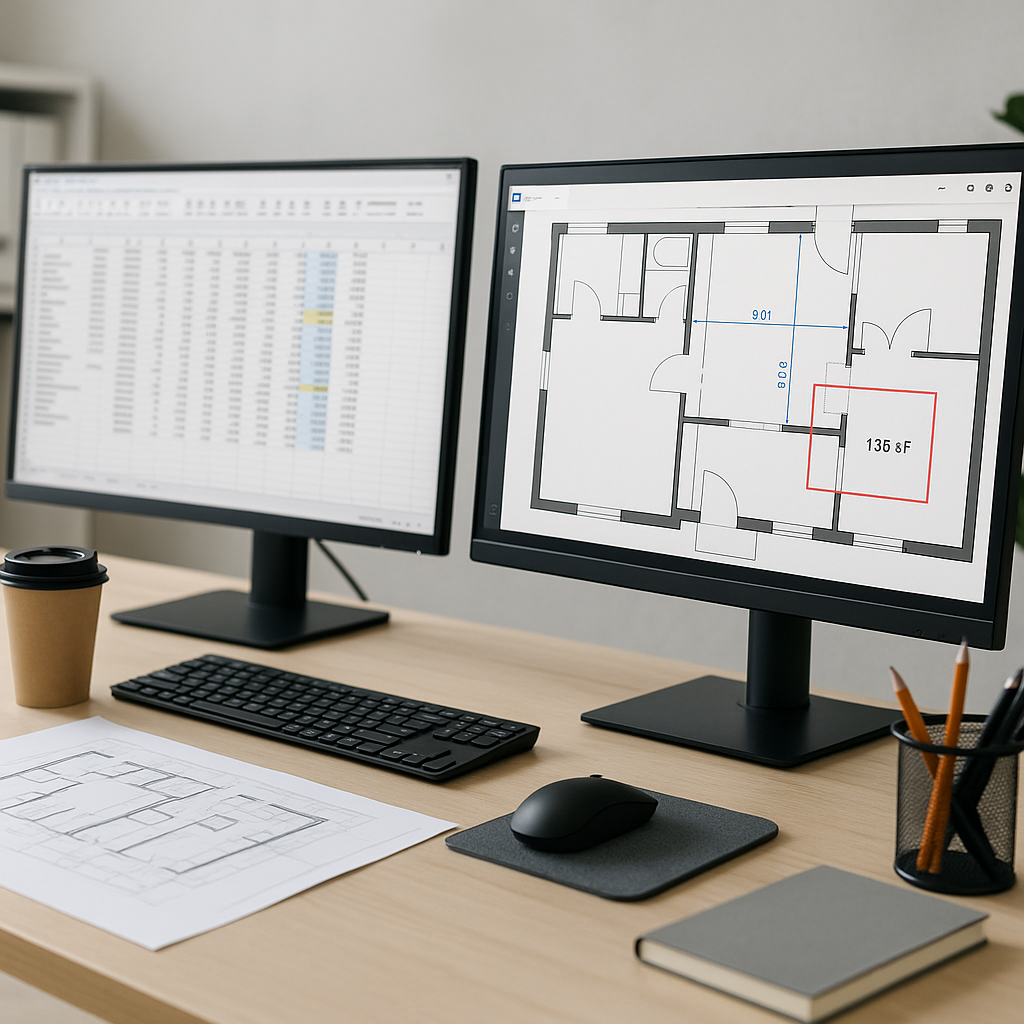
Manual takeoffs can be a time-consuming process. If you’re in preconstruction, you know the drill. You get a flat PDF drawing set—no quantities, no schedules. Just lines on a page and a clock ticking down. Estimators spend significant time extracting room areas, wall lengths, and door/window counts.
Why does this matter? Because preconstruction schedules are shrinking. Clients want bids faster than ever. Spending days on manual takeoffs is no longer sustainable when AI tools can handle the same tasks much more efficiently.
The AI Solution: Faster and More Accurate Takeoffs
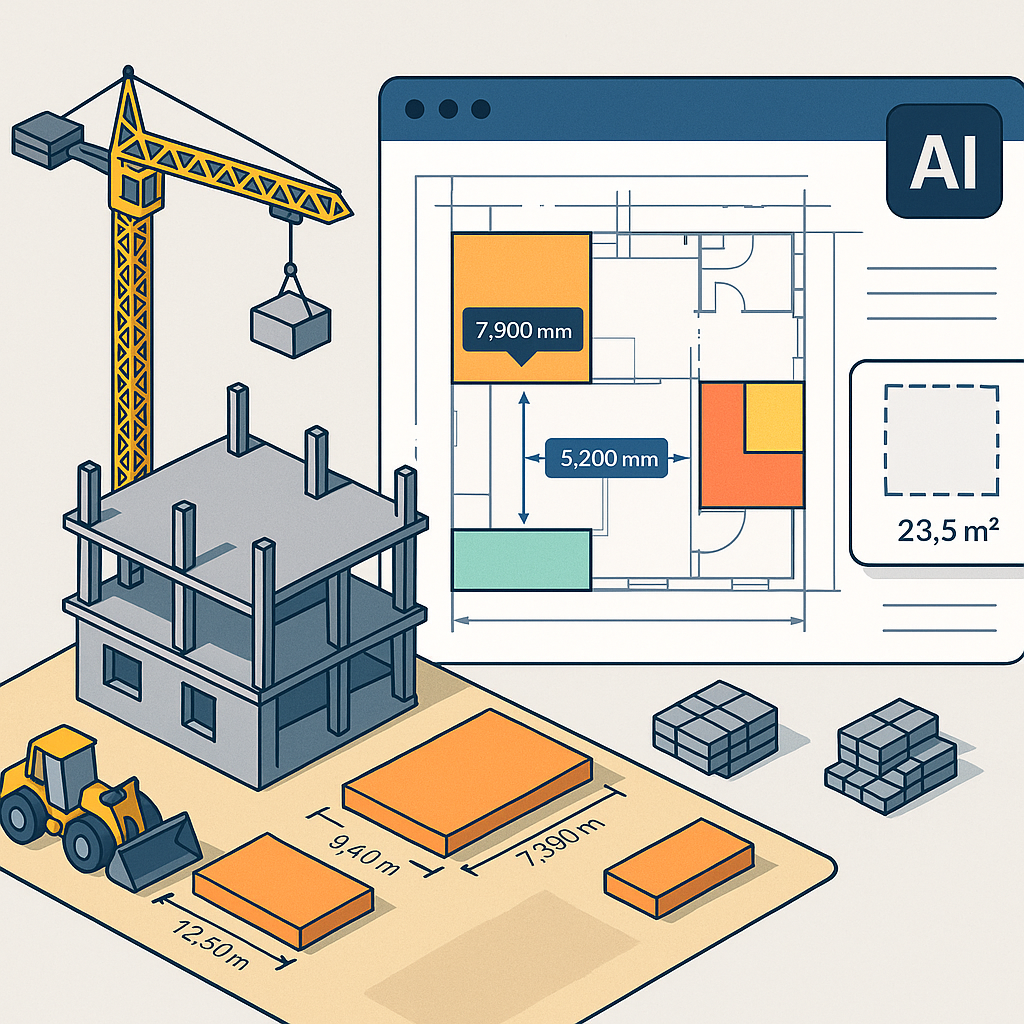
AI-powered tools like EstimateNext are transforming the preconstruction process. These tools use Vision AI to read PDFs, identify drawing elements, and extract quantities almost instantly. Instead of manually measuring lines and areas, you upload a drawing set, and the tool does the heavy lifting.
Illustrative example — A contractor using AI-powered takeoff tools could save significant labor hours on a complex bid by automating the process. This allows the team to focus on higher-value tasks like strategy and bid optimization.
AI also reduces human error—no misreading scales or missing a room. This is critical when working on tight profit margins.
Why AI Takeoffs Work
How does it actually work? Here’s the breakdown:
- Upload Your Drawings: Flat PDFs, scanned blueprints, or vector files—it doesn’t matter. AI tools process all of them.
- Vision AI Scans and Extracts: The platform identifies key elements like walls, doors, windows, and areas. It converts line work into quantities.
- Flagging Uncertainties: If the AI is unsure about a measurement, it flags it for review. You can adjust these with manual overrides.
- Output Ready: The tool generates a detailed QTO (Quantity Takeoff) report in formats like Excel or CSI MasterFormat, ready for your bid package.
What About Accuracy?
The obvious objection is, “Sure, it’s faster, but can it match manual accuracy?” In many cases, yes. AI tools often reduce takeoff discrepancies significantly. However, no system is perfect. That’s why these tools include options for manual review and adjustment. You’re still in control.
The ROI of AI Takeoffs
Illustrative example — If a team spends dozens of hours on takeoffs for a single estimate, the labor cost can add up quickly. By automating this process with AI, firms can save both time and money, even after accounting for the cost of the tool. Over multiple projects, these savings can become substantial.
Common Misconceptions About AI Takeoffs
-
“AI will replace my job.” AI doesn’t replace estimators; it supports them. You’re still the expert making judgment calls. The AI just frees you from repetitive tasks—so you can focus on strategy, value engineering, and winning bids.
-
“It’s too expensive.” Compared to traditional methods, AI tools are often cost-effective. Many platforms offer scalable pricing to suit different business sizes.
-
“It won’t work for my project type.” AI tools are adaptable. Whether you’re working on a small fit-out or a large infrastructure project, the technology can scale to meet your needs.
Common Mistakes When Using AI Takeoff Tools
- Skipping the Review: Even the best AI systems need oversight. Check flagged elements and low-confidence areas.
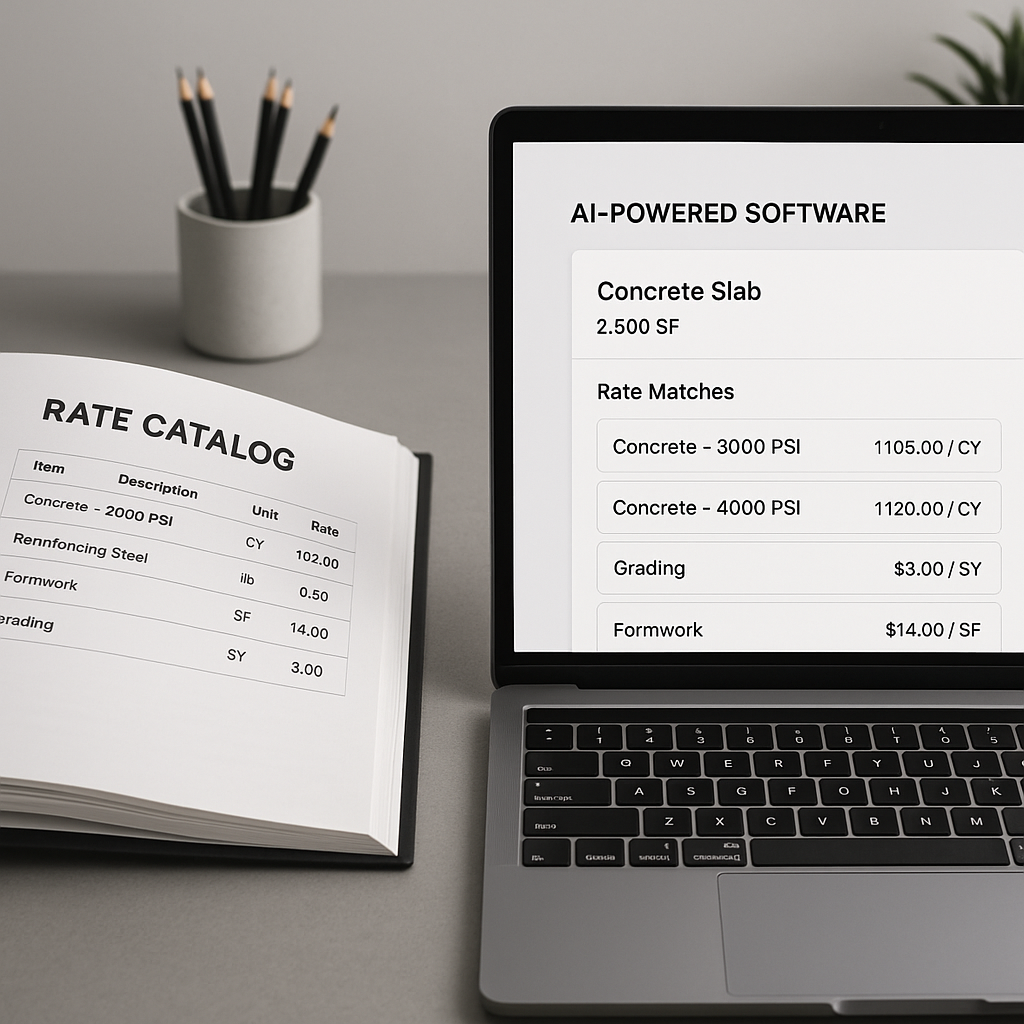
- Relying on Default Settings: Customize your tool for your specific needs. Upload custom rate catalogs or define unique parameters.
- Not Training Your Team: A short learning curve is required for most tools. Proper training ensures you get the most out of the software.
FAQ
Q: How much time can I expect to save per project? A: Many users report significant time savings, depending on project size and complexity.
Q: Is AI accurate enough for large projects? A: Yes, but quality input data is critical. AI tools reduce discrepancies significantly, but human oversight is still essential.
Q: Can AI tools handle revisions? A: Yes. Tools like EstimateNext allow you to upload revised drawings and compare changes side by side.
Q: Do I need special training to use these tools? A: Most AI platforms are designed to be intuitive. Training usually takes a short amount of time.
Final Thoughts
AI-powered takeoffs are becoming a necessity in preconstruction. They save time, reduce errors, and improve efficiency. In a world where preconstruction schedules are only getting tighter, adopting these tools can provide a competitive edge.
If you’re ready to streamline your takeoff process, EstimateNext offers a free trial to help you get started.