How Manual Takeoffs Impact Preconstruction Workflows
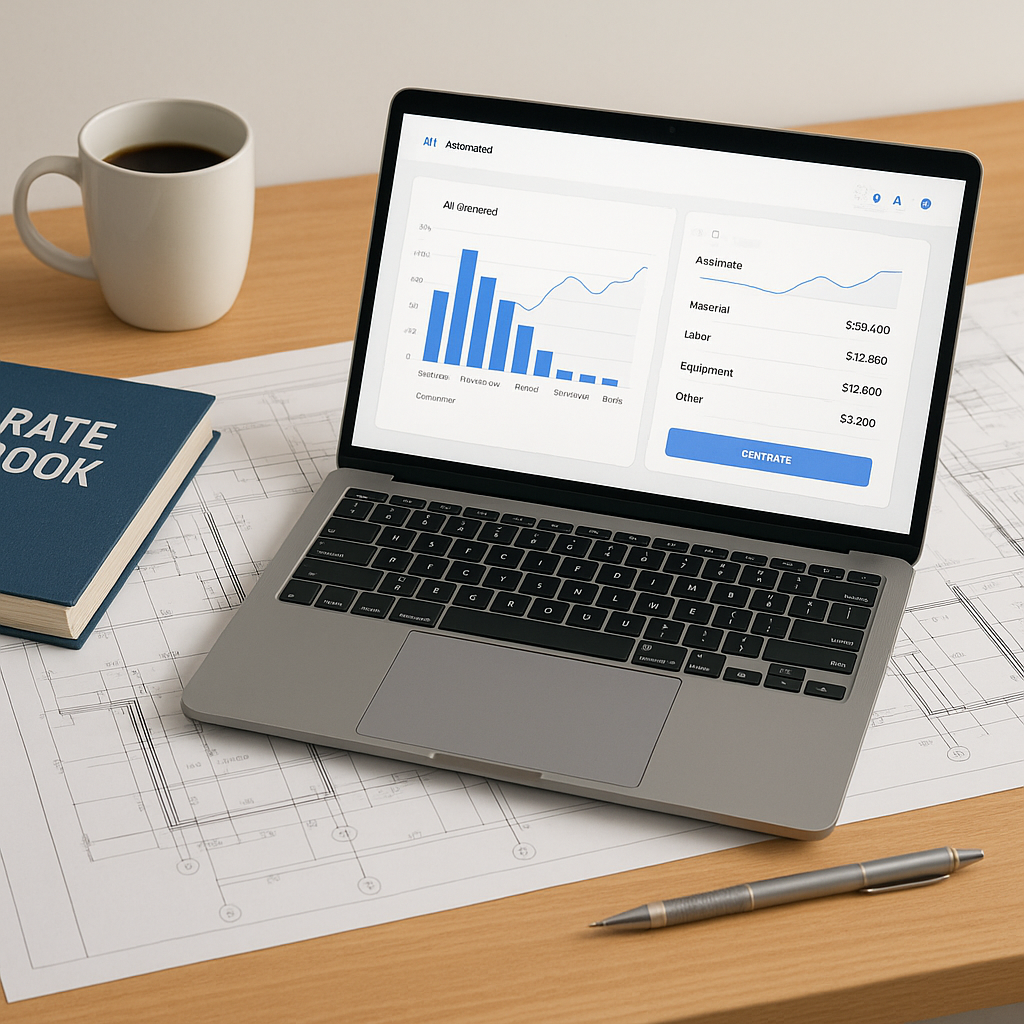
Manual drawing takeoffs can be a time-consuming and error-prone process. Estimators often need to measure, label, and cross-check hundreds of sheets, which can lead to inefficiencies and potential mistakes. Errors such as a missed column length or incorrect room area can result in cost overruns and project delays.
How AI Takeoffs Work
AI-powered takeoff tools streamline this process by automating repetitive tasks. Here’s a general overview of how they work:
- Upload Your Drawings: Drag and drop PDF or CAD files into the platform.
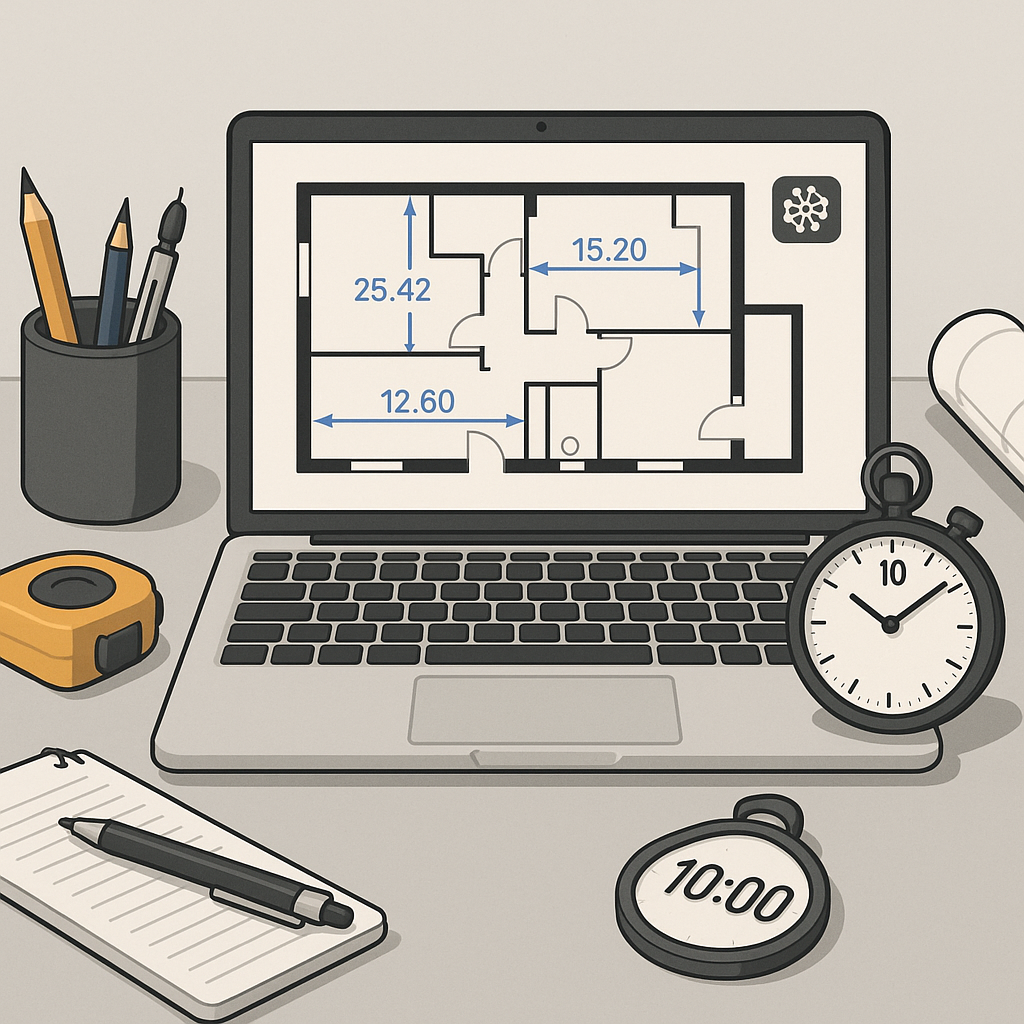
- Calibration: Set scale and reference points (e.g., a known wall length).
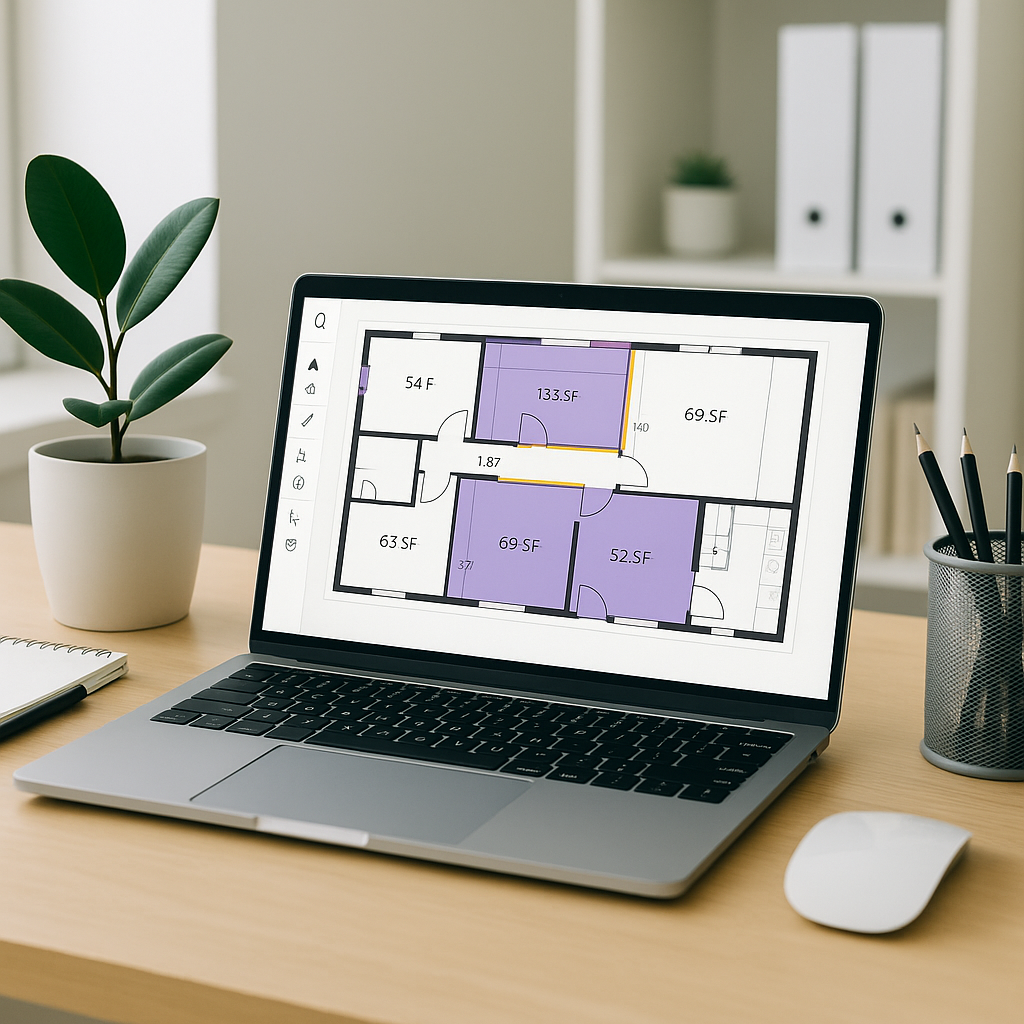
- Automated Extraction: Vision AI identifies and measures key elements such as areas, counts, and linear dimensions.
- Confidence Scoring: Low-confidence extractions are flagged for manual review.
- Audit Trail: Every edit is logged, ensuring transparency and accountability.
These tools allow estimators to focus on higher-value tasks by automating the labor-intensive aspects of takeoffs.
Why Speed Matters in Preconstruction
Faster takeoffs can have a significant impact on preconstruction workflows. Benefits include:
- More Bids: Increased capacity to pursue additional projects.
- Better Subcontractor Coordination: Faster quantity extraction enables earlier sharing of scope details, allowing subcontractors to provide quotes sooner.
- Improved Bid Strategy: Extra time can be used to refine profit margins and assess risk contingencies.
Common Objections to AI Takeoffs
Here are some common concerns about adopting AI-powered takeoff tools:
-
“AI can’t think like an estimator.” AI is not meant to replace expertise but to complement it. Estimators still make the critical judgment calls, while AI handles repetitive tasks.
-
“What about small projects?” AI tools are scalable and can be used for projects of varying sizes. Starting with smaller projects can help refine workflows before scaling up.
-
“What if the AI misses something?” Confidence scoring ensures that flagged items can be reviewed and adjusted manually. Human oversight remains an essential part of the process.
FAQ: AI Takeoffs
Q: How accurate are AI-powered takeoffs? A: Accuracy depends on the quality of input data, but AI tools are designed to reduce discrepancies compared to manual methods.
Q: Can AI tools integrate with my current software? A: Many platforms offer integrations with tools like Bluebeam, Procore, and Excel via APIs.
Q: Do I need training to use AI takeoff tools? A: Most platforms are user-friendly and require minimal training to get started.
The Bottom Line
Manual takeoffs can create bottlenecks in preconstruction workflows. AI-powered tools help eliminate these inefficiencies, allowing teams to focus on higher-value tasks such as refining bid strategies and coordinating with subcontractors. By automating repetitive tasks, these tools enhance both speed and accuracy in the estimation process.