The Takeoff Problem: Manual Work Challenges
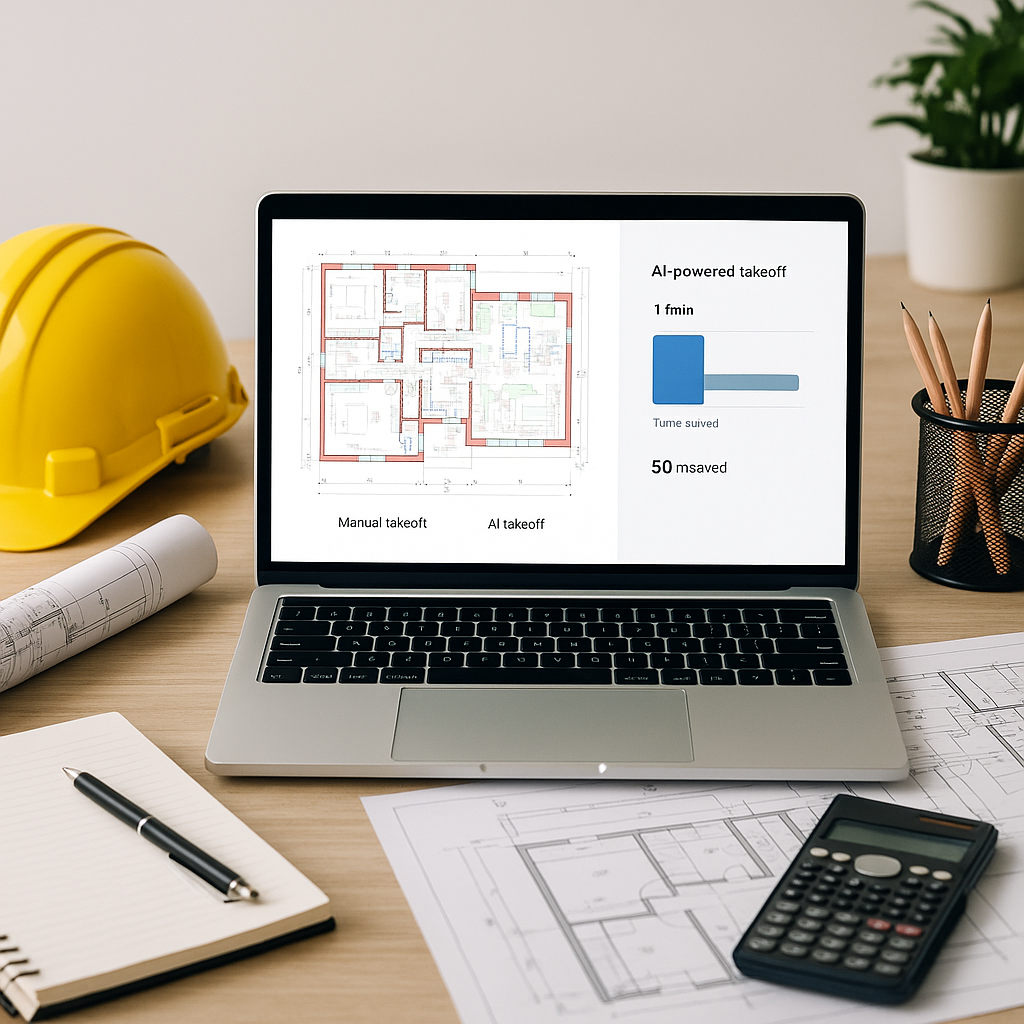
If you're in preconstruction, you already know the challenges of manual takeoffs. Estimators often spend significant time tracing drawings, measuring areas, counting windows, and recalculating quantities. This process is labor-intensive, prone to errors, and leaves limited time for value engineering or strategic tasks.
Manual takeoffs don’t just cost time—they limit opportunities. The time spent on repetitive tasks could be used to pursue more bids, negotiate better terms with subcontractors, or refine pricing strategies. Streamlining this process can make a significant difference in operational efficiency and project outcomes.
The AI Solution: Streamlining Takeoffs
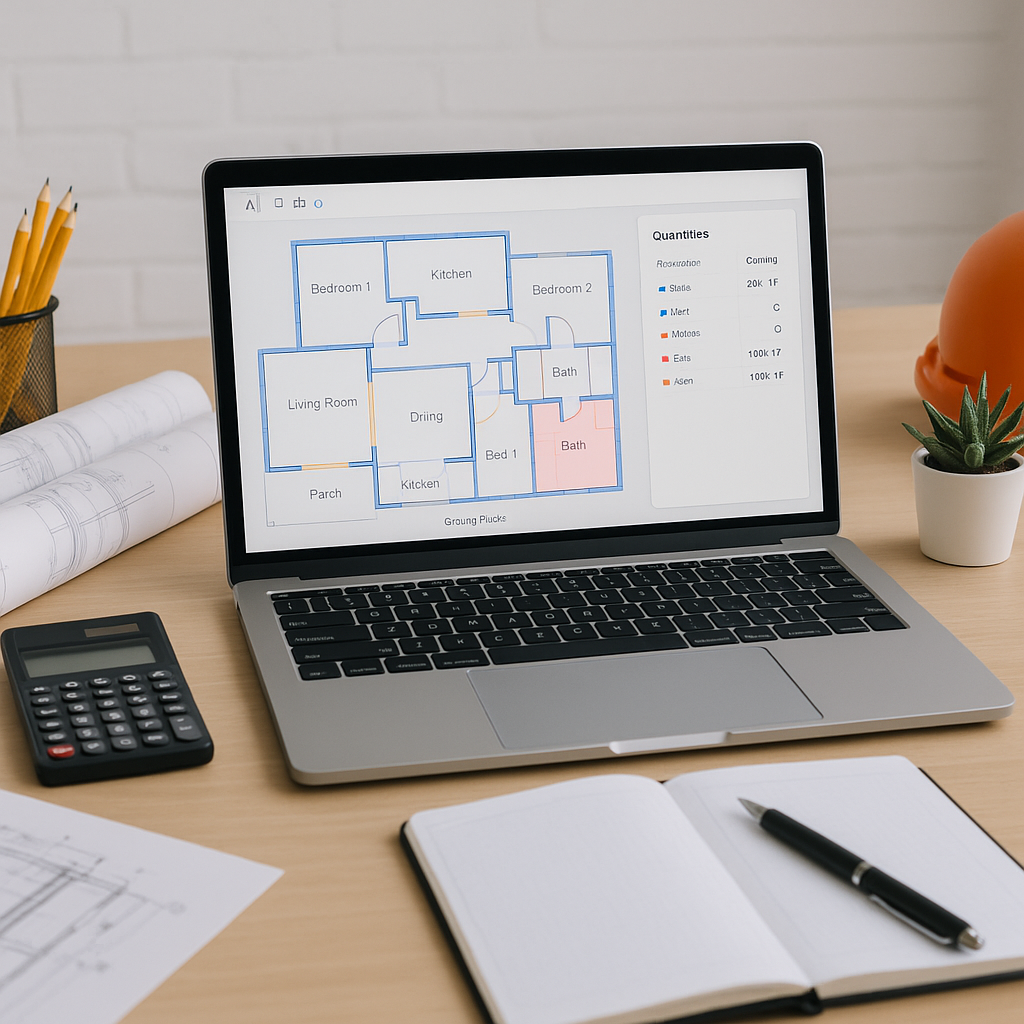
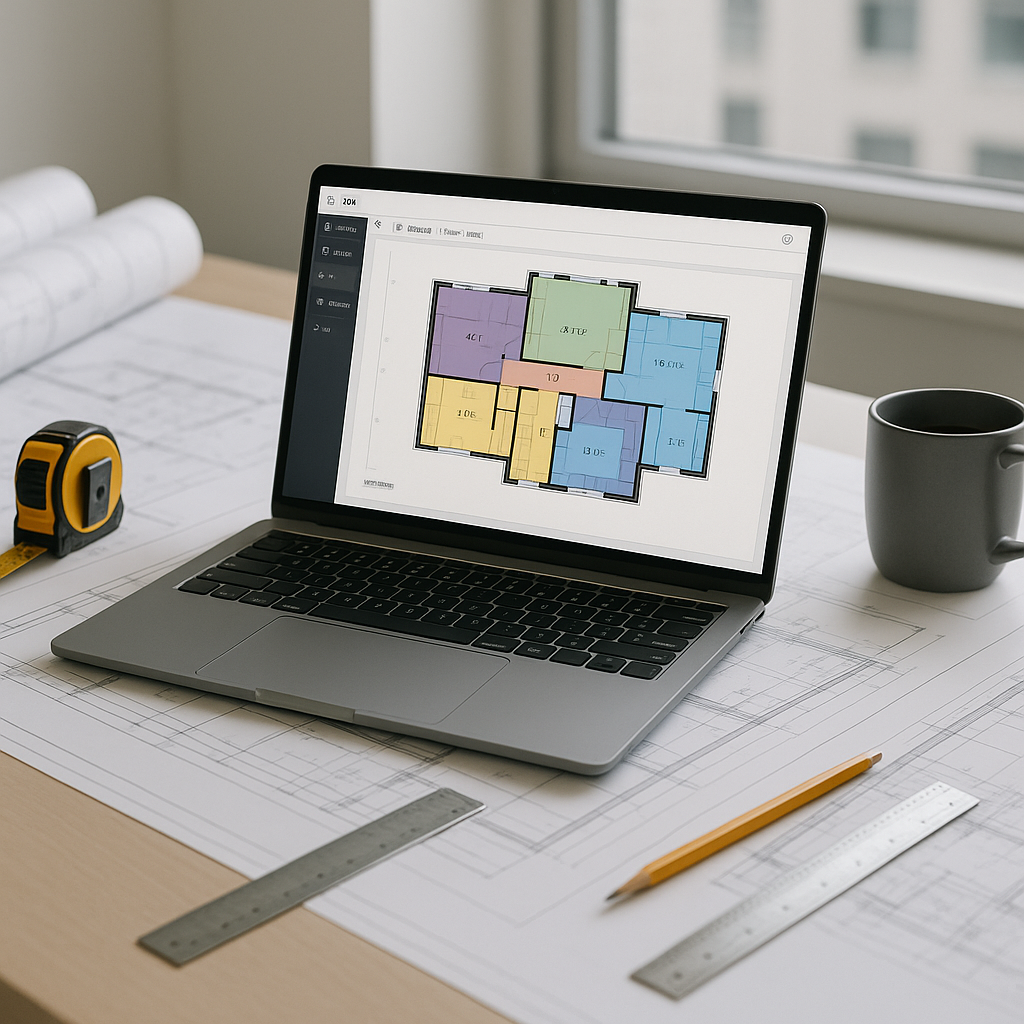
AI-powered takeoff tools are transforming this workflow. Instead of spending hours manually tracing PDFs, AI can extract quantities in a fraction of the time. By uploading a drawing set, the AI identifies elements such as walls, areas, and door/window counts. It can also flag items requiring manual review, ensuring accuracy.
This approach not only accelerates the process but also enhances precision. For instance, AI can compare revised drawings to original ones and highlight changes, eliminating the need to manually search for revision clouds or scope changes. The result is faster, more reliable takeoffs.
What About Accuracy?
A common concern is whether AI can match the expertise of human estimators. While AI doesn’t replace human judgment, it complements it by handling repetitive tasks. Estimators remain responsible for making critical decisions, negotiating with subcontractors, and setting markups.
Accuracy improves when AI is paired with human oversight. Many tools include features like flagged items and manual override options, allowing users to review and adjust measurements as needed. This hybrid approach ensures both speed and precision.
Common Questions About AI Takeoffs
Q1: Can AI handle complex projects?
Yes, but human review is essential for edge cases. AI excels at repetitive tasks like measuring floor areas or counting fixtures, while humans can address more nuanced details.
Q2: Does it integrate with existing software?
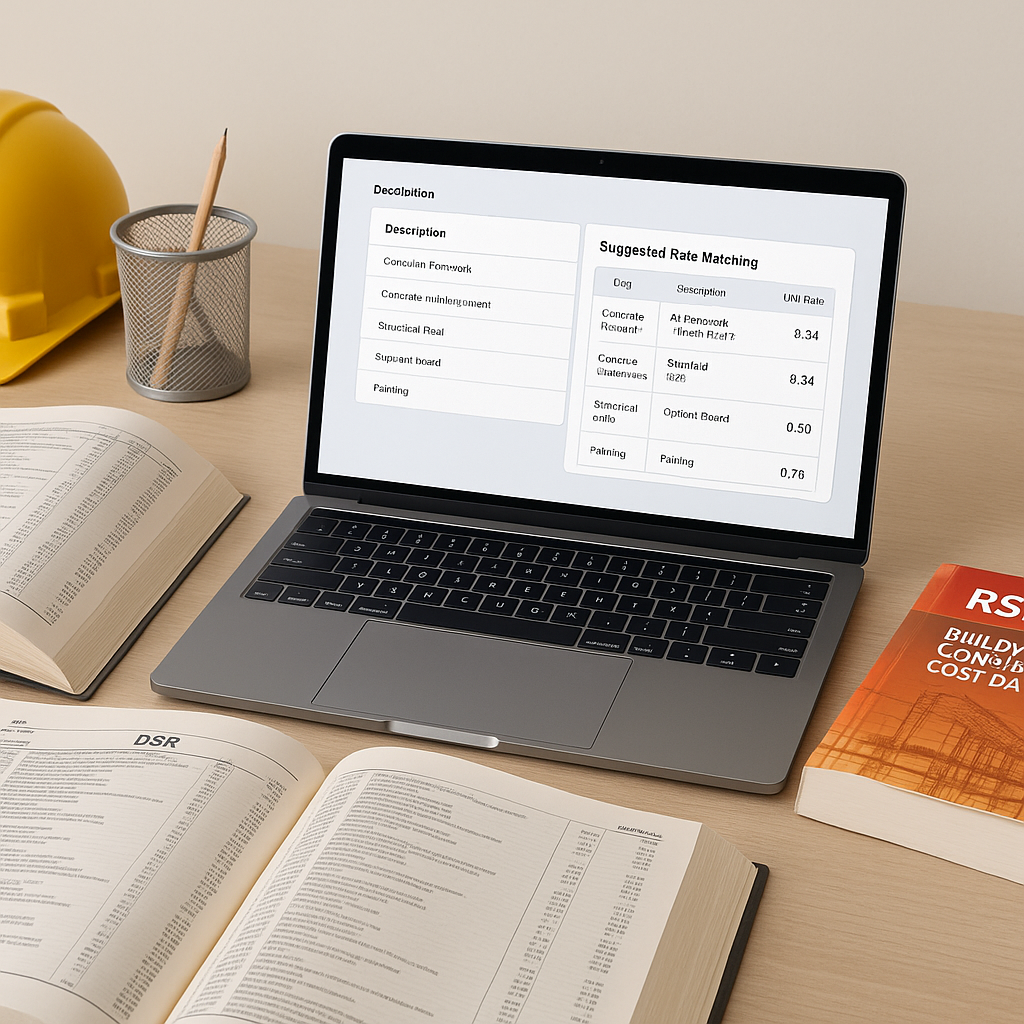
Most AI tools integrate with popular construction software like Bluebeam and Procore, enabling seamless workflows.
Q3: How long does it take to learn?
AI takeoff tools are typically user-friendly and require minimal training. Most users can become proficient within a short period.
What to Watch For
- Input Quality Matters: AI performance depends on the quality of the uploaded drawings. Clear, clean PDFs yield the best results, while fuzzy scans or hand-drawn sketches may require additional effort.
- Don’t Skip the Review: Always review flagged items and low-confidence measurements to ensure accuracy.
- Start Small: Begin with a smaller project to familiarize yourself with the tool before scaling up to larger bids.
Why It’s Worth It
Illustrative example — If your team spends significant hours on manual takeoffs per project, and AI reduces that time substantially, the labor savings can be considerable. Beyond cost savings, the additional bandwidth allows teams to focus on strategic tasks like refining bids and pursuing more opportunities.
Final Thoughts
AI-powered takeoffs are not about replacing estimators but about enabling them to focus on higher-value tasks. By automating repetitive processes, these tools help teams work smarter, not harder. If manual takeoffs are consuming too much of your time, exploring AI solutions could be a game-changer for your workflow.