The Real Cost of Manual Takeoffs
Manual takeoffs can be time-consuming and prone to errors. Estimators often spend significant time measuring drawings, counting quantities, and inputting data into spreadsheets. This process not only consumes valuable hours but also limits the ability to focus on multiple bids or strategic tasks.
The inefficiency of manual takeoffs can lead to missed opportunities. Faster turnaround times allow for submitting more bids, increasing the chances of winning projects. This is where AI-powered takeoff tools come into play, offering a more efficient alternative.
How AI Takeoffs Actually Work
AI takeoff tools leverage computer vision and machine learning to automate the estimation process. Here’s a general workflow:
- Upload the Drawings: Users upload PDF drawings, including architectural plans, structural details, or MEP layouts.
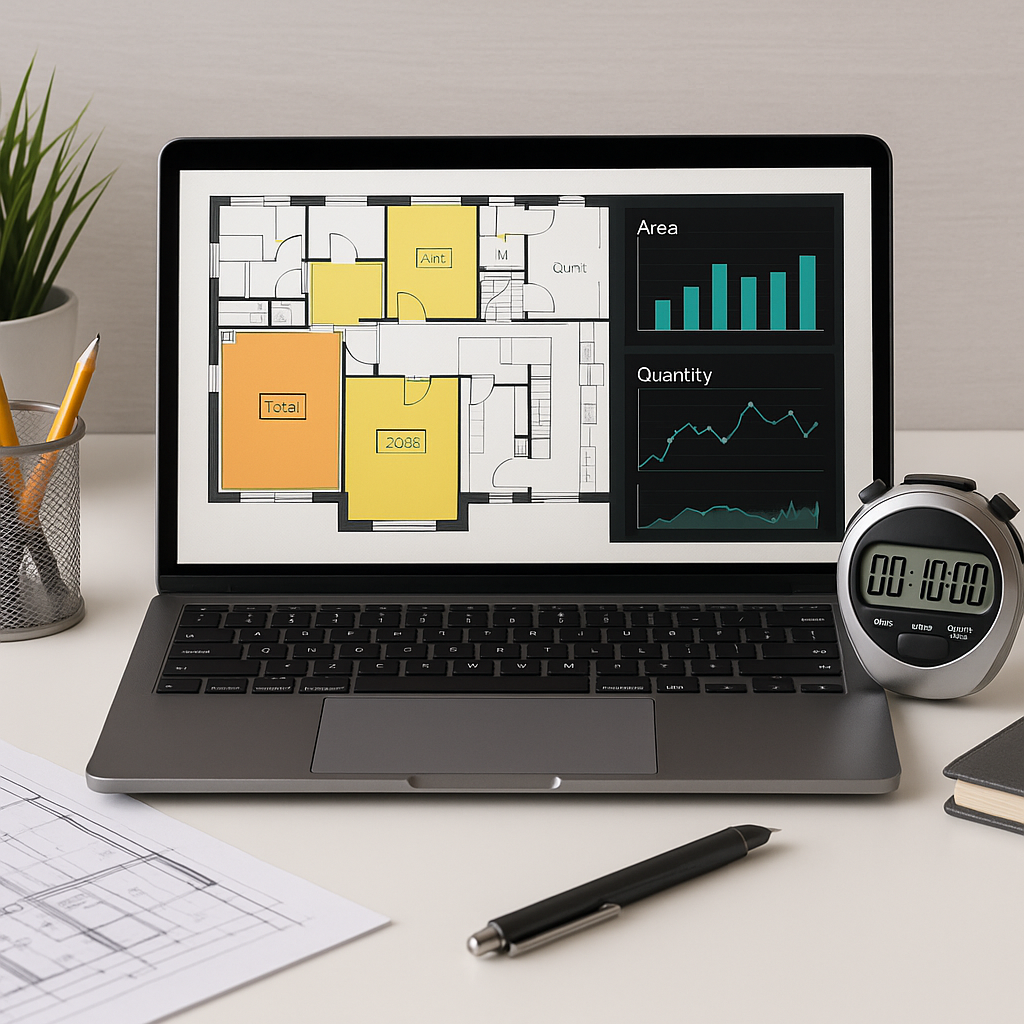
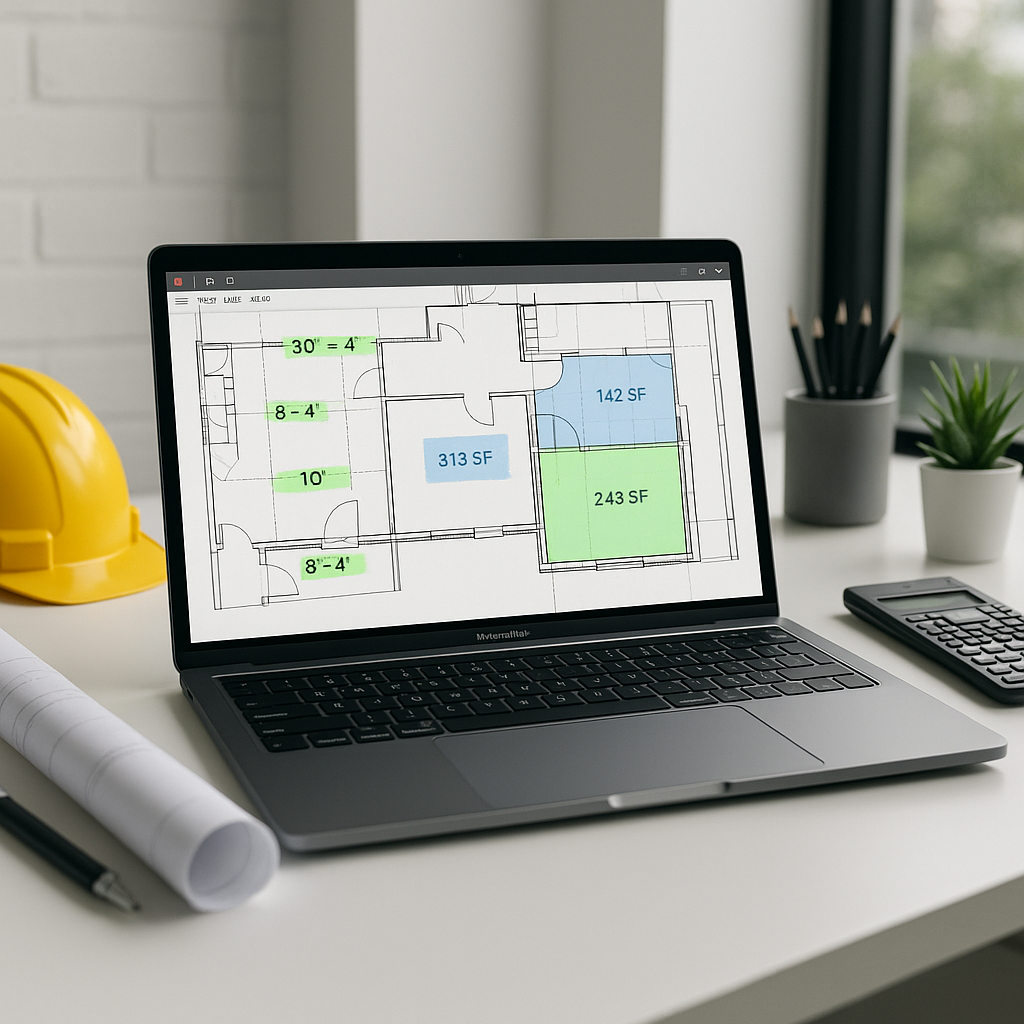
- AI Reads the Drawings: The system uses computer vision to identify elements such as walls, doors, windows, and materials. It can calculate dimensions like wall lengths or slab areas.
- Quantity Extraction: The AI extracts quantities directly from the drawings, such as square footage for drywall or other materials, while accounting for openings like windows or doors.
- Review and Adjust: Users can review flagged areas where the AI is uncertain and make manual adjustments as needed.
- Export: The final data can be exported into formats like Excel, PDF, or integrated with construction management tools.
Why Speed Isn’t the Only Benefit
While AI takeoffs significantly reduce the time spent on estimates, they also offer additional advantages:
- Consistency: AI applies uniform logic to every drawing, reducing discrepancies and improving accuracy.
- Scalability: The process scales to projects of varying sizes, from small renovations to large infrastructure developments.
- Error Reduction: By automating repetitive tasks, AI minimizes common errors such as miscounts or missed measurements.
- Team Productivity: With AI handling routine tasks, teams can focus on higher-value activities like subcontractor negotiations or refining bid strategies.
What You Should Watch For
AI tools are not without limitations. Here are some considerations to keep in mind:
- Input Quality: Poorly scanned or incomplete drawings can affect the AI’s performance. High-quality inputs are essential.
- Human Oversight: While AI is a powerful tool, it’s not a substitute for professional expertise. Always review outputs for critical projects.
- Training Requirements: Although many tools are user-friendly, teams may need some time to become proficient.
FAQ
1. How accurate are AI takeoffs? Accuracy depends on the quality of the input data. Most platforms allow manual adjustments to ensure precision.
2. Can AI takeoffs be used for smaller projects? Yes, AI tools are scalable and can handle projects of all sizes.
3. Do AI tools integrate with existing software? Many platforms offer integrations with tools like Bluebeam, Procore, or Excel.
4. What if drawings change mid-process? AI tools can accommodate revisions by recalculating quantities based on updated drawings.
5. How much training does my team need? Most tools are designed to be intuitive, with users typically becoming proficient within a short period.
The Bottom Line
Manual takeoffs can be a bottleneck in the estimation process. AI-powered tools streamline this workflow, saving time and improving accuracy. By adopting these technologies, construction teams can enhance productivity and focus on strategic tasks, ultimately improving their competitive edge.