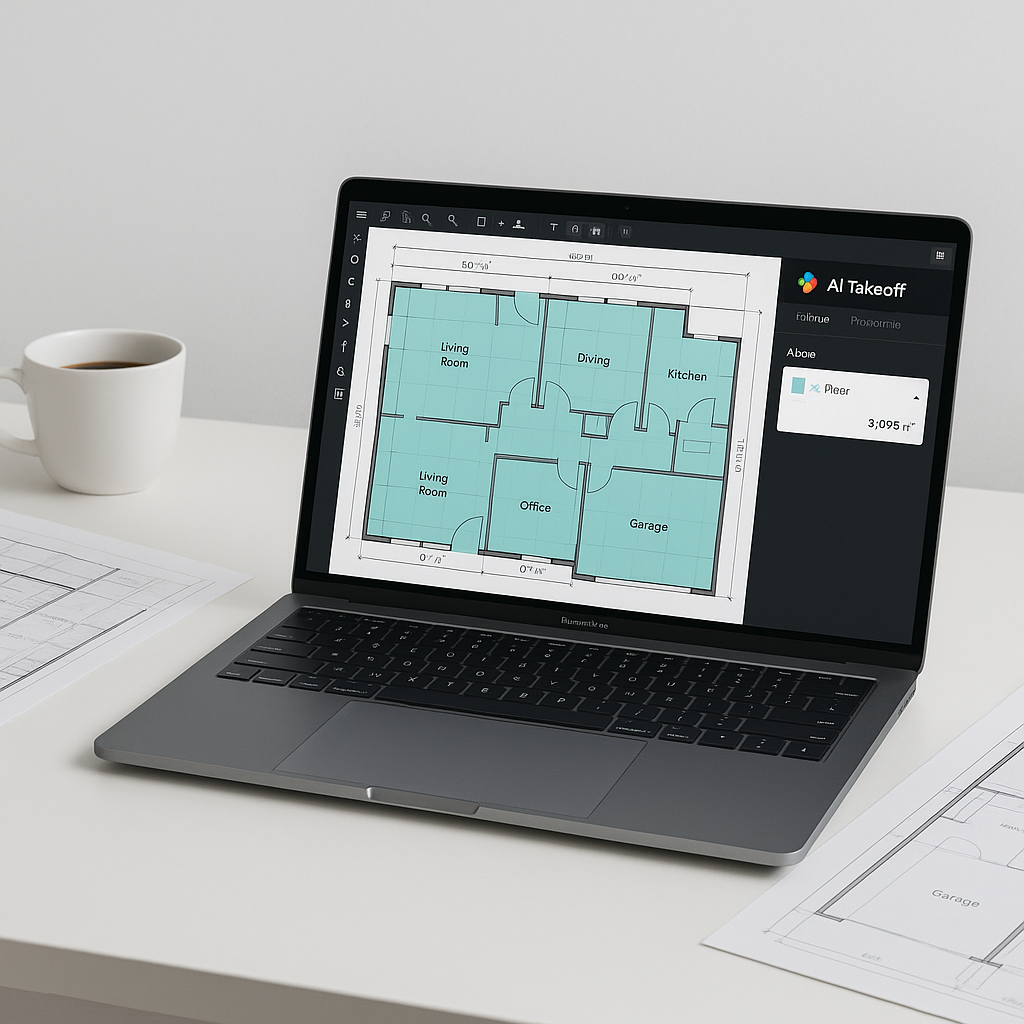
How AI-Powered Tools Are Transforming Preconstruction Estimation
Manual drawing takeoffs can be a time-consuming and error-prone process. Estimators often spend hours flipping between flat PDFs and spreadsheets, tracing wall lengths, and manually calculating quantities. This traditional approach not only takes significant time but also increases the risk of errors, especially when dealing with complex projects or revisions.
The Problem: Manual Takeoffs Are Slow and Error-Prone
Handling a high-stakes bid often involves working with flat PDFs that lack quantities or measurements. Estimators must calibrate scales, trace walls, and manually extract quantities, which is tedious and prone to mistakes. Errors in quantity takeoff can lead to cost overruns, and the time spent on these tasks could be better utilized elsewhere in the preconstruction process.
According to McKinsey’s 2023 report on construction productivity, manual workflows consume a significant portion of preconstruction hours, leaving teams struggling to meet deadlines.
The Solution: AI-Powered Takeoffs
AI-powered tools offer a faster and more efficient alternative to manual takeoffs. These tools use advanced algorithms to automate the extraction of quantities from drawings, significantly reducing the time required for this task. Here’s a general overview of how these tools work:
- Upload the Drawing Set: Users upload flat PDFs or other drawing formats into the system.
- Automated Quantity Extraction: The AI identifies areas, lengths, and counts, extracting quantities for walls, floors, windows, and other elements in the drawings.
- Revision Handling: When updated drawings are uploaded, the system automatically compares changes, eliminating the need to retrace everything manually.
Illustrative example — A contractor using an AI tool for a mid-sized project could save significant time on takeoffs, allowing the team to focus on refining their bid strategy or other high-value tasks.
What About Accuracy?
A common concern is whether AI tools can match the accuracy of manual takeoffs. While oversight is essential, AI tools often reduce errors by eliminating issues caused by human fatigue or distractions. The accuracy of the results depends on the quality of the input data—clean and complete drawings yield the best outcomes.
Why This Matters for Smaller Teams
AI-powered tools are not just for large general contractors. Smaller contractors and regional firms can also benefit from the efficiency gains these tools provide. Automating repetitive tasks like takeoffs allows smaller teams to allocate their resources more effectively, improving their competitiveness in the bidding process.
For subcontractors, faster takeoffs mean quicker turnaround times for quotes, which can be a significant advantage in competitive markets.
Common Mistakes With AI Takeoffs
While AI tools can streamline the takeoff process, it’s important to avoid common pitfalls:
- Over-Reliance: Always validate key quantities manually to ensure accuracy.
- Bad Inputs: Messy or incomplete drawings can lead to errors. Ensure input data is clean and well-prepared.
- Ignoring Training: While most AI tools are user-friendly, a brief training session can help teams maximize their effectiveness.
The Bottom Line
AI-powered tools are transforming preconstruction estimation by automating takeoffs, reducing errors, and saving time. By adopting these tools, construction teams can focus on higher-value tasks and improve their overall efficiency in the bidding process.


