Why Manual Takeoffs Are a Bottleneck
Every estimator knows the challenges of manual takeoffs. You’re staring at a PDF, tracing lines, counting fixtures, and calculating areas. It’s tedious, time-consuming, and prone to errors. For mid-sized projects, manual takeoff can require significant time and effort, often diverting attention from other critical tasks like refining bid strategies, negotiating with subcontractors, or reviewing scope changes. A single missed measurement can throw an entire estimate off.
Enter AI-Powered Takeoff Tools
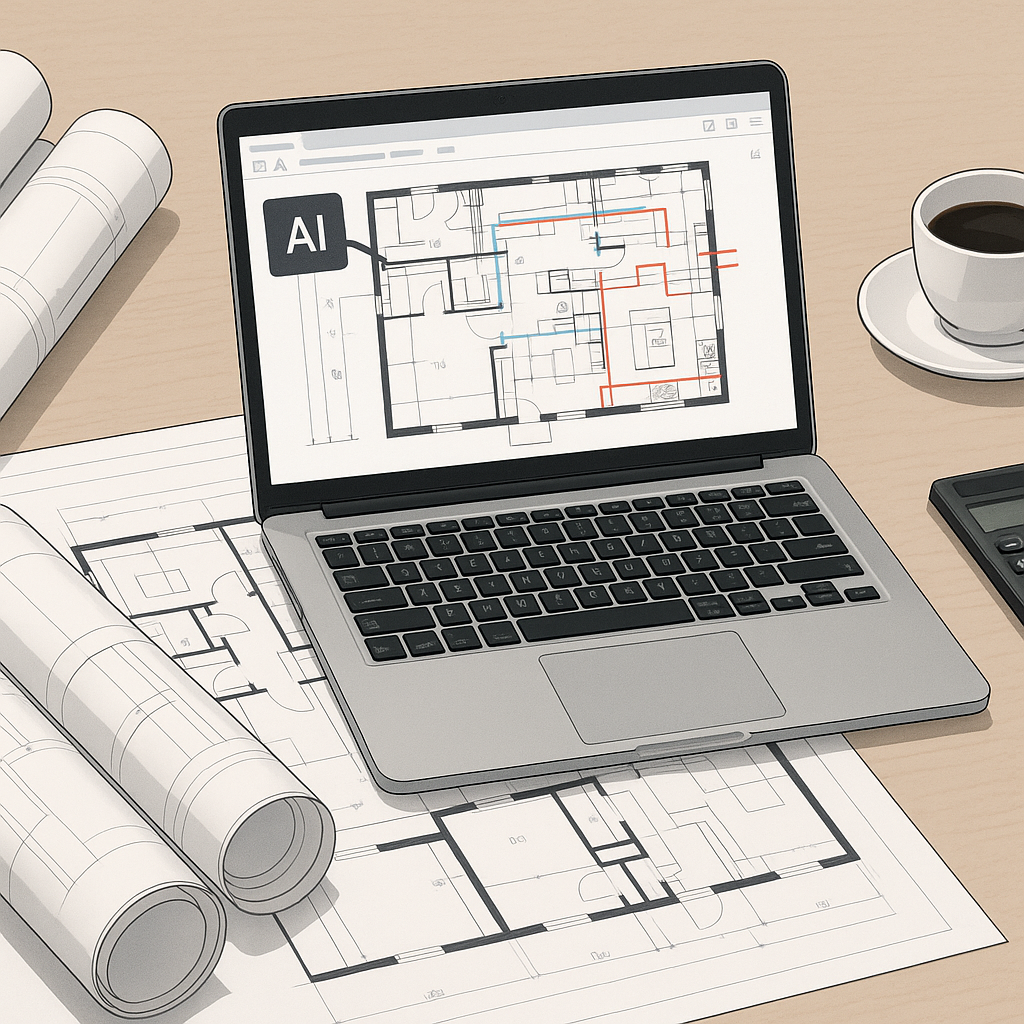
AI tools are transforming the preconstruction process. Instead of spending hours manually tracing drawings, you upload your PDFs, and the AI extracts quantities automatically. Doors, windows, wall lengths, floor areas—it identifies and measures these elements efficiently.
These tools are designed to assist rather than replace estimators. By automating repetitive tasks, they allow professionals to focus on higher-value activities, such as reviewing outputs and refining estimates.
How It Works
Here’s the process in a nutshell:
- Upload Your Drawings: Drop your PDF or drawing set into the platform.
- AI Extraction: The tool reads the drawings, extracting room areas, wall lengths, fixture counts, and more.
- Review and Adjust: You can review flagged areas and make manual corrections if needed.
- Export Your Quantities: Once finalized, export the data into your preferred format—Excel, CSI MasterFormat, or directly into your estimating software.
This workflow streamlines the takeoff process, reducing manual effort while maintaining accuracy.
The Accuracy Question
Skeptical about accuracy? Many estimators worry AI tools might miss details or misinterpret complex drawings. While no system is perfect, AI tools often include features like manual override options and flagged areas for review. This ensures that estimators can double-check and adjust outputs as needed.
Additionally, these systems improve over time. The more they are used, the better they become at interpreting drawings and delivering accurate results. Human oversight remains essential, but AI tools can significantly reduce the likelihood of errors.
What About Complex Drawings?
AI takeoff tools handle most standard drawings with ease. For heavily annotated or multi-layered documents, human oversight is still necessary. The AI might not fully understand custom notes or non-standard symbols, but it can handle the bulk of the work, allowing estimators to focus on the more complex aspects.
Common Mistakes When Using AI
Here’s what to watch out for:
- Garbage In, Garbage Out: If your PDFs are low-quality or poorly labeled, the AI’s output will suffer. Always start with clean, legible drawings.
- Skipping the Review Step: Trust the AI, but verify. Spend time reviewing the outputs for accuracy, especially on critical measurements.
- Ignoring Updates: AI systems improve with updates. Make sure you’re using the latest version to take advantage of new features and fixes.
- Over-Reliance: AI is a tool, not a replacement for your expertise. Use it to augment your process, not dictate it.
The Real Cost of Not Adopting AI
If you’re still relying solely on manual takeoffs, you risk falling behind competitors who are leveraging AI tools to streamline their processes. By reducing the time spent on takeoffs, these tools enable estimators to focus on improving bids, negotiating better rates, and pursuing additional projects.
Final Thoughts
If you’re still spending significant time on manual takeoffs, it’s worth exploring AI-powered tools. These solutions can save time, reduce errors, and allow you to focus on strategic aspects of your work, ultimately helping you stay competitive in the industry.


