The Takeoff Problem Nobody Talks About
Let’s get straight to it. Manual takeoffs can consume a significant amount of time. If you’re using tools like Bluebeam and Excel, you already know the drill: trace every line, count every window, double-check every measurement. It’s tedious, error-prone, and slow. Multiply that across multiple bids per year, and suddenly your team is overwhelmed.
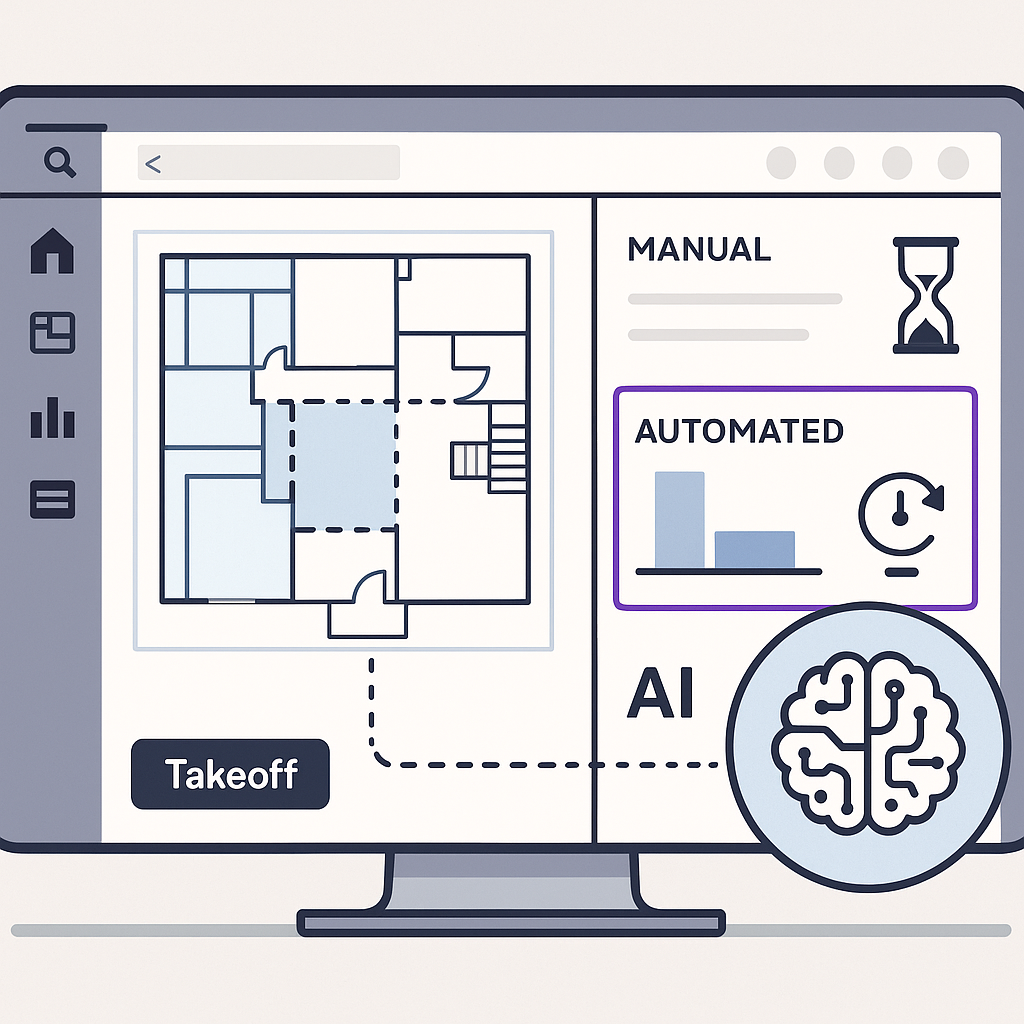
But here’s the kicker: most of this grunt work isn’t adding value. It’s just busywork. That’s why AI-powered tools are gaining attention. Instead of estimators grinding through PDFs all week, AI tools can read the drawings and extract quantities much faster. This can free up your team to focus on higher-value tasks.
How Does AI Takeoff Actually Work?
It’s pretty simple. Upload your PDF or drawing set, and the AI gets to work. It identifies room areas, wall lengths, door/window counts, and more. For items with low confidence—say, an unclear wall thickness—you can manually override the measurement and leave an audit trail. No more guesswork, no more double-checking spreadsheet formulas.
It’s not perfect, though. AI doesn’t always recognize unusual architectural features or heavily annotated drawings. A human touch is still needed for edge cases. But for the majority of the work, it can be a significant time-saver.
The ROI of AI Tools
Illustrative example — Let’s consider a scenario where a team spends dozens of hours on manual takeoffs for a single bid. By automating this process with AI, the time required could be reduced substantially. This saved time can then be allocated to other critical tasks, improving overall productivity. While the exact cost savings depend on factors like team size and project complexity, the potential for efficiency gains is clear.
For subcontractors, faster takeoffs mean faster quote turnaround, which can enable them to respond to more bids. This can improve their chances of winning projects and growing their business.
What About Accuracy?
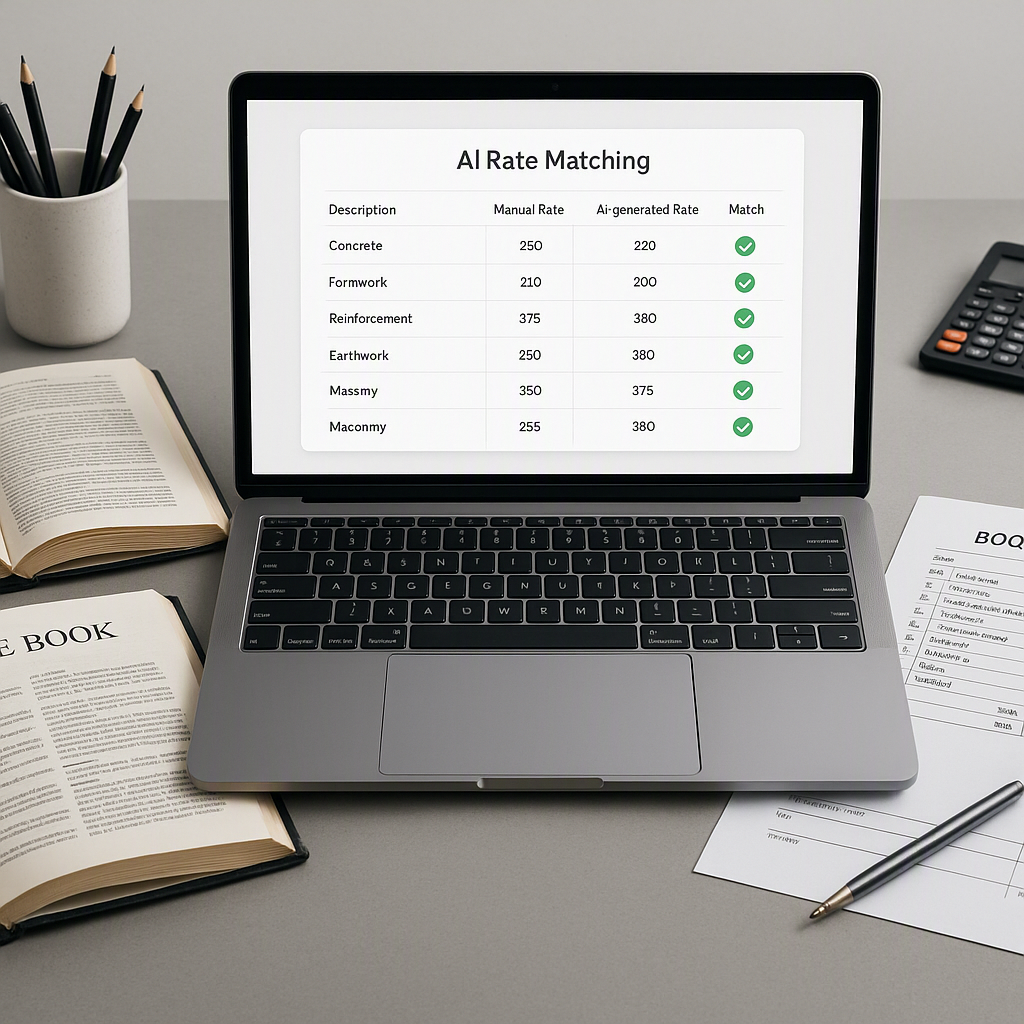
You might be thinking, “Sure, AI is fast, but can it match my team’s accuracy?” It’s a fair question. AI-powered takeoffs often improve with feedback over time. However, it’s important to ensure that input data is clean and accurate, as errors in the source material can affect the results. While AI can handle a large portion of the work, human oversight remains essential for quality control.
Common Pushbacks
“It’ll replace my team.”
Not a chance. AI doesn’t replace your expertise; it amplifies it. You’re still the one making judgment calls, negotiating with subs, and deciding on markup. The AI just handles the repetitive tasks. Think of it as a tool to enhance your team’s efficiency.
“It’s too expensive.”
Compared to traditional methods and the time spent on manual processes, AI tools can offer a cost-effective solution. Many platforms offer flexible pricing plans, making them accessible to firms of various sizes.
“It won’t work for niche projects.”
AI tools are designed to scale to different project sizes and complexities. For highly customized jobs, many platforms allow you to upload your own rate catalogs and tailor the system to your specific needs.
The Bottom Line
Manual takeoffs aren’t just slow—they’re inefficient. AI-powered tools can significantly reduce the time spent on repetitive tasks, allowing your team to focus on higher-value activities. If you’re still relying on traditional methods, it might be time to explore how AI can streamline your preconstruction process.