Manual Drawing Takeoff: A Time-Consuming Process
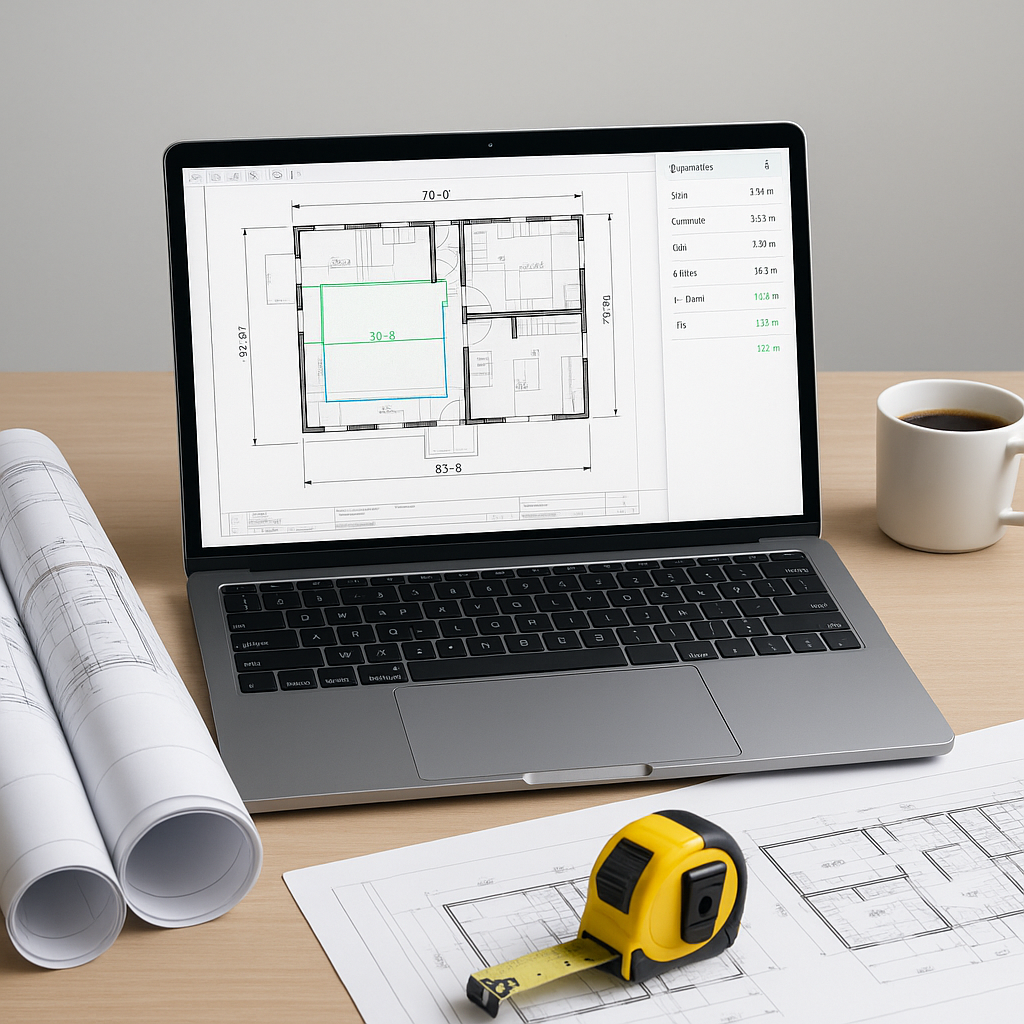
If you're a preconstruction director or estimator, you know the challenges of manual drawing takeoff. Linear measurements, area calculations, counts—it's painstaking work, and mistakes can happen. On large bids, manual takeoff can consume significant time and resources, creating a bottleneck for the entire estimation process.
How AI-Powered Takeoff Works
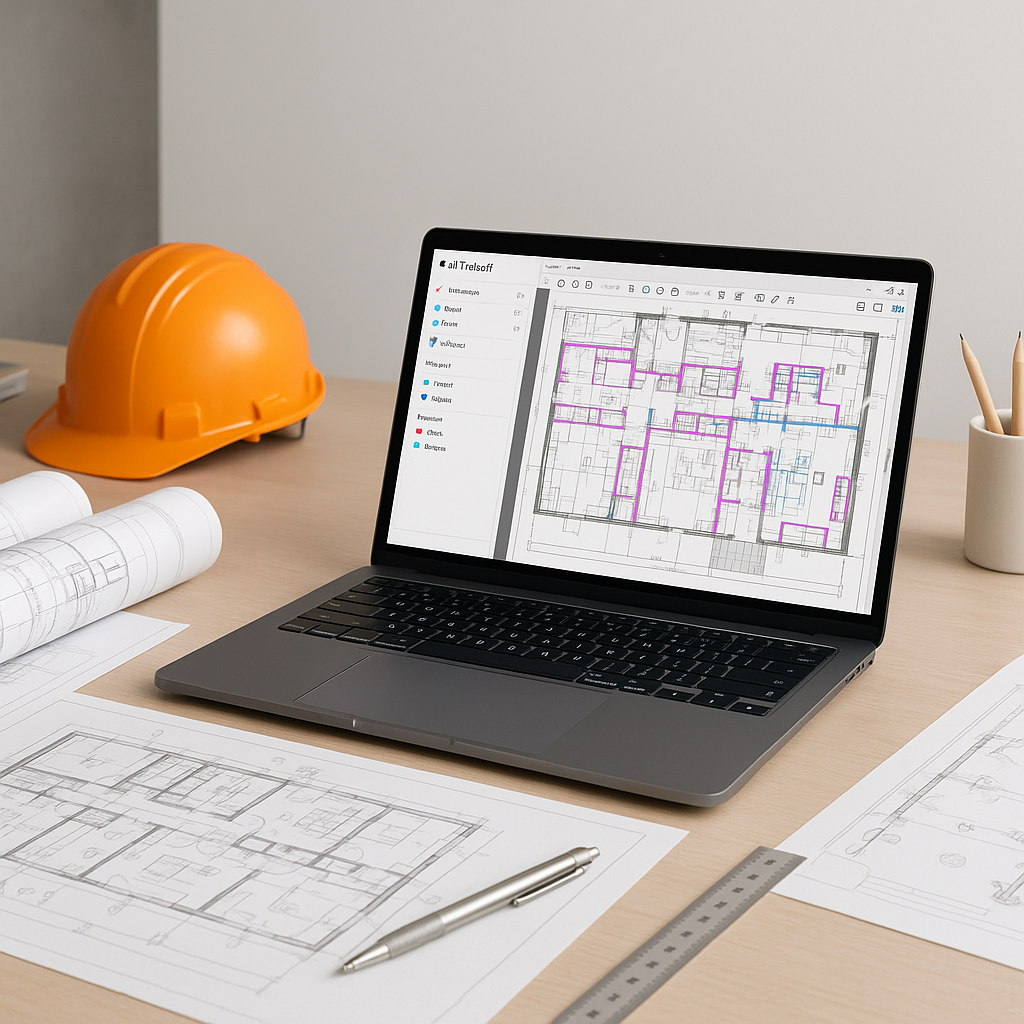
AI tools like EstimateNext address this challenge by automating the takeoff process. Instead of manually combing through drawings, you upload the PDF set, and the system processes the data quickly. Vision AI reads the drawings, extracts quantities, and organizes them into a detailed Bill of Quantities (BOQ). Need wall lengths, door counts, or room areas? The system provides these details and highlights low-certainty items for human review.
Illustrative example — On a high-rise bid, an AI tool extracted quantities in a fraction of the time it would take manually, allowing the team to focus on critical tasks like sub-bid negotiations and margin analysis. This demonstrates how AI can streamline workflows and improve efficiency.
Why Accuracy Still Requires Human Oversight
AI doesn’t replace the judgment of an experienced estimator—it enhances it. While AI tools are highly accurate, input quality matters. Blurry scans or poorly labeled PDFs may still require manual review.
To address this, many AI tools include features like manual overrides and revision tracking. These allow users to tweak quantities, add missing measurements, and verify every number before finalizing the bid package.
Benefits of AI in Preconstruction Estimation
- Time Savings: Automating repetitive tasks like drawing takeoff frees up time for higher-value activities.
- Improved Accuracy: AI tools reduce discrepancies by identifying potential errors and inconsistencies.
- Scalability: AI can handle projects of varying sizes, from small renovations to large infrastructure bids.
Common Mistakes to Avoid
- Over-reliance on AI outputs: Always review low-confidence items flagged by the system. Human judgment is essential for catching errors.
- Skipping training: While AI tools are intuitive, proper training ensures your team uses them effectively.
- Ignoring edge cases: Complex projects with custom materials or non-standard specs may require manual input. Configure your catalogs early to avoid surprises.
FAQ: AI for Drawing Takeoff
Q: How accurate are AI-generated takeoffs?
AI tools significantly reduce discrepancies, but human oversight is essential for edge cases and final verification.
Q: Can AI handle large projects?
Yes. AI tools are designed to scale, making them suitable for projects of all sizes, including those with thousands of line items.
Q: What formats do AI tools support?
Most platforms support PDF, CAD, and image files, with OCR capabilities for scanned documents.
Q: How does AI handle revisions?
You can upload revision sets, and the system automatically compares changes, eliminating the need for manual redlines.
Q: Is AI expensive?
AI tools are generally cost-effective, especially when compared to the cost of additional labor for manual tasks.
Conclusion
AI-powered tools are transforming preconstruction estimation by automating drawing takeoff and improving efficiency. By reducing time spent on repetitive tasks, these tools allow estimators to focus on strategic activities that add value to the bidding process. If you're looking to streamline your workflow, consider exploring AI solutions for your next project.