The Problem: Manual Takeoffs Are Time-Consuming and Error-Prone
If you’ve ever worked in preconstruction, you know the grind. Manual quantity takeoffs for a single project can take significant time and effort. Measuring wall lengths, counting fixtures, and recalibrating PDFs are tedious and prone to errors.
Every line traced by hand is a potential mistake. Miss one window opening, and your materials order is off. Miscalculate square footage, and your pricing may be inaccurate. The worst part? You’re doing this for every bid, even the ones you know you won’t win.
That’s where AI takeoff tools come in. They don’t just save time—they change the way you approach estimation entirely. Let’s break it down.
The AI Solution: Automating Takeoffs
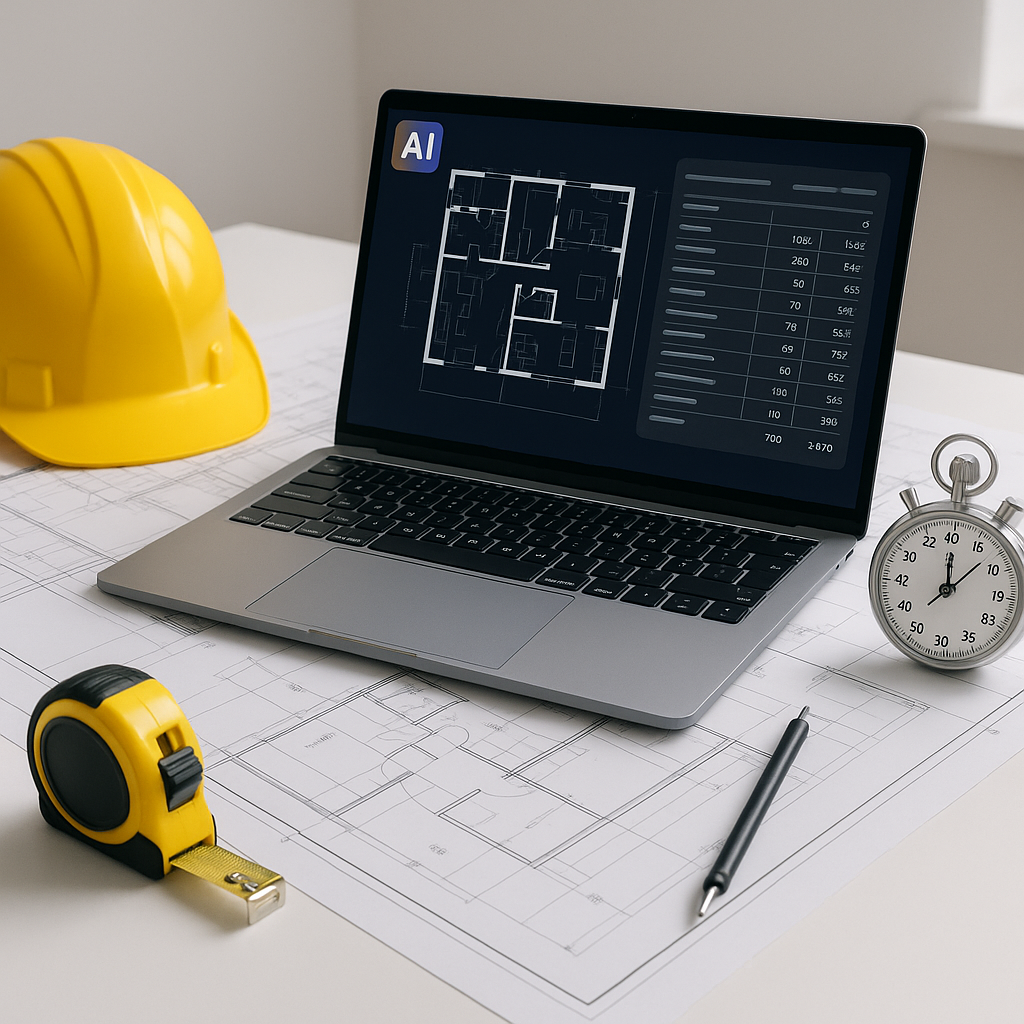
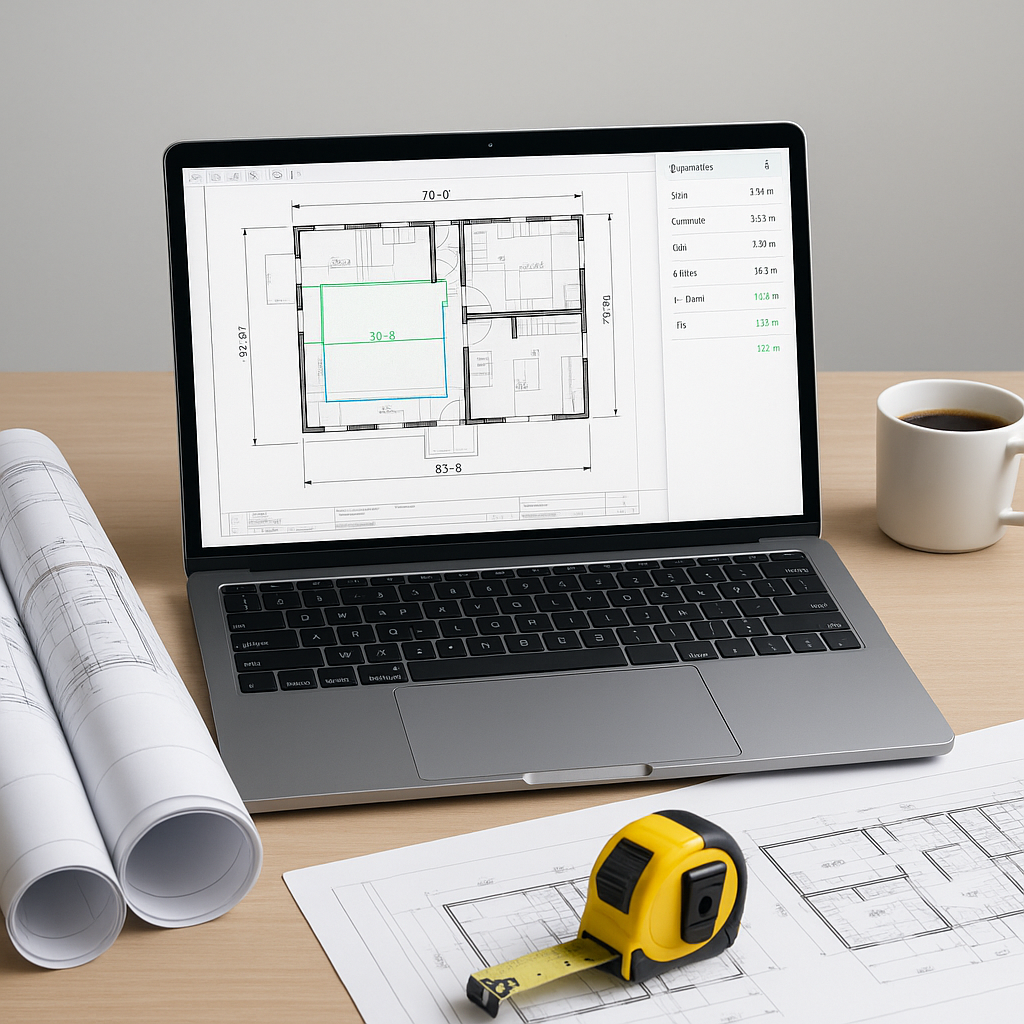
AI-powered tools use Vision AI to handle takeoffs efficiently. You upload a drawing set—PDF, DWG, or even a scanned image—and the system extracts quantities automatically. Floor areas, wall lengths, door counts—everything you’d normally measure manually.
Here’s how it works:
- Upload Your Drawings: Drag and drop your files into the platform. AI can calibrate scales and recognize sheet layouts.
- Auto-Extract Quantities: Vision AI detects key elements like walls, doors, windows, and room areas. You get a quantified takeoff ready for review.
- Review and Verify: The system flags items for manual review, allowing you to correct or remeasure directly within the tool, with full audit trails.
AI doesn’t just speed things up—it reduces errors. By automating repetitive tasks, you eliminate the human mistakes that creep in when you’re rushing to meet a deadline.
Why This Matters: Efficiency and Accuracy
Manual takeoffs can consume significant time and resources, limiting how many bids your team can handle. By automating this process, AI-powered tools free up your team to focus on higher-value tasks like refining bids, negotiating with subcontractors, or exploring alternative scenarios.
Smaller contractors, in particular, can benefit by leveling the playing field. Instead of spending days on takeoffs, they can focus on sharpening their bids and increasing their chances of winning more work.
Common Concerns About AI Takeoffs
You might be thinking, “Sure, AI is fast, but can it really handle the complexity of my projects?” Here’s the thing: AI doesn’t replace your expertise—it amplifies it.
-
What About Accuracy? AI tools often include features like manual overrides to ensure accuracy. You’re still in control—AI just handles the repetitive tasks.
-
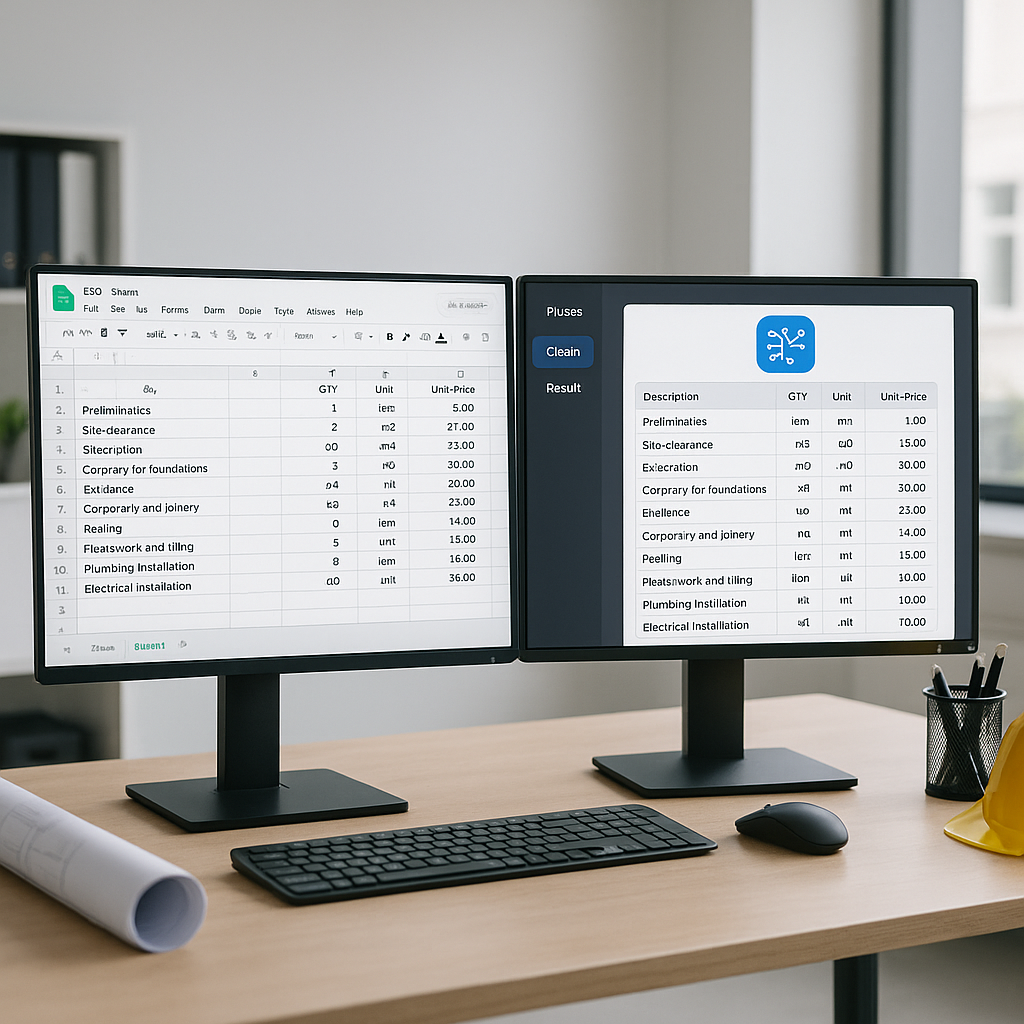
Will It Work With My Existing Tools? Most platforms integrate seamlessly with software like Bluebeam, Procore, or Excel. You can export AI-generated takeoffs directly into your existing workflows.
-
What About Revisions? AI tools allow you to upload revision sets and compare changes automatically. No more starting over from scratch when you get updated drawings.
FAQs
Q: How long does it take to learn AI tools?
Most users report being up and running quickly. The interfaces are designed to be intuitive, and most tools offer plenty of training resources.
Q: Can AI takeoffs handle specialty trades like MEP or fire protection?
Yes. Many tools include specialist trade modules for HVAC, electrical, plumbing, and more.
Q: What if my drawings are messy or incomplete?
AI tools are designed to handle imperfect input. They can recognize hand-drawn annotations, scan PDFs, and identify missing data points for manual input.
Final Thoughts
Manual takeoffs are a bottleneck. They consume time, introduce errors, and limit how many bids your team can realistically handle. AI-powered tools are quickly becoming the industry standard for preconstruction estimation. By automating takeoffs, you can save time, reduce errors, and focus on winning more work.
If you’re ready to explore how AI can transform your estimation process, consider trying an AI-powered tool today.