The Hidden Time Sink in Construction Estimation
Ask any estimator what’s the most tedious part of their job, and chances are they’ll mention rate lookup. Whether it’s flipping through extensive catalogs or digging through Excel sheets of custom rates, this process can be time-consuming and prone to errors. Manual rate lookup isn’t just slow—it’s also error-prone. Forget one inflation adjustment or misread a labor rate, and your estimate could be significantly off. In competitive bids, those errors can cost you the job.
How AI Changes the Game
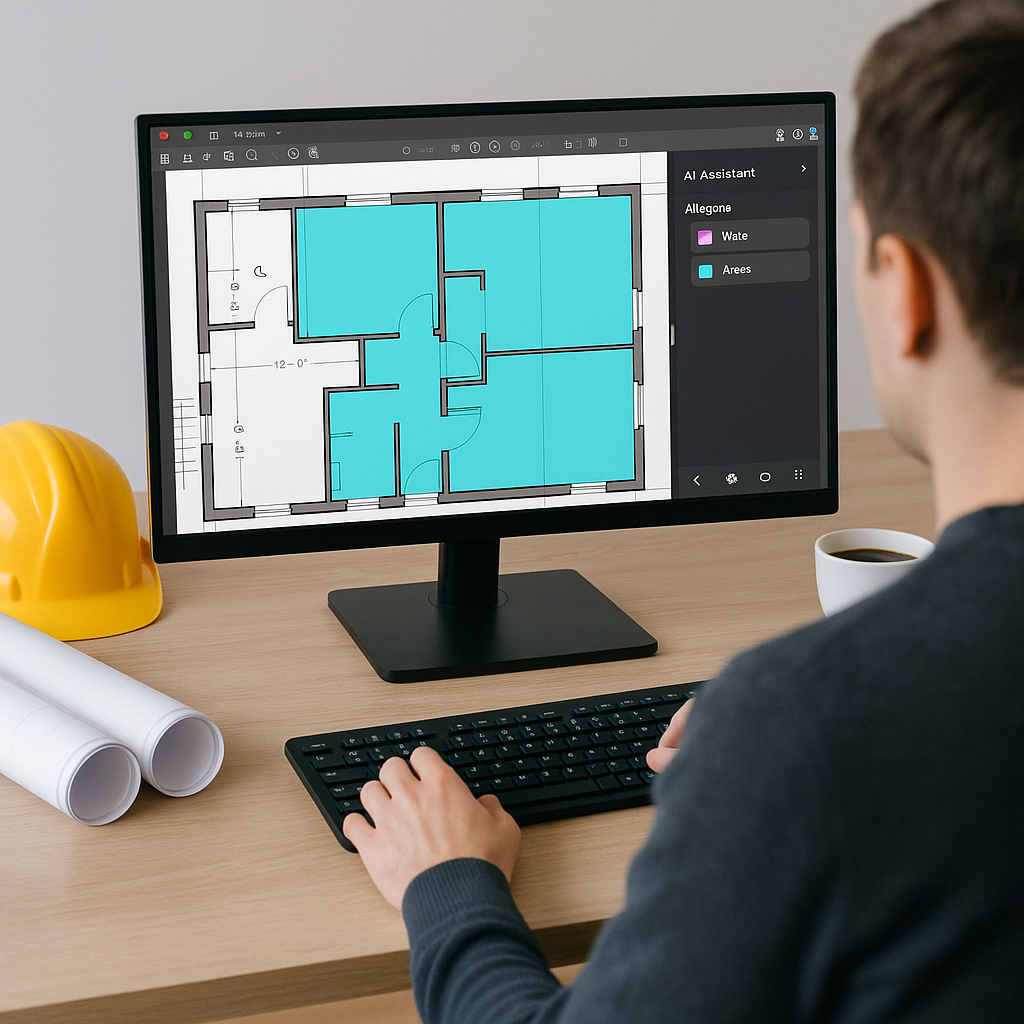
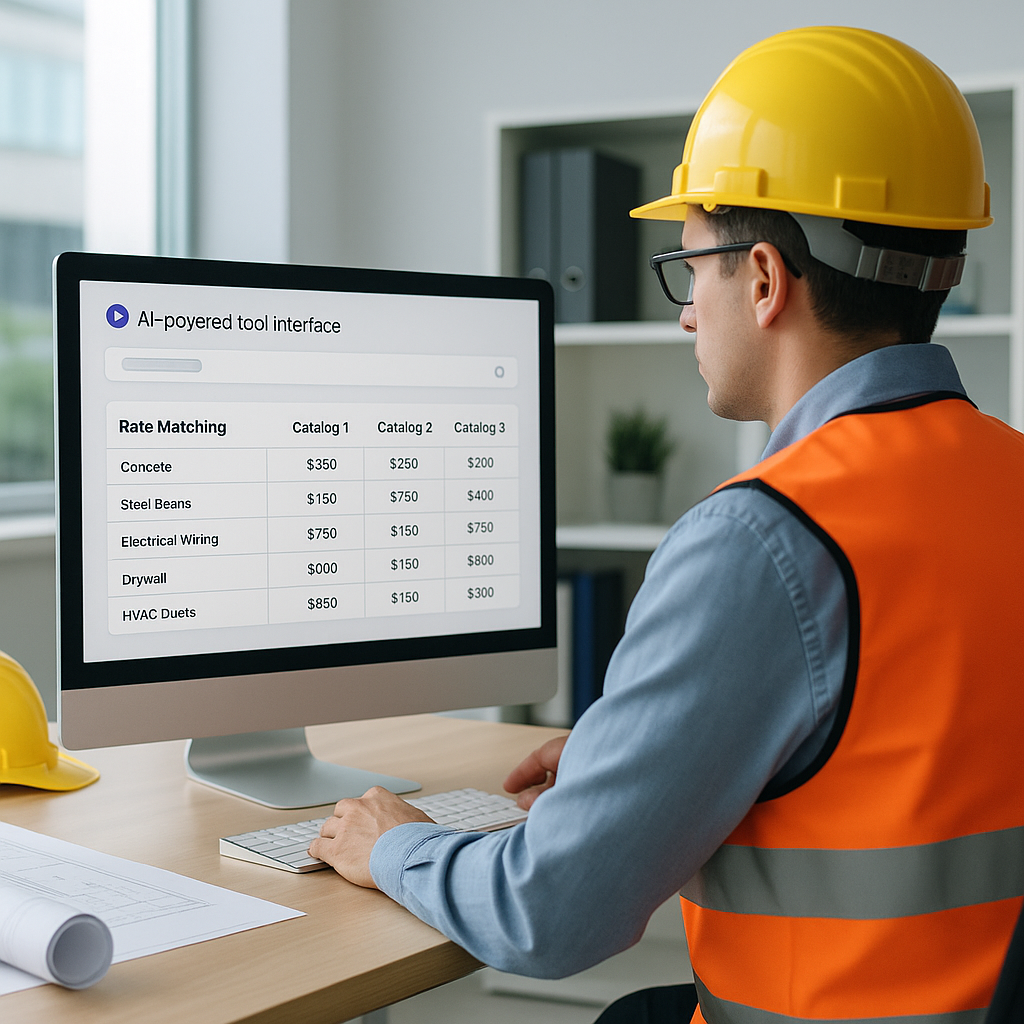
AI-powered rate matching tools are transforming this process. Instead of manually hunting for rates, you upload your Bill of Quantities (BOQ), and the tool automates the process. It scans through large databases of items across multiple catalogs and returns matches quickly. These tools can provide material, labor, and equipment breakdowns, helping estimators make more informed decisions.
Illustrative example — Imagine you need the cost of installing pre-stressed concrete girders. By typing it into an AI-powered tool, you could receive relevant matches in seconds, saving significant time and reducing the risk of manual errors.
Why Accuracy Matters
Speed is important, but accuracy is critical. AI tools parse catalogs semantically, ensuring rates align with your project’s scope and location. For instance, some tools integrate inflation adjustments automatically, applying the correct uplift percentage for the catalog year. This eliminates the need for manual calculations.
Custom rates can also be a challenge with traditional methods. AI platforms often allow users to upload their own material or finish catalogs, ensuring estimates reflect real costs. Over time, these tools can improve their accuracy by learning from adjustments made by users.
The Cost Factor
Traditional estimation tools can be expensive, which is why many estimators still rely on manual methods like Excel or paper catalogs. AI-powered tools, however, are often more cost-effective and accessible, making them a viable option even for smaller firms.
Common Objections
Some may argue that “AI can’t think like an estimator.” While true, AI doesn’t replace expertise—it enhances it. Estimators still make the critical decisions, negotiate with subcontractors, and adjust margins. The AI handles repetitive tasks, freeing up time for higher-value activities.
Another concern is reliability. What if the AI gets it wrong? Most platforms include manual override features, allowing users to review and adjust rates as needed. This ensures that human oversight remains a key part of the process.
FAQ
Q: How accurate are AI-generated rates?
A: AI tools are designed to reduce errors significantly, but human oversight is still essential to ensure accuracy.
Q: Can I upload custom rate catalogs?
A: Yes. Many AI platforms allow users to define custom rates, ensuring estimates reflect actual costs.
Q: How long does it take to learn the software?
A: Training typically takes a short amount of time, as platforms are designed for ease of use.
Q: Do AI tools work for small projects?
A: Yes. AI tools are scalable and can be used for projects of any size.
What to Watch For
- Data Quality: AI is only as good as the data you provide. Ensure your BOQ is clean and comprehensive.
- Catalog Scope: Check whether the AI tool covers your region’s specific rate books. Some platforms have extensive catalogs for regions like India (CPWD DSR), the US (RSMeans), and GCC countries.
- Manual Overrides: Always review high-value items for accuracy, even if the AI matches them confidently.
Conclusion
If you’re looking to streamline your estimation process, AI-powered tools can help by automating rate matching and improving accuracy. These tools save time and reduce errors, allowing you to focus on higher-value tasks in your projects.