Why Preconstruction Still Feels Stuck in the 90s
Let’s be honest: preconstruction workflows are painfully outdated. You’ve got estimators tracing PDFs in Bluebeam, flipping through rate books like RSMeans, and re-re-rebuilding Excel formulas every time a client asks, "What if we swap X for Y?" It’s slow, tedious, and expensive. Worse, every hour wasted here snowballs into missed bids, thinner margins, and burnt-out teams.
Take drawing takeoffs, for example. Just one mid-size bid can require significant time — estimators spending days measuring walls, counting fixtures, and manually checking dimensions. And it doesn’t end there. Rate lookup and subcontractor bid leveling can also consume substantial time and effort.
According to a 2023 McKinsey report, the construction industry loses billions annually to inefficiencies like these.
The AI Fix: Automating Takeoffs
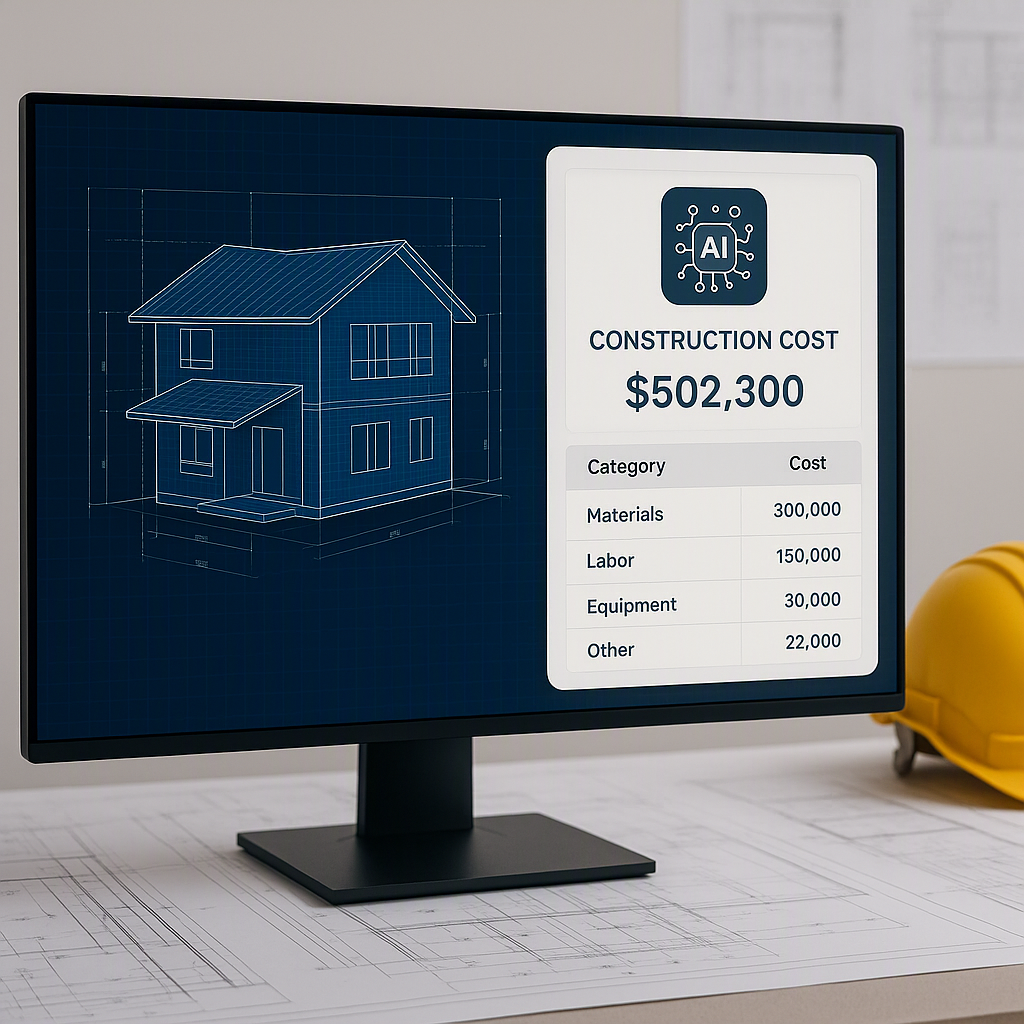
Here’s where AI-powered tools like EstimateNext change the game. Their Vision AI feature automates drawing takeoffs, significantly reducing the time required for tasks like extracting quantities for walls, doors, windows, beams, and more. The AI can also flag low-confidence measurements so you can double-check critical dimensions.
How It Works
- Upload your drawings: Drag and drop your files into the platform. No format headaches.
- AI extraction: The tool scans every sheet, pulling room areas, wall lengths, fixture counts, and more.
- Confidence scoring: It highlights lines or areas where measurements might need manual review.
- Override and finalize: You can remeasure or adjust directly in the platform.
Illustrative example —
| Item | Quantity | Confidence |
|---|---|---|
| Wall Lengths (m) | Example Value | High |
| Door Counts | Example Value | Medium |
| Window Areas (sq m) | Example Value | High |
The result? Tasks that once took days can now be completed in a fraction of the time.
The Obvious Objection: “But AI Can’t Think Like an Estimator”
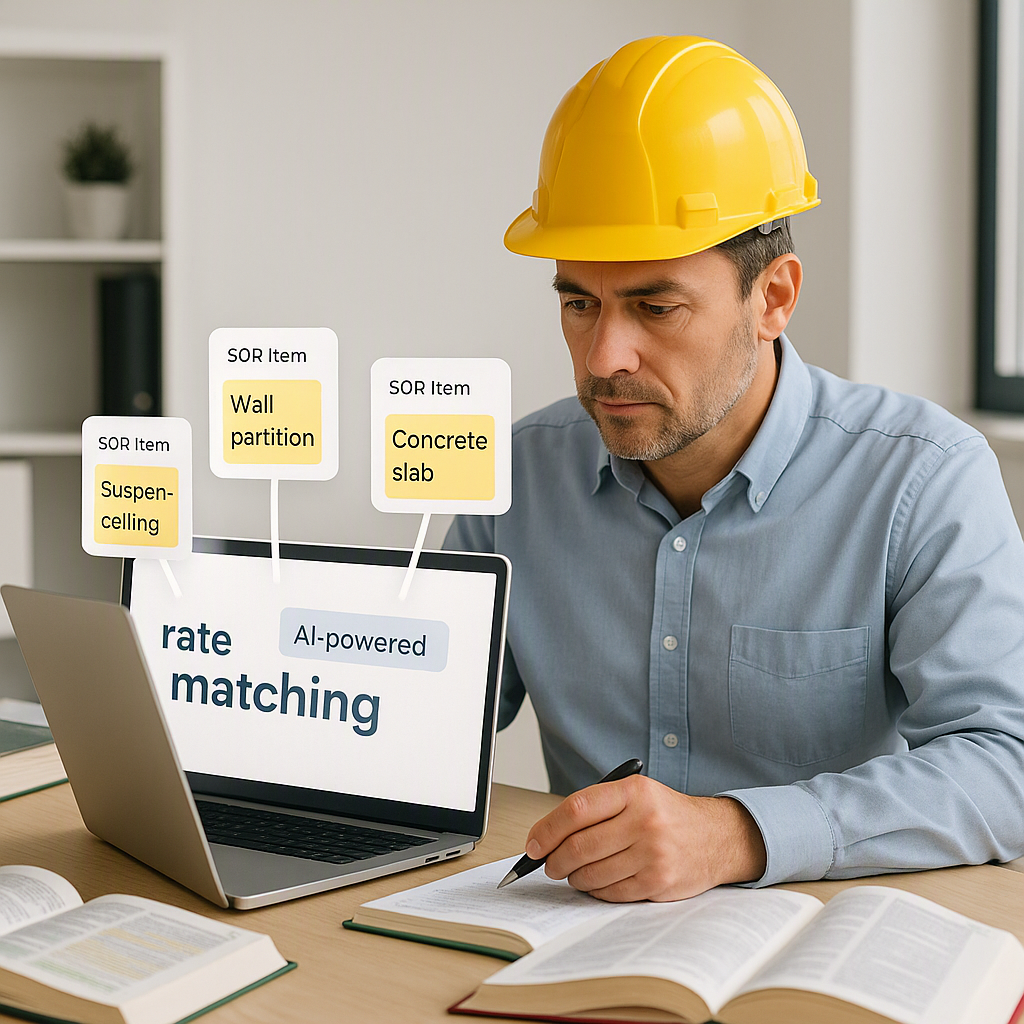
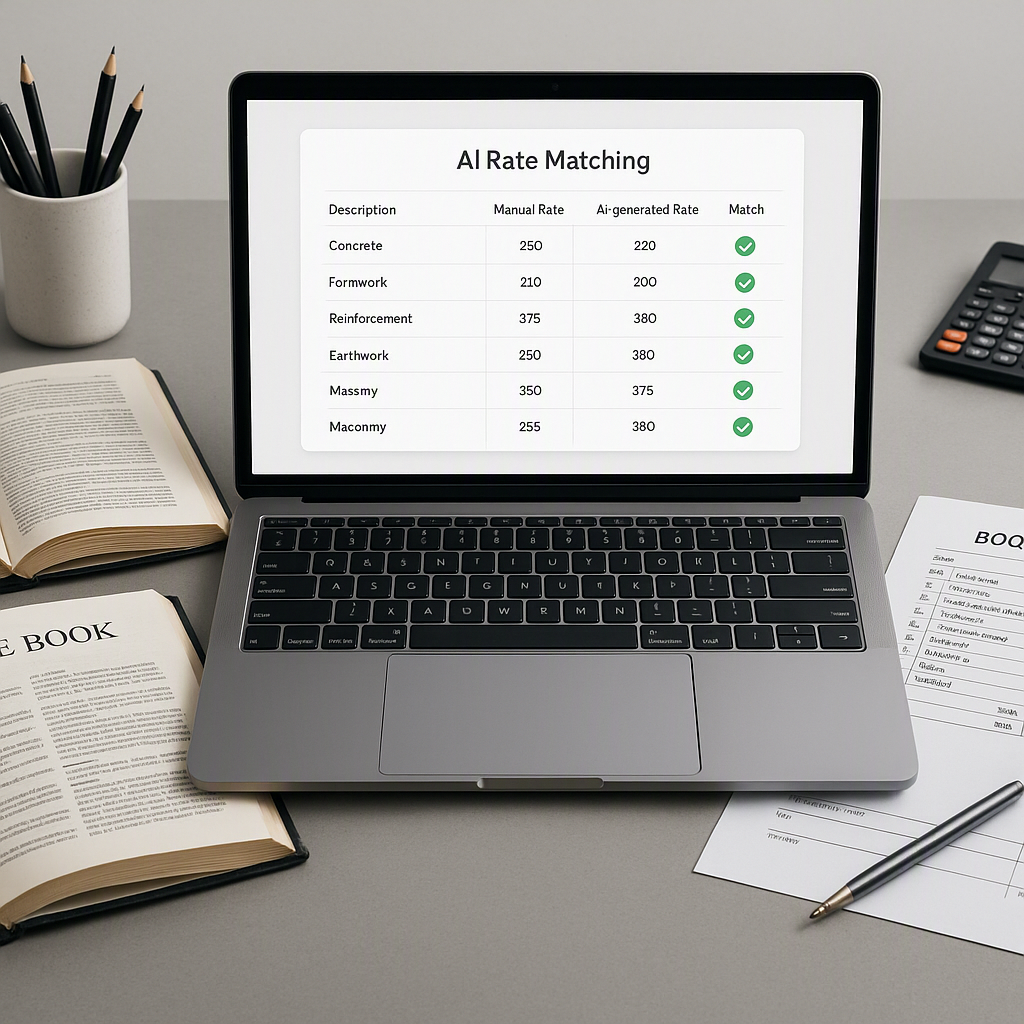
Let’s address the elephant in the room. You might be thinking, “Sure, AI is fast, but it doesn’t understand the nuances of construction.” That’s partially true — AI won’t replace your expertise. It amplifies it. You’re still the one making judgment calls, negotiating with subs, and deciding markup. The AI just handles the repetitive tasks — like takeoffs, rate matching, and scope comparisons.
In fact, many AI platforms include manual override tools for exactly this reason. These tools allow estimators to remain in control of final measurements and rates, ensuring accuracy and alignment with project-specific requirements.
What About Multi-Market Complexity?
Here’s another pain point AI solves: handling different standards, currencies, and catalogs across regions. For instance, US GCs follow CSI MasterFormat, while Indian contractors use CPWD DSR. AI tools can adapt to these variations seamlessly. Advanced architectures ensure that whether you’re pricing a bid in Dallas or Delhi, you’re working with local compliance and rates.
Illustrative example — A large infrastructure project might require region-specific approved rates for materials and labor. Instead of manually searching through rate books, you can use the platform’s semantic search to match items to the correct standards in seconds.
Common Mistakes: Why Some Teams Struggle with AI Adoption
- Skipping training: AI tools are intuitive, but they’re not magic. Teams that skip onboarding often miss key features.
- Low-quality inputs: Garbage in, garbage out. Uploading poorly scanned PDFs or incomplete BOQs limits accuracy.
- Ignoring manual overrides: Over-reliance on AI can lead to blind spots. Always review flagged items.
The Bottom Line
If you’re tired of wasting hours on manual takeoffs and rate lookups, AI-powered estimation tools are worth considering. They won’t replace your expertise, but they’ll free you up to focus on the work that actually moves the needle.