The Takeoff Problem in Construction
Manual takeoffs can be a time-consuming and error-prone process. Estimators often spend significant time analyzing PDF drawings, tracing walls, counting doors, and measuring areas. This traditional approach is not only labor-intensive but also prone to human errors, such as missed dimensions or miscounts, which can lead to inaccurate estimates and impact project profitability.
How AI Redefines Takeoffs
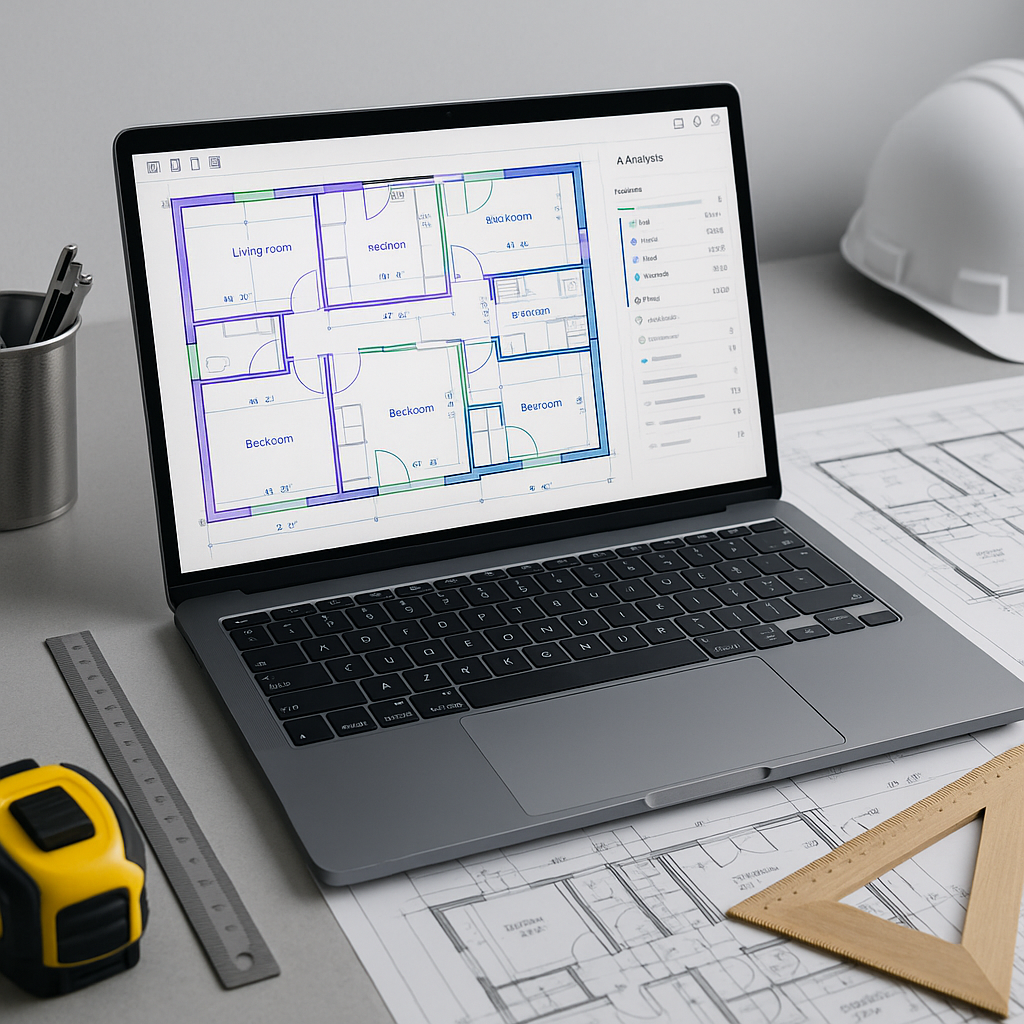
AI-driven takeoff tools use Vision AI to extract quantities directly from drawings. By uploading a PDF, these tools can process room areas, wall lengths, door counts, and other details in a fraction of the time it takes to do manually. This automation reduces the manual effort required and minimizes the risk of errors, allowing estimators to focus on higher-value tasks.
What Makes AI Takeoffs Different?
Here are some key advantages of AI-powered takeoffs:
- Speed: AI processes drawings much faster than manual methods, significantly reducing the time required for takeoffs.
- Accuracy: AI tools help reduce discrepancies by automating calculations and identifying potential errors, though human oversight remains essential.
- Scalability: AI tools can handle projects of varying sizes and complexities, making them suitable for both small and large-scale construction projects.
The Human Element: Why Estimators Are Still Essential
AI tools are designed to assist, not replace, human estimators. While AI can handle repetitive tasks, estimators are still needed for critical decision-making, such as interpreting project requirements, negotiating with subcontractors, and refining bid strategies. By automating routine tasks, AI allows professionals to focus on strategic aspects of their work.
Common Misconceptions About AI Takeoffs
Here are some common concerns about AI tools and the realities:
- “AI isn’t accurate enough.” AI tools include features like flagged areas for manual review, ensuring accuracy with human oversight.
- “It’s for big firms only.” AI tools are scalable and can benefit contractors of all sizes.
- “It’s too hard to learn.” Most platforms are user-friendly, with intuitive interfaces and short learning curves.
Common Mistakes to Avoid
- Ignoring Low-Confidence Areas: Always review flagged areas to ensure accuracy.
- Underestimating Setup Time: Clean, legible drawings are essential for optimal results.
- Over-Relying on Defaults: Customize AI settings to align with specific project needs and rate catalogs.
Why It’s Time to Make the Switch
The construction industry has been slow to adopt new technologies, but AI-powered estimation tools are proving to be game-changers. By automating repetitive tasks, these tools save time, reduce errors, and allow teams to focus on strategic activities that drive project success.
If you’re looking to improve efficiency and accuracy in your preconstruction estimation process, consider exploring AI-powered tools to streamline your workflow.


