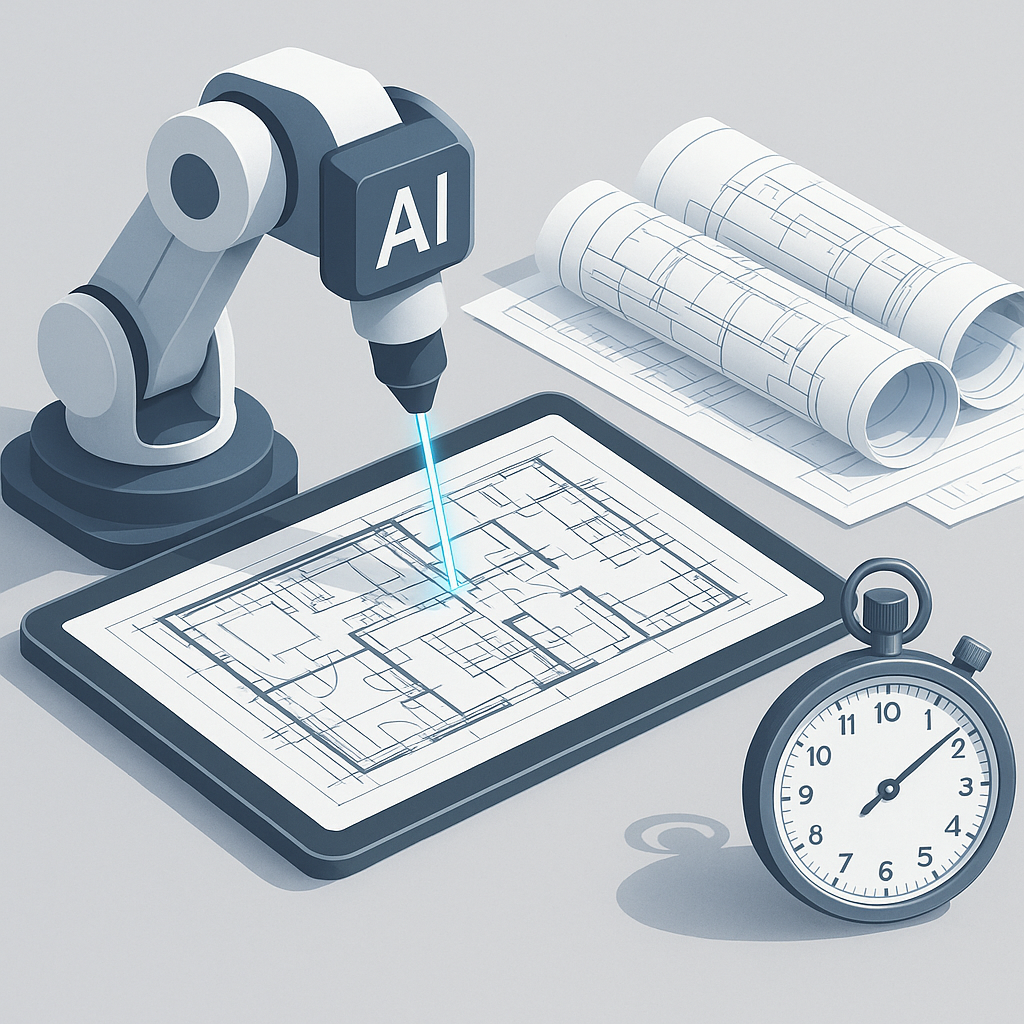
Manual Takeoffs Are Time-Consuming and Error-Prone
If you’ve ever spent hours poring over a set of drawings with a highlighter and a ruler, you know how tedious and exhausting manual takeoffs can be. For decades, this has been the industry standard, but the process is slow, prone to errors, and labor-intensive.
With tighter deadlines, fewer estimators, and growing competition, the construction industry is under pressure to find more efficient ways to handle preconstruction tasks. Manual takeoffs, while traditional, may no longer be the best approach.
The Problem: Repetitive and Labor-Intensive Work
Quantity takeoffs require measuring every wall, door, and beam across multiple pages of drawings. These quantities are then manually input into spreadsheets or software. A single missed line can lead to inaccurate estimates, which can damage trust and lead to costly mistakes.
For contractors managing multiple projects simultaneously, this repetitive process can quickly become overwhelming, consuming significant time and resources.
The Solution: AI-Powered Takeoffs
AI-powered tools are transforming how takeoffs are performed. Instead of manually measuring and inputting data, these tools allow users to upload drawings, and the AI extracts quantities automatically. This approach reduces the time and effort required for takeoffs while improving accuracy.
Here’s how the process typically works:
- Upload Drawings: Upload your PDF or drawing set into the platform.
- AI Extraction: The AI identifies elements like walls, windows, and doors automatically.
- Review and Adjust: The system flags uncertain areas for manual review.
- Export Data: Quantities are prepared for use in your Bill of Quantities (BOQ) or pricing tool.
Illustrative example — A contractor using AI-powered takeoff tools could potentially save significant time on a large project by automating repetitive tasks, allowing their team to focus on higher-value activities like cost engineering and bid strategy.
Why It Matters: Beyond Time Savings
While saving time is a significant benefit, AI-powered takeoff tools offer additional advantages:
- Improved Accuracy: By reducing manual input, these tools minimize errors, leading to more reliable estimates and fewer change orders.
- Scalability: AI tools can handle projects of any size, from small renovations to large infrastructure developments, without requiring additional manpower.
- Cost Efficiency: These tools are often cost-effective, providing value by reducing labor hours and improving productivity.
- Enhanced Morale: Automating repetitive tasks allows estimators to focus on strategic and creative aspects of their work, leading to greater job satisfaction.
Addressing Common Concerns
Some professionals may have reservations about adopting AI-powered tools. Here are common concerns and how they can be addressed:
-
“AI might miss important details.”
- Many tools include features like confidence scoring and manual overrides, ensuring that users can review and adjust as needed.
-
“It’s too complicated to learn.”
- Most AI tools are designed to be user-friendly, with intuitive interfaces and minimal training requirements.
-
“It’s not affordable.”
- While there is an upfront cost, the time and labor savings often outweigh the investment, making these tools a cost-effective solution.
What to Look for in an AI Tool
Not all AI-powered takeoff tools are created equal. When evaluating options, consider the following:
- Integration: Ensure the tool integrates seamlessly with your existing software, such as Procore or Excel.
- Accuracy: Look for tools that improve over time by learning from your feedback.
- Support: Choose a provider that offers robust customer support and training resources.
Final Thoughts
Preconstruction is a critical phase that requires precision and efficiency. AI-powered takeoff tools offer a modern solution to the challenges of manual takeoffs, enabling contractors to save time, reduce errors, and improve overall productivity. By adopting these tools, you can focus on strategic tasks and deliver more competitive bids.
Ready to explore AI-powered takeoff tools? Start by researching available options and testing their features to find the best fit for your team.


