The Takeoff Problem: Why It’s Eating Your Time
Every estimator knows the grind. You’ve got a set of PDF drawings, maybe hundreds of pages deep, and you’re tasked with extracting quantities manually. Linear footage, areas, counts—it’s all painstaking work. This process can consume significant time and resources, leaving less room for refining bids, strategizing margins, or pursuing more projects. It’s like paying your best people to do the equivalent of data entry—not ideal.
Enter AI-Powered Takeoffs: A Smarter Solution
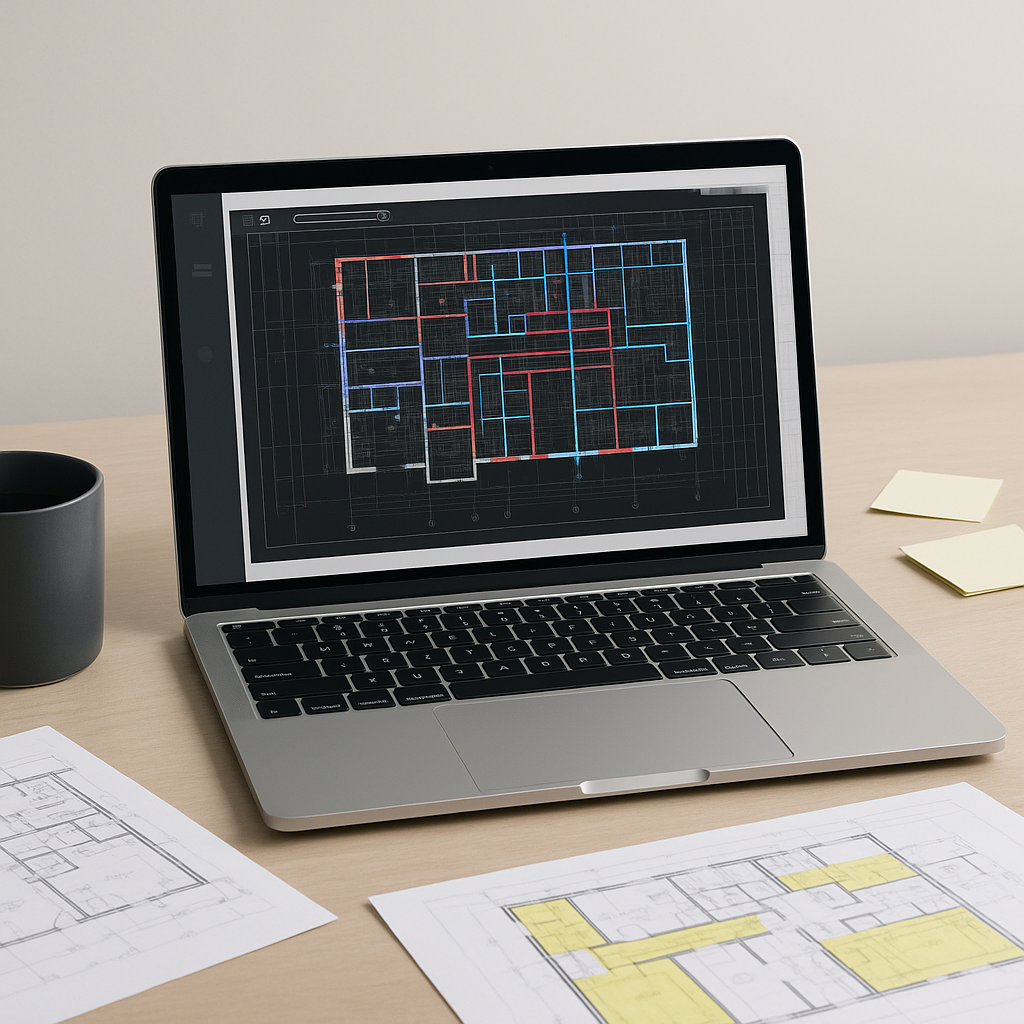
AI-powered tools are transforming the way takeoffs are performed by automating the extraction of quantities from PDF drawings. These tools can recognize patterns, measurements, and annotations directly from the files, significantly reducing the manual effort involved.
Illustrative example — Imagine a scenario where a team spends days manually measuring and counting elements in a set of drawings. With AI, this process could be completed in a fraction of the time, freeing up resources for more strategic tasks.
How It Works: The 3-Step Process
-
Upload Your Drawings: Drag and drop your PDF plans into the platform. It doesn’t matter if they’re messy, hand-annotated, or even scanned—AI is designed to handle a variety of inputs.
-
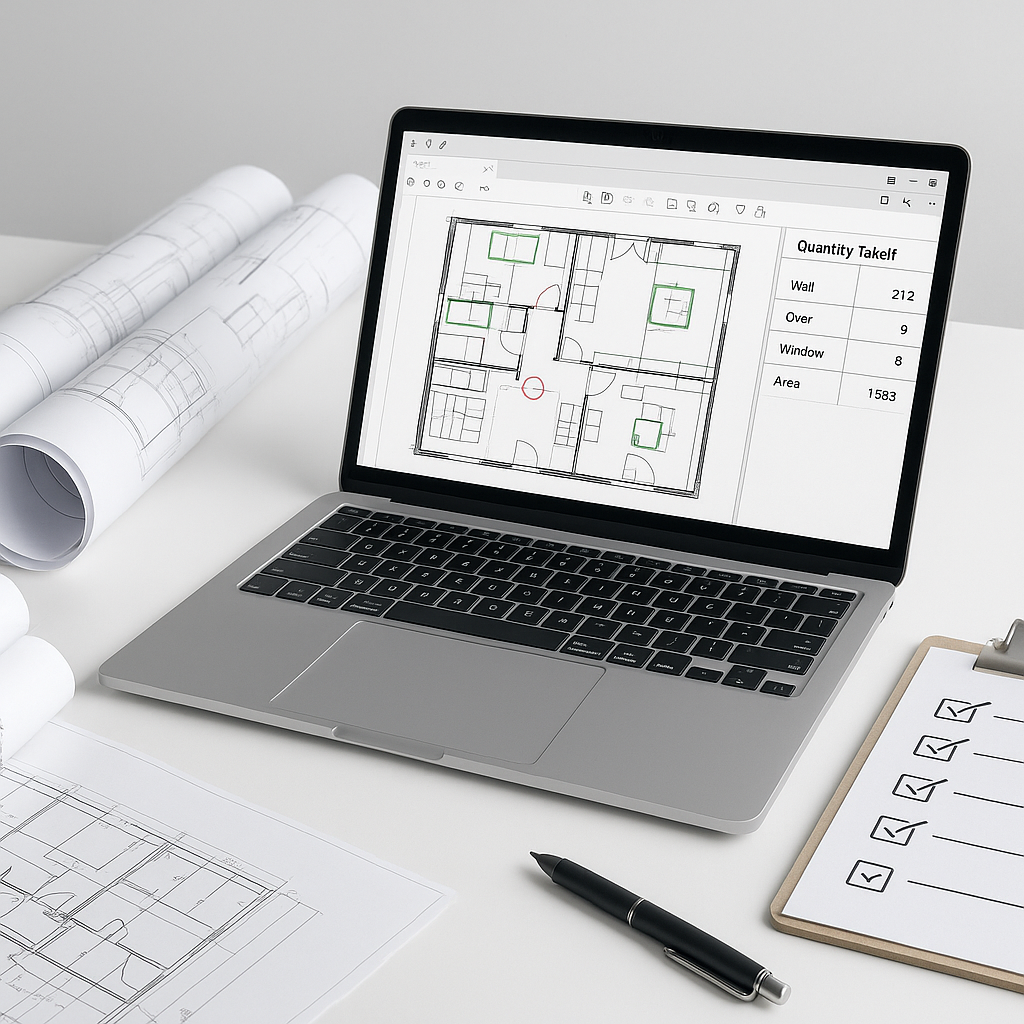
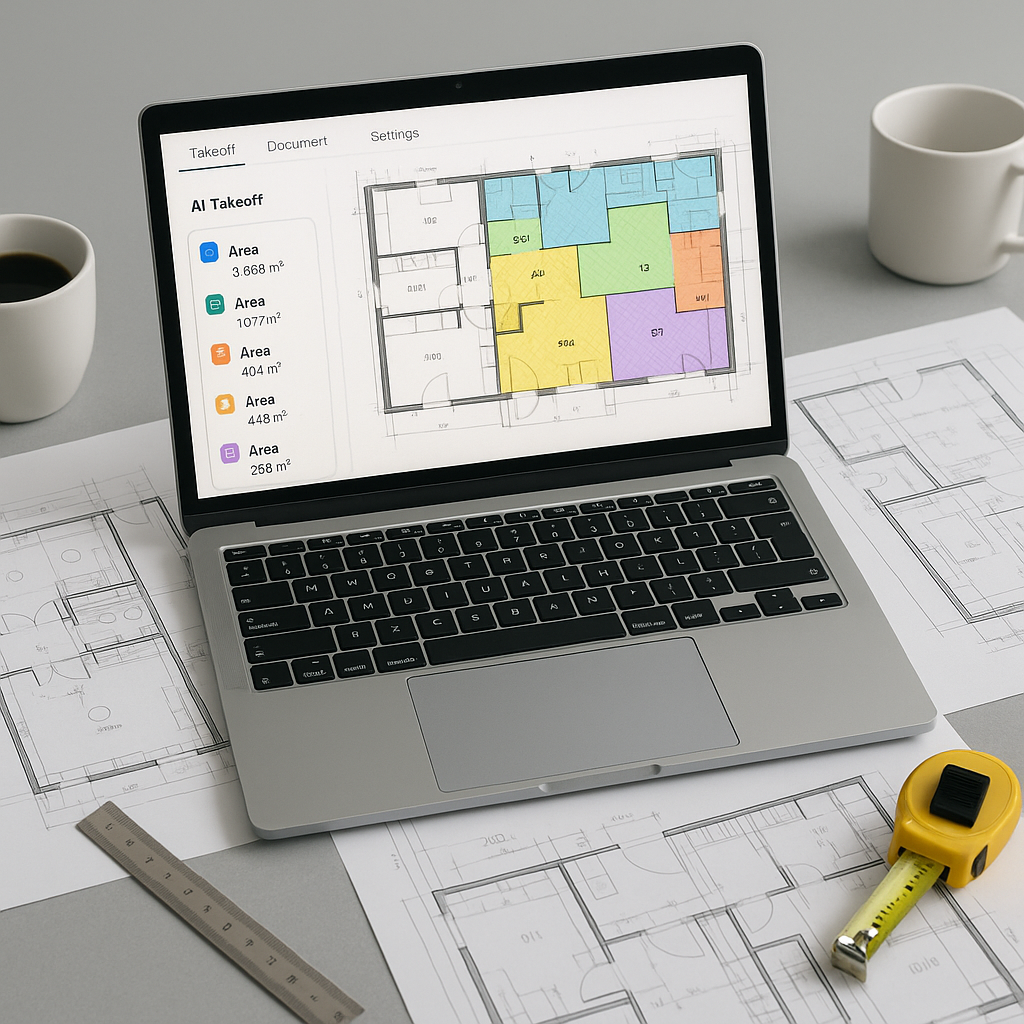
Calibrate and Extract: Use simple tools to calibrate the scale. Then let the AI go to work. It extracts room areas, wall lengths, door/window counts, and more in minutes.
-
Review and Adjust: While AI tools are highly efficient, human oversight is essential. Review the results and make adjustments as needed to ensure accuracy.
The Common Pushback: “AI Can’t Think Like an Estimator”
A common concern is that AI lacks the judgment of a seasoned estimator. This is true—AI is not a replacement for human expertise. Instead, it’s a tool designed to handle repetitive tasks, allowing estimators to focus on high-value activities like subcontractor negotiations, margin strategies, or improving win rates. By reducing the time spent on manual takeoffs, estimators can allocate more time to refining and optimizing their bids.
Why Speed Matters More Than Ever
Construction timelines are tighter than ever, and clients expect faster turnaround on estimates. AI-powered takeoffs provide a speed advantage, enabling you to deliver estimates more quickly than competitors. Faster takeoffs also mean you can handle more bids, increasing your chances of winning projects. It’s a volume game, and AI helps you play it smarter.
FAQ: Quick Answers for Skeptics
Q: How accurate are AI-powered takeoffs?
AI tools are highly accurate but not perfect. That’s why platforms include options for manual review and adjustments to ensure precision.
Q: Will AI replace estimators?
No. AI handles repetitive tasks, but estimators are still essential for making judgment calls and refining bids. Think of AI as an assistant, not a replacement.
Q: What if my drawings are inconsistent or messy?
AI-powered tools are designed to handle messy inputs, including scanned PDFs and hand annotations. Calibration ensures accuracy even with imperfect files.
Q: Is it hard to learn these tools?
Most AI platforms are intuitive, and training typically takes a short amount of time. The time savings kick in almost immediately.
Common Mistakes to Avoid
-
Skipping Calibration: Always calibrate the scale before extracting quantities. A small mistake here can throw off the entire estimate.
-
Blind Trust in AI: Review low-confidence results. AI is fast, but human oversight ensures accuracy.
-
Underutilizing the Tool: Many teams only use AI for linear measurements. Don’t ignore its ability to count fixtures, calculate areas, or analyze revisions.
The Bottom Line
AI-powered takeoffs are more than just a convenience—they’re a competitive edge. By automating repetitive tasks, these tools allow estimators to focus on strategic, high-value work. Adopting AI in preconstruction estimation is quickly becoming a necessity for staying competitive in today’s fast-paced construction industry.