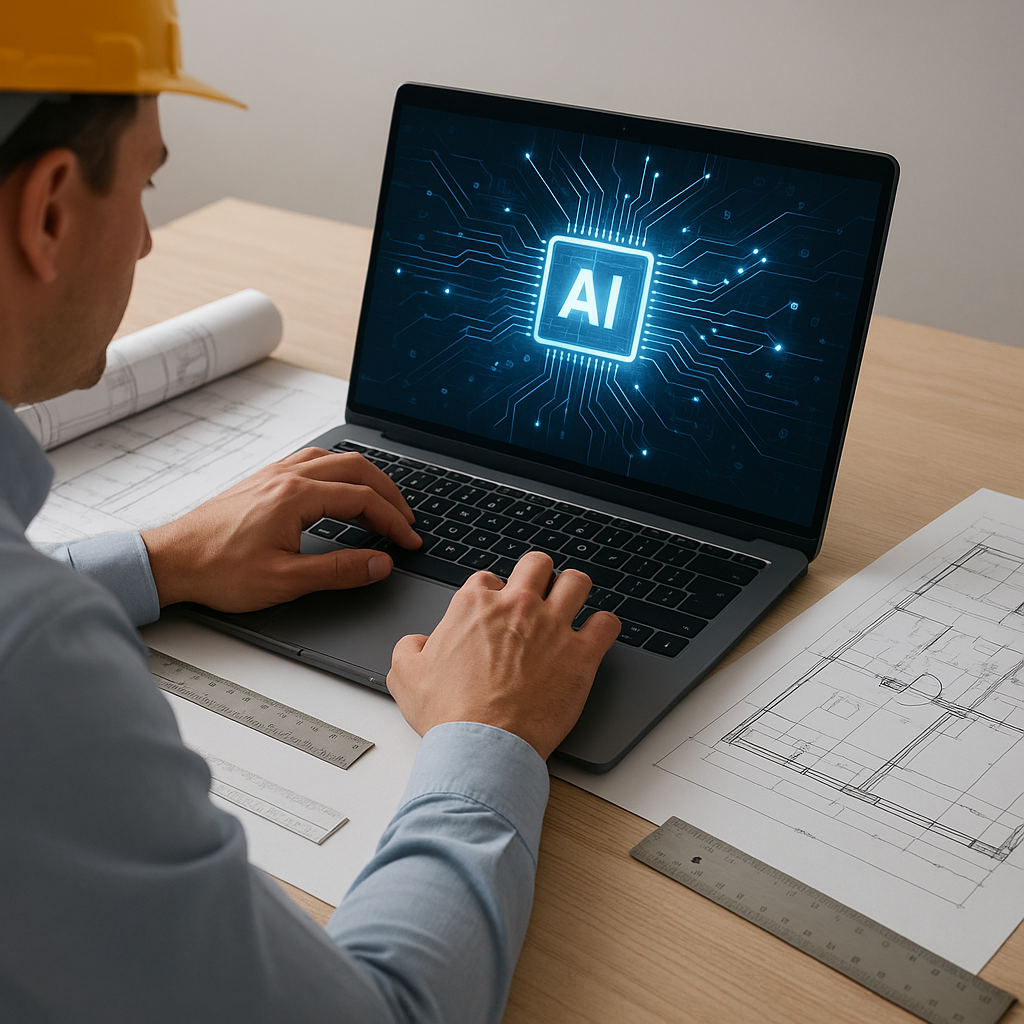
Why Are Takeoffs Still a Bottleneck in Construction Estimation?
Every estimator has been there: a 200-page PDF of drawings lands in your inbox. You have bids due in three days, and the clock is already ticking. You grab your coffee, open your Bluebeam or your takeoff software of choice, and start measuring line by line. Room areas, lengths, counts, annotations—it’s a full day's job, maybe two.
Now, multiply that by multiple estimators, each dedicated to a different aspect of the bid. Add in the inevitable revisions to the drawings and the inevitable human errors that creep in after hours of clicking and calculating. The result? You’ve just spent significant time on a single task that doesn’t even include rate matching, scope alignment, or bid prep. It’s not just inefficient; it’s a waste of talent and time.
The irony? We’re in 2023, and many of us are still doing quantity takeoffs the same way we did them 20 years ago. Why? Because it’s the devil we know. But what if there’s a better way?
How AI-Powered Takeoffs Work
Let’s talk about AI. Specifically, how AI is changing the game for quantity takeoffs in preconstruction estimation. Tools like EstimateNext use Vision AI to automate the process. You upload your drawing set—yes, even if it’s a messy, unstructured PDF—and within minutes, you’ve got your quantities extracted, categorized, and ready to use.
Here’s how it works:
- Drawing Upload: You upload the PDF to the platform. No need to worry about file formats or organization—it handles messy files like a pro.
- AI Recognition: The Vision AI scans the drawings, identifying room areas, wall lengths, opening counts, and more. It’s like having a junior estimator who never sleeps.
- Confidence Scoring: Every extracted line item is given a confidence score. Low confidence? You can manually verify and adjust as needed. No more wondering if your numbers are off.
- Export-Ready: Once verified, the quantities are seamlessly exported into your BOQ, ready for rate matching and bid preparation.
Real Impact: Time Savings and Efficiency
Illustrative example — A contractor working on a high-rise bid used an AI-powered tool to extract quantities for concrete columns, beams, and wall panels from over 50 drawing sheets. Normally, this task would take multiple estimators several days. With AI, the initial output was generated in minutes, and the review process took only a few hours. This allowed the team to focus on refining the bid strategy, improving sub bid leveling, and double-checking the more creative aspects of their proposal. The result was a more efficient process and a higher-quality bid.
The Numbers Add Up
According to a 2023 McKinsey report, early adopters of AI in construction estimation see significant cost and time savings per project. Even for smaller projects, the ROI is clear: time saved is money saved. By automating repetitive tasks, estimators can redirect their efforts to higher-value activities like strategy and risk assessment.
The Obvious Objection: "AI Can’t Think Like an Estimator"
We hear it all the time: "AI doesn’t know construction." And you’re right. AI isn’t a substitute for your expertise. But that’s not the point.
AI is like hiring a tireless assistant for the mundane tasks that drain your time and energy. It measures the lines, counts the doors, and calculates the areas so you don’t have to. You’re still the one deciding on pricing strategies, evaluating risks, and making the final call. The AI just clears your plate so you can focus on what you’re actually good at.
Common Mistakes with AI Takeoffs
- Blind Trust: AI is a tool, not a magic wand. Always review low-confidence items.
- Ignoring Training: AI tools improve over time with feedback. If you’re not using the feedback system, you’re leaving accuracy improvements on the table.
- Lack of Integration: If your takeoff tool doesn’t integrate with your existing software (Bluebeam, Procore, etc.), you’re adding unnecessary friction. Look for tools like EstimateNext that offer seamless integration.
- Assuming AI is Expensive: Many contractors think AI tools are out of reach for their budget. However, affordable options are available that can fit into most budgets.
The Bottom Line
Takeoffs shouldn’t take days. Not in 2023. With AI-powered tools like EstimateNext, you can get quantities extracted quickly, saving significant time per project. That’s time you could spend on what really matters: winning more work, building better relationships with subs, and refining your bids.


