Sub Bid Leveling: The Tedious Preconstruction Chore No One Talks About
If you’ve ever had to level subcontractor bids, you know it’s no one’s favorite task. It’s a grind. You’re piecing together quotes from multiple subs, all using different line items, scopes, and formats. Some use unit rates, others lump sums. One sub includes scaffolding in their price; another doesn’t. Add in typos, missing scope items, and last-minute changes, and you’ve got a recipe for frustration.
Manual sub bid leveling can take significant time for a mid-sized project. And let’s be honest—it’s not just about the time. It’s the mental fatigue that comes with cross-checking spreadsheets, chasing clarifications, and making sure you’re comparing apples to apples.
But here’s the kicker: Even after all that effort, you’re still guessing. Did you catch every scope gap? Are you missing hidden costs buried in a sub’s exclusions? The stakes are high because leveling mistakes can cost you the job—or worse, blow a hole in your margins if you win.
How AI Changes the Game
This is where AI-powered preconstruction tools like EstimateNext step in. Instead of slogging through manual comparisons, you can upload your sub quotes directly into the platform.
Here’s what happens next:
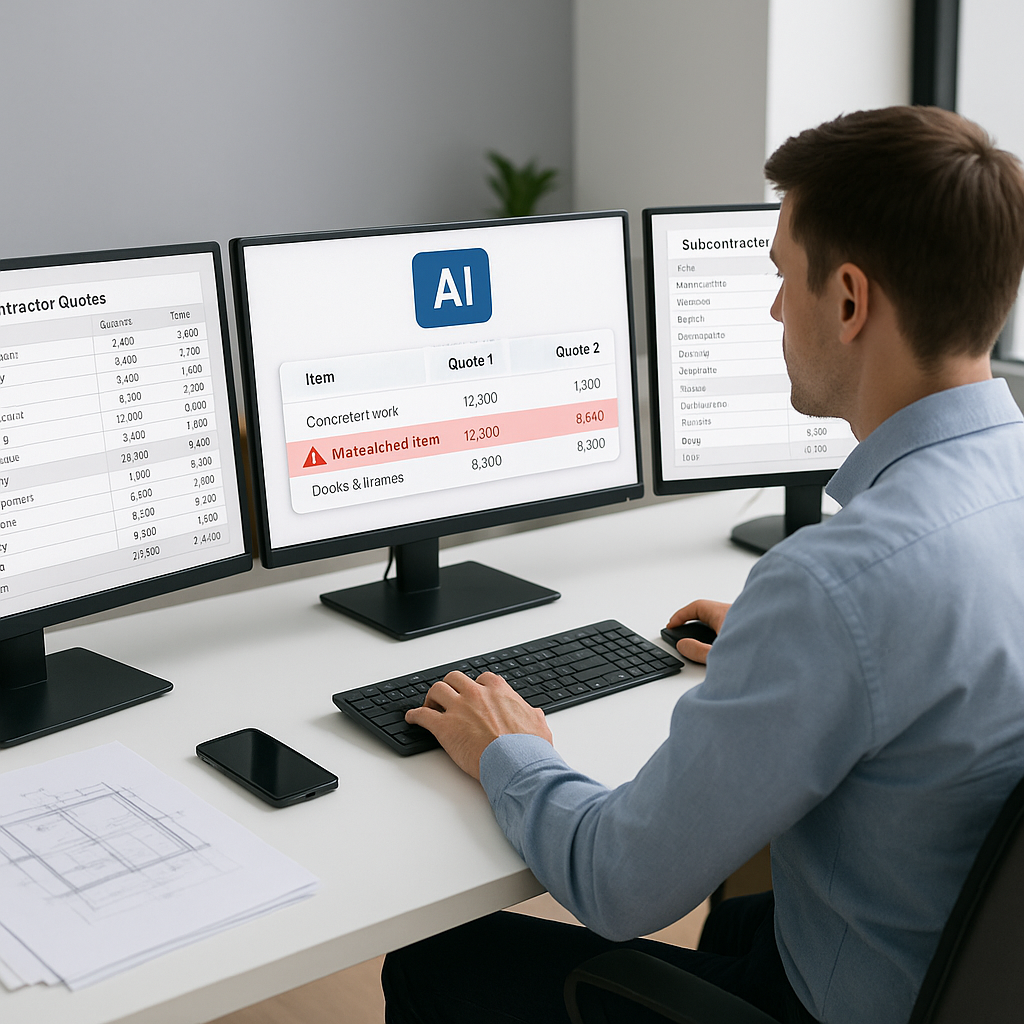
- Scope Normalization: The AI identifies scope gaps by comparing line items across all quotes. For example, if Sub A includes scaffolding but Sub B doesn’t, the system flags it.
- Rate Matching: It cross-references the rates in each quote with its database of standard SOR items, highlighting outliers or inconsistencies.
- Ranking: Once the scope and rates are normalized, it ranks your subs—L1 (lowest bid) to L3—based on cost, scope coverage, and other metrics you set.
This process, which used to take hours, now takes significantly less time. And because the system creates an audit trail, you can double-check its work or override decisions if needed.
Common Objections to AI in Estimation
“AI can’t think like an estimator.”
You’re right—it doesn’t. But it doesn’t need to. AI doesn’t replace your expertise; it amplifies it. You’re still the one making judgment calls, negotiating with subs, and deciding on markup. The AI just handles the grunt work, like comparing line items and spotting inconsistencies.
“What if the AI misses something?”
That’s why tools like EstimateNext include features like manual overrides. You can review and adjust as needed. Think of it as having a junior estimator who never gets tired and learns from every project.
What to Watch For
Not all AI tools are created equal. Some are better at handling complex, multi-trade bids than others. Look for a platform that:
- Supports multiple file formats (PDF, Excel, etc.)
- Offers integrations with your existing tools like Procore or Bluebeam
- Includes a robust database of standard rates and the ability to upload custom catalogs
Also, don’t underestimate the importance of training. AI tools are user-friendly, but there’s always a learning curve. Most teams get the hang of it after two or three projects.


