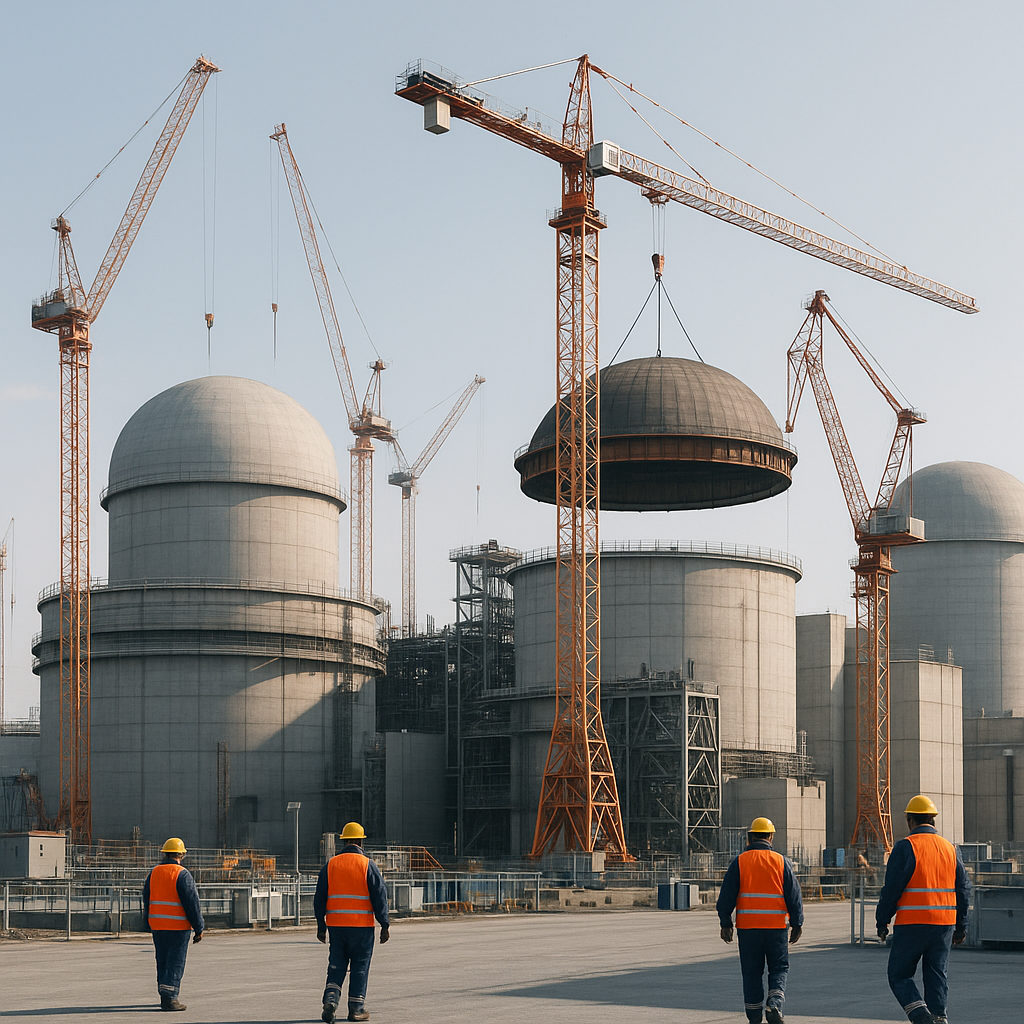
Understanding the Impact of DOE's $17.5B Nuclear Loans on Rate Analysis
The Department of Energy’s (DOE) $17.5 billion loan program to fund nuclear reactor construction is creating significant opportunities and challenges in the construction industry. Estimating costs for nuclear plants is particularly complex due to labor shortages, materials volatility, and stringent regulatory requirements.
For general contractors (GCs) and preconstruction teams, the challenge lies in pricing these projects accurately and efficiently. A single misstep in rate assumptions can have significant financial implications. Below, we explore the unique complexities of nuclear construction and how modern tools can help address these challenges.
Why Nuclear Construction Costs Are Different
1. Specialized Labor
Nuclear construction requires highly skilled labor, including certified welders, pipefitters, and electricians. These workers often command premium rates due to their specialized training and the limited supply of qualified personnel. Labor shortages in the industry further exacerbate the challenge, making it essential for estimators to use up-to-date labor rate data that reflects current market conditions.
2. Exotic Materials
Nuclear reactors require specialized materials such as reinforced concrete, high-grade steel, and proprietary coatings. These materials often have unique specifications, such as radiation shielding or high compression strength, which make them more expensive and harder to source. Estimators must carefully account for these factors when building their rate libraries.
3. Regulatory Overhead
Nuclear projects are subject to strict regulatory compliance, which adds layers of testing, documentation, and inspections. These requirements introduce additional costs and time considerations that must be factored into rate analysis. Estimators often include these as overhead percentages or contingency line items to ensure comprehensive cost coverage.
Addressing the Rate Matching Problem
One of the most significant challenges in nuclear project estimation is finding and matching accurate rates for specialized labor, materials, and equipment. Traditional methods, such as manually searching through rate books or spreadsheets, can be time-consuming and error-prone.
Leveraging Technology for Efficiency
Modern tools, such as AI-powered rate libraries, can streamline the rate-matching process. These tools use advanced search capabilities to quickly identify relevant rates based on project-specific criteria. For example, estimators can search for "nuclear-certified welders" or "radiation-resistant materials" and receive tailored results, along with adjustments for inflation, location, and project scale.
Illustrative example — Using traditional methods, finding and cross-verifying a rate for nuclear-grade concrete might take several hours. With AI-powered tools, this process can be completed in seconds, significantly improving both speed and accuracy.
Adapting to Market Volatility
Market conditions for materials, labor, and interest rates are constantly changing, and DOE loans do not shield projects from these fluctuations. Estimators must be prepared to adapt their rate assumptions in real time to reflect current market trends.
Dynamic Rate Updates
AI-powered platforms can dynamically update rates as market conditions change. For instance, if the cost of steel increases, the tool can automatically propagate the updated rate across the entire estimate, ensuring consistency and accuracy. This capability reduces the risk of errors and helps estimators respond quickly to market volatility.
Common Mistakes in Nuclear Rate Analysis
- Underestimating Labor Costs: Ensure your labor rate library is updated to reflect current market conditions.
- Ignoring Regulatory Overhead: Compliance costs are significant and must be accounted for.
- Over-Reliance on Historical Data: Adjust historical rates for inflation and current demand to avoid inaccuracies.
- Manual Rate Matching: Automate the process with AI tools to improve speed and accuracy.
Conclusion: The Future of Nuclear Construction Estimation
The DOE’s $17.5 billion loan program presents both opportunities and challenges for the construction industry. Accurate rate analysis is critical for successfully bidding on nuclear projects, given their complexity and high stakes.
By leveraging modern tools and methodologies, estimators can improve the accuracy and efficiency of their rate analysis, ensuring competitive bids and minimizing financial risks.


