The Takeoff Problem in Preconstruction
If you’ve spent any time in preconstruction, you know how tedious manual takeoffs can be. Estimators often spend significant time tracing every wall, window, and floor area in PDF drawings. It’s not just time-consuming—it can also limit your team’s capacity to handle multiple bids effectively, leading to tighter timelines and increased stress.
For years, preconstruction has been a manual process, requiring teams to work harder, hire more people, or pull late nights to meet deadlines. However, advancements in AI-powered tools are beginning to change this dynamic.
The Potential of AI in Takeoffs
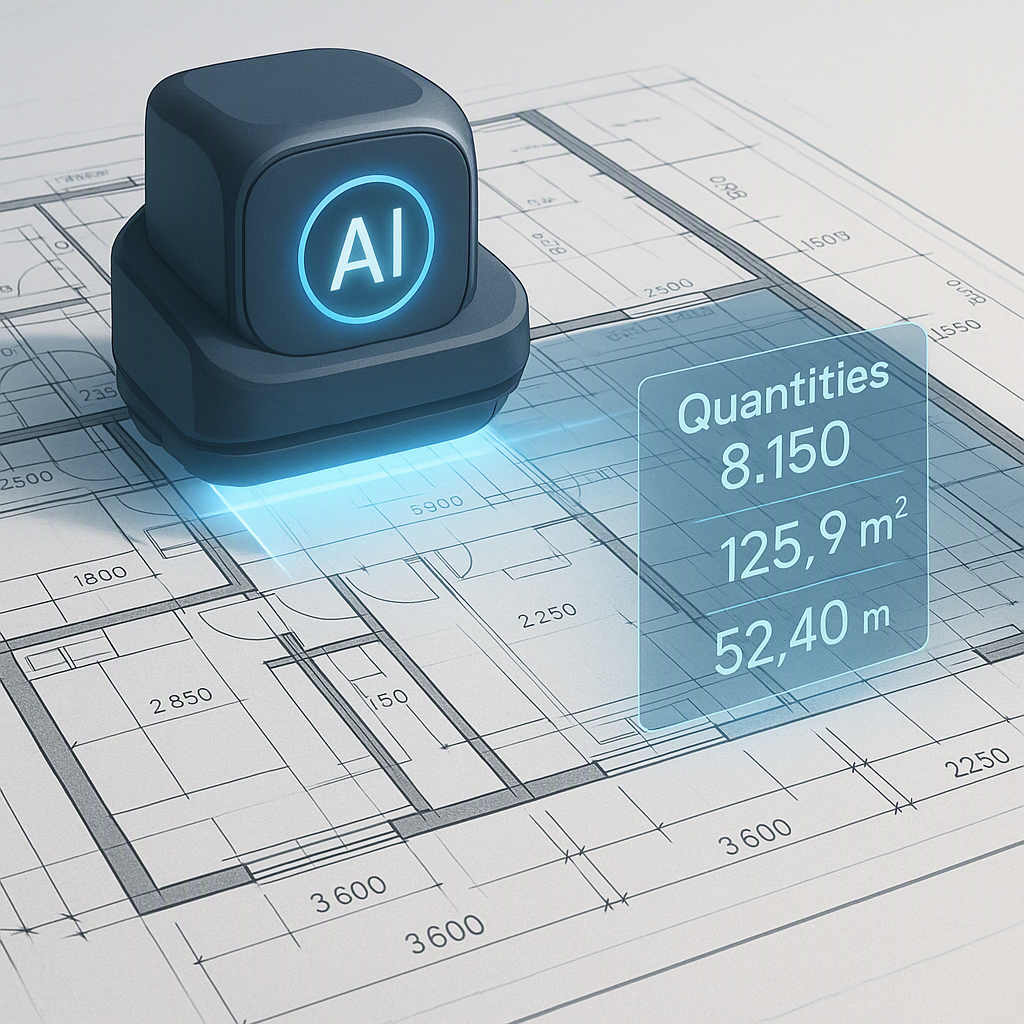
AI-powered tools for quantity takeoffs are designed to automate the process of extracting measurements and quantities from construction drawings. These tools can significantly reduce the time required for takeoffs, allowing teams to focus on refining bid strategies and negotiating with subcontractors.
Illustrative example — Imagine a scenario where a manual takeoff process typically takes two days. Using an AI-powered tool, this process could be completed in a fraction of the time, freeing up resources for other critical tasks.
Overcoming Resistance to Change
Adopting new technology in preconstruction can be challenging. Common concerns include:
- Trust Issues: Estimation is high-stakes, and teams may worry about the accuracy of AI-generated results.
- Learning Curve: Many teams have invested years mastering traditional tools like Bluebeam, Excel, and RSMeans, and adding another tool might feel overwhelming.
However, the benefits of automation often outweigh these concerns. By combining AI with human oversight, teams can catch potential errors early and improve overall efficiency.
How AI Tools Work in Preconstruction
Here’s a general workflow for integrating AI-powered tools into the estimation process:
- Upload Drawings: PDF drawings are uploaded into the AI tool, which automatically extracts quantities such as room areas, wall lengths, and door counts.
- Review Low-Confidence Areas: The AI flags measurements it is unsure about, allowing estimators to manually verify them. This step is typically faster than traditional methods.
- Export the Takeoff: Once the results are reviewed, the takeoff data can be exported into existing estimation workflows, integrating with tools like Procore or Excel.
These tools also improve over time, learning from past projects to better understand specific needs, such as recurring design elements or custom rate catalogs.
Challenges and Considerations
While AI tools offer significant advantages, there are still challenges to address:
- Edge Cases: Unusual design features or inconsistent drawing standards can sometimes confuse AI tools. Combining AI with human oversight helps mitigate these issues.
- Long-Term Implications: Teams may need to consider the balance between automation and maintaining the expertise required for manual estimation.
Conclusion: A Smarter Way Forward
AI tools for preconstruction estimation are not about replacing human expertise but enhancing it. By automating repetitive tasks, these tools allow teams to focus on strategic aspects of their work, such as creativity and winning more bids. If you’re still relying solely on manual takeoffs, it may be time to explore how AI can help optimize your processes and improve efficiency.


