Storm Relief: Challenges for Construction Estimators
Storm relief projects often involve repairing critical infrastructure like roads, bridges, and utilities. These projects are urgent and come with unique challenges for construction estimators. Accurate and timely estimation can determine who wins the contracts and ensures the project’s financial viability.
Why Storm Projects Are Hard to Estimate
Emergency relief projects present several challenges:
- Aggressive Timelines: Communities need repairs quickly, leaving little room for delays in estimation or execution.
- Unpredictable Damage: Field assessments are often required to understand the extent of the damage before estimation can begin.
- Specialized Cost Factors: Storm damage involves non-standard items such as:
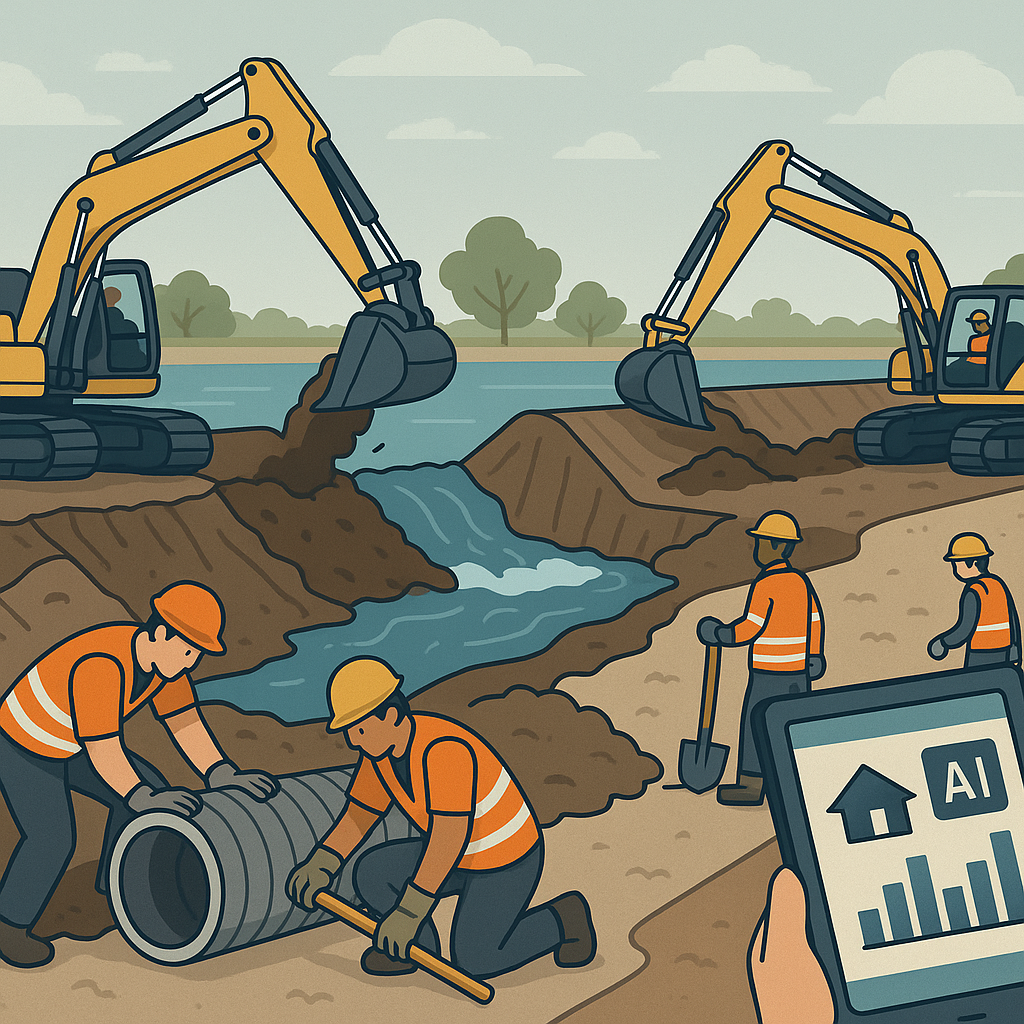
- Earthwork volumes for washed-out roads or levees.
- Temporary traffic control setups.
- Overhauls of drainage systems.
Estimators often need to source rates for materials and labor that account for these storm-specific factors. Traditional methods, like flipping through rate catalogs, can be time-consuming and prone to errors. Misestimating costs can lead to overpricing and losing bids or underbidding and incurring losses.
How Smarter Workflows Can Help
Modern tools and workflows can significantly improve the estimation process. For example, AI-powered tools can:
- Match rates for materials and labor across large databases.
- Automate calculations for complex tasks like earthwork volumes or drainage system requirements.
- Adjust for local standards, tax regimes, and inflation factors.
Illustrative example — Imagine pricing earthwork volumes for levee reconstruction. Instead of manually calculating cut-and-fill quantities, a civil estimation tool could optimize material quantities and factor in labor rates, saving time and reducing errors.
Common Mistakes in Storm Damage Estimation
- Ignoring Inflation Factors: Storm projects often span multiple years. Failing to adjust for inflation can lead to inaccurate bids.
- Underestimating Temporary Works: Costs for temporary detours, traffic control, or shoring can add up quickly if not accounted for.
- Relying on Generic Rate Books: Standard rate schedules may not cover the specialized needs of storm damage projects. Custom vendor quotes or specialized tools are often necessary.
The Bottom Line
Storm relief funding presents significant opportunities for construction firms, but success depends on the ability to estimate projects quickly and accurately. Leveraging smarter workflows and modern tools can help estimators overcome the unique challenges of storm-related projects, ensuring competitive and viable bids.


