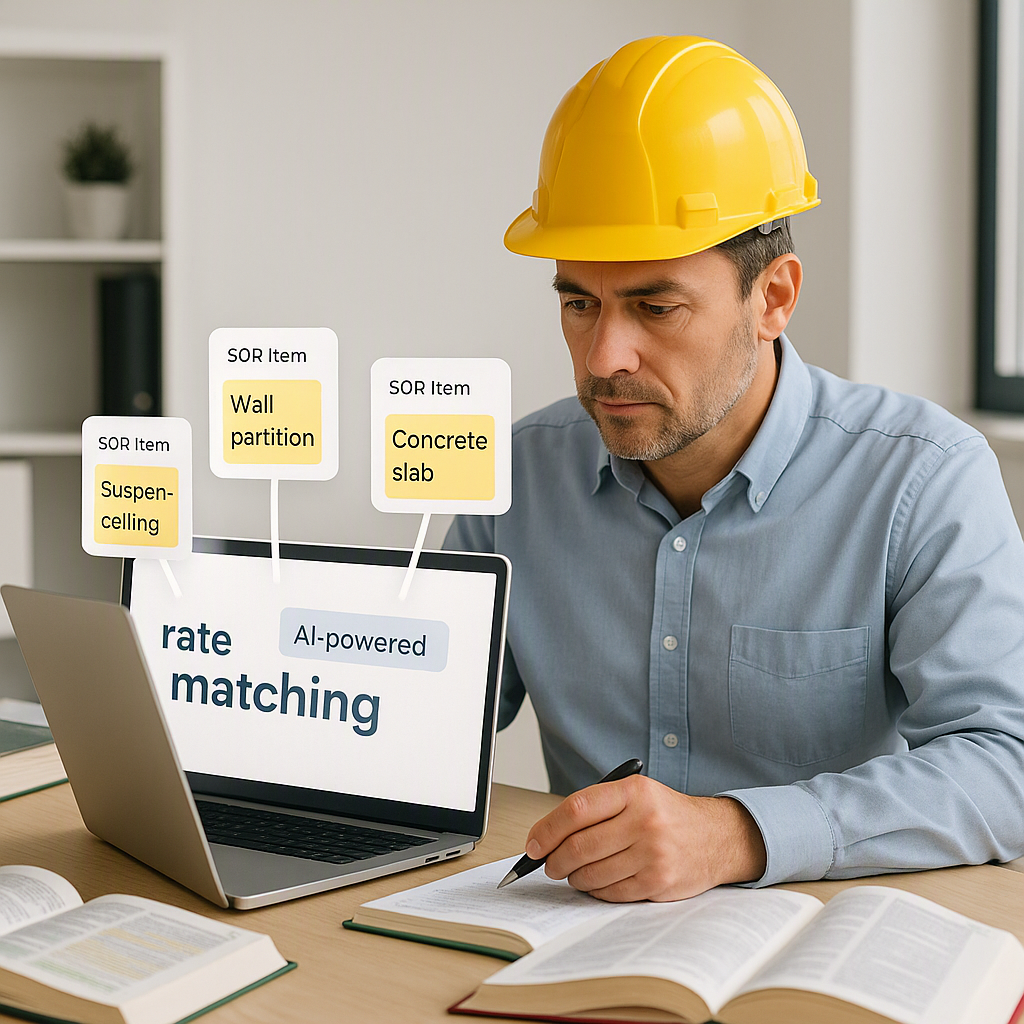
Why Rate Analysis is a Bottleneck for Estimators
Rate analysis might seem straightforward: material + labor + equipment, plus overhead and profit. Simple formula, right? Unfortunately, any estimator with real experience knows that's far from the truth. The devil is in the details — flipping through outdated rate books like CPWD DSR, manually calculating inflation adjustments, or cross-referencing endless spreadsheets. Miss one adjustment, and your bid could either hemorrhage profit or lose the project altogether.
The Real Pain Points in Manual Rate Analysis
Let’s go deeper into the common struggles estimators face:
-
Time-Consuming Data Entry: When your Bill of Quantities (BOQ) has hundreds of line items, extracting rates from massive catalogs like CPWD DSR or RSMeans can eat up hours. Add the complexity of manually mapping rates to quantities, and you're left with a frustratingly inefficient workflow.
-
Error-Prone Manual Calculations: A single oversight in inflation adjustments or unit rates can snowball into massive financial losses. Imagine miscalculating the cost of a high-value structural component — the consequences could be disastrous.
-
Regional Variability: Rates for materials and labor often depend on geographic location. If your rate catalog isn't localized or up-to-date, you risk submitting bids based on inaccurate assumptions.
-
Lack of Transparency: Traditional rate analysis methods often lack a clear audit trail. When clients ask for justification of your costs, you might struggle to explain how each figure was derived.
Why AI-Powered Rate Analysis Tools Are the Solution
An AI-driven rate analysis calculator can radically transform how estimators approach this critical task. One such tool, EstimateNext, simplifies the process, ensuring accuracy and saving valuable time. Here’s how it works:
-
Semantic Search Across Vast Catalogs: Instead of flipping through PDFs or Excel files, upload your BOQ into the tool. The AI scans your line items and matches them with rates from a database of over 78,000 Standard Schedule of Rates (SOR) items, ensuring you get the most relevant results.
-
Detailed Rate Breakdown: Modern tools don’t just give you a lump sum rate. They break down costs into material, labor, and equipment, offering transparency and a full audit trail. Knowing where every number comes from builds confidence in your estimates.
-
Built-In Inflation Adjustments: For long-term projects, inflation can be a critical variable. AI tools automate this process by suggesting inflation percentages based on the latest regional Consumer Price Index (CPI). This ensures your bid is realistic and accounts for price fluctuations.
-
Customization and Learning: If the AI doesn’t find the perfect match for a rate, you can override its suggestions or input custom rates. Over time, the system learns from your preferences, refining future recommendations.
Expanded Practical Steps to Use a Rate Analysis Tool
If you’re ready to make the transition from manual methods to automated rate analysis, follow these actionable steps:
1. Audit Your Current Process
- Estimate the time your team spends on rate analysis for each bid. A detailed time audit will highlight inefficiencies.
- Identify common pain points such as error rates, time spent on corrections, or struggles with inflation adjustments.
2. Choose the Right Tool
- Evaluate tools based on catalog coverage. Does it support your region’s standard rate books like CPWD DSR, RSMeans, or similar?
- Check for features like inflation adjustments, customization, and audit trails.
- Assess the user interface. A complicated tool might save time but could require extensive initial training.
3. Implement on a Trial Basis
- Select a small, manageable project for your first test run. Compare the AI-generated rates with your traditional methods to see the difference.
- Look for discrepancies and confirm the tool’s accuracy.
4. Train Your Team
- Schedule training sessions to familiarize your estimators with the new tool.
- Build a troubleshooting guide to address common issues during onboarding.
5. Measure ROI and Scale Up
- Track metrics like time saved, accuracy improvements, and overall bid success rates.
- Gradually roll out the tool for larger projects as your team becomes more comfortable.
Common Pitfalls to Watch For
Even with advanced AI tools, there are critical mistakes to avoid:
- Blind Trust in Default Rates: AI tools are highly accurate, but they aren’t infallible. Always validate suggested rates for high-value or niche items.
- Neglecting Inflation Factors: Long-term projects require careful attention to inflation. Ensure the tool accounts for regional CPI trends.
- Ignoring Regional Specifics: Construction rates vary drastically across locations. Verify that your tool incorporates localized data.
- Underestimating the Learning Curve: Don’t expect perfection from day one. Invest time in training and customization to maximize the tool’s benefits.
Decision Framework: Choosing the Right Rate Analysis Tool
| Feature | Importance Level | Questions to Ask Providers |
|---|---|---|
| Catalog Coverage | High | Does it include standard rate books for my region? Is the database comprehensive? |
| Customization Options | Medium-High | Can I add custom rates or override suggestions? Does the tool learn from my edits? |
| Inflation Adjustments | High | Does the tool incorporate CPI data automatically? Can I set custom inflation rates? |
| Ease of Use | Medium | How intuitive is the user interface? Is training included? |
| Cost | Medium | Is pricing scalable for my company’s size? Are there hidden fees or restrictions? |
| Data Security | High | What encryption and data protection measures are in place? |
Final Thoughts
Manual rate analysis can be a time sink riddled with opportunities for errors. The introduction of AI-powered tools like EstimateNext has significantly simplified the process, offering speed, accuracy, and transparency. By automating repetitive tasks and providing clear documentation, these tools help estimators focus on crafting competitive bids.
If you're ready to take your estimating to the next level, consider adopting a rate analysis tool and start with a trial project. The benefits — reduced workload, improved accuracy, and faster turnaround — far outweigh the initial learning curve.