The $652M Wake-Up Call
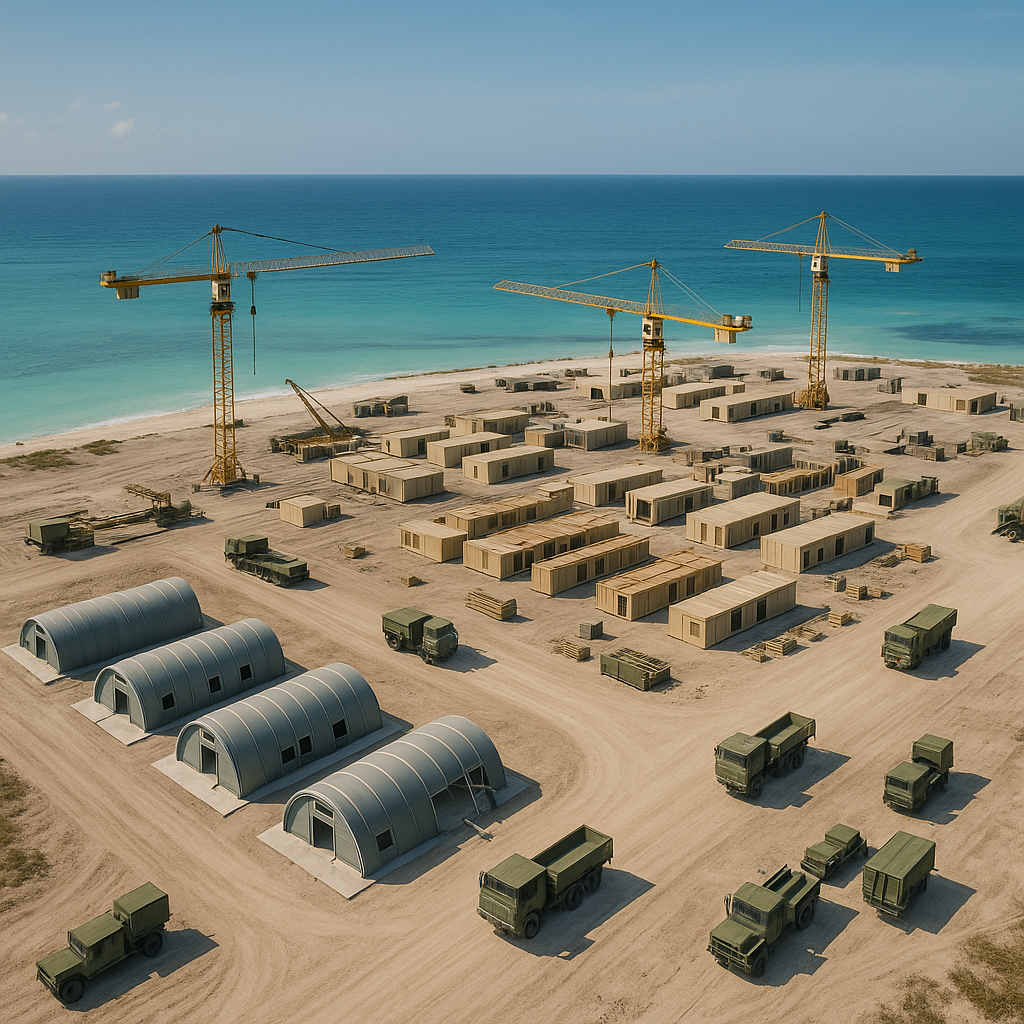
Tutor Perini just landed a $652M contract to build a military base in Guam. That’s huge, but the size of the project isn’t the only story here. This deal, awarded by the Naval Facilities Engineering Systems Command (NAVFAC), signals a shift in how military construction bids are being evaluated. If you’re a general contractor (GC) or a subcontractor in this space, you need to pay attention.
Federal contracts like this come with layers of complexity: compliance, tight timelines, and fierce competition. But what’s really changing? NAVFAC, like many federal agencies, is putting speed and precision at the forefront of bid evaluation. And for GCs still stuck with manual workflows, that’s a problem.
Why Military Contracts Are Different
Military projects like this aren’t your average commercial build. You’re dealing with unique challenges:
- Strict compliance: Federal Acquisition Regulations (FAR) and Defense Federal Acquisition Regulations (DFAR) mean there’s no room for error. A single oversight in wage determination or reporting could result in disqualification or penalties.
- Logistical nightmares: Guam is remote. Materials, labor, and equipment all come with shipping and lead-time headaches. For example, steel sourced from the mainland U.S. can take 30-40 days to arrive in Guam—assuming no delays. Every element of the supply chain must be meticulously planned.
- Tight deadlines: The Department of Defense (DoD) doesn’t do delays. In 2021, a $400M Navy base project in San Diego penalized a contractor $1.2M for missing milestones. If you can’t meet the timeline, you’re out.
But the biggest challenge? The bidding process itself. Manual rate lookups, slow takeoffs, and Excel-based workflows just can’t keep up. GCs who embrace automation are winning these contracts because they can deliver faster, more accurate bids.
The Problem with Manual Workflows
Let’s break it down. A typical military bid involves:
- Takeoffs: For a project like Guam’s military base, takeoffs can take 40-60 hours. That’s two estimators working full-time for a week.
- Rate lookups: Federal projects often require compliance with Davis-Bacon wages or union rates. Flipping through rate books or outdated PDFs adds another 10-12 hours.
- Subcontractor bid leveling: You’ll get quotes from 5-10 subs per trade. Normalizing those bids can take 6-8 hours per trade.
That’s 60-80 hours per bid, minimum. Multiply that by the 5-8 GMP pursuits a year that most top GCs chase, and you’re burning over 500 hours annually just on preconstruction.
Real-World Example: What Manual Processes Cost One GC
A medium-sized GC in Texas reported losing a $150M federal contract in 2022 because their bid was submitted two days late. The delay came down to manual workflows—takeoffs took longer than expected, and their team struggled to reconcile subcontractor bids in time. That one missed opportunity cost them months of overhead recovery and sunk proposal costs.
Now, let’s talk about what happens when you automate.
How Automation Wins Military Bids
AI-powered tools like EstimateNext are changing the game. Here’s how:
1. Faster Takeoffs
Manual takeoffs for a project the size of the Guam base could take a full week. With EstimateNext’s Vision AI, you can extract quantities from PDF drawings in 10 minutes. That’s not an exaggeration—it’s a 10X speed improvement. And it’s not just faster; it’s more accurate. The AI flags low-confidence areas so you can double-check only what matters.
2. Instant Rate Matching
Federal bids often require compliance with specific wage rates, like Davis-Bacon. Instead of flipping through PDFs or manually searching databases, EstimateNext uses semantic search across 78,000+ SOR items. Need a union labor rate for HVAC in Guam? You’ll have it in seconds.
3. Sub Bid Leveling in 30 Minutes
Normalizing subcontractor bids is a nightmare. You’re comparing apples to oranges: one sub includes materials, another doesn’t; one uses union labor, another doesn’t. EstimateNext’s AI-powered bid leveling does the heavy lifting, flagging scope deviations and ranking subs by cost and compliance. What used to take 6 hours now takes 30 minutes.
The ROI Is Brutal (In a Good Way)
Let’s do the math. If you’re saving 50 hours per bid at $130/hour (a typical estimator rate), that’s $6,500 saved per project. Multiply that by 5-8 bids per year, and you’re looking at $32,500-$52,000 in savings annually. And that’s just labor. Faster bids mean more bids submitted, which means more wins.
For a GC director, the ROI is undeniable. EstimateNext’s GC plan costs $99/month per seat. That’s $1,188/year. The savings? 40X, minimum.
Case Study: A GC Automates and Wins Big
One mid-sized GC in California implemented EstimateNext in 2022. They reduced their preconstruction workload by 35% and landed two federal contracts worth $225M. The company reported a 25% increase in bid submissions year-over-year, directly attributed to faster workflows.
Tutor Perini’s Secret Weapon?
While there’s no public confirmation that Tutor Perini uses AI tools, it’s clear they’ve optimized their processes. You don’t win a $652M federal contract without nailing compliance, speed, and accuracy. And for those still relying on manual workflows, you’re playing catch-up.
The Bigger Picture: Federal Funding Is Exploding
The Guam project isn’t a one-off. Thanks to the Infrastructure Investment and Jobs Act (IIJA) and increased defense spending, federal construction opportunities are booming. A 2023 McKinsey report estimates $1.2 trillion in federal infrastructure funding over the next decade. Military bases, data centers, and transportation hubs are all on the table.
Federal vs. Commercial Projects: Key Differences
| Feature | Federal Projects | Commercial Projects |
|---|---|---|
| Compliance | FAR/DFAR, Davis-Bacon rates | Local/state regulations |
| Deadlines | Fixed, no extensions | Flexible |
| Competition | High, strict evaluation | Moderate |
| Payment Terms | Multi-stage, slower | Faster |
But here’s the kicker: federal agencies are prioritizing contractors who can move fast. If your preconstruction team is still stuck in Excel, you’re leaving money on the table.
What’s Next for GCs?
The rules are changing. To compete for federal contracts, GCs need to:
- Automate takeoffs: Stop wasting 40 hours on manual measurements.
- Streamline compliance: Use tools that handle federal wage rates and union rules automatically.
- Level subs faster: AI-powered bid leveling isn’t optional anymore.
If you’re not investing in automation, you’re falling behind. And with $1.2 trillion in federal funding up for grabs, that’s a costly mistake.
Final Thoughts
Tutor Perini’s $652M Guam project is a blueprint for future military bids: speed, precision, and compliance win the day. If you’re still relying on manual workflows, it’s time to rethink your approach. AI-powered tools like EstimateNext aren’t just nice-to-haves—they’re essential.
If you’re dealing with slow takeoffs and manual bid leveling, EstimateNext can help. Get started free →


