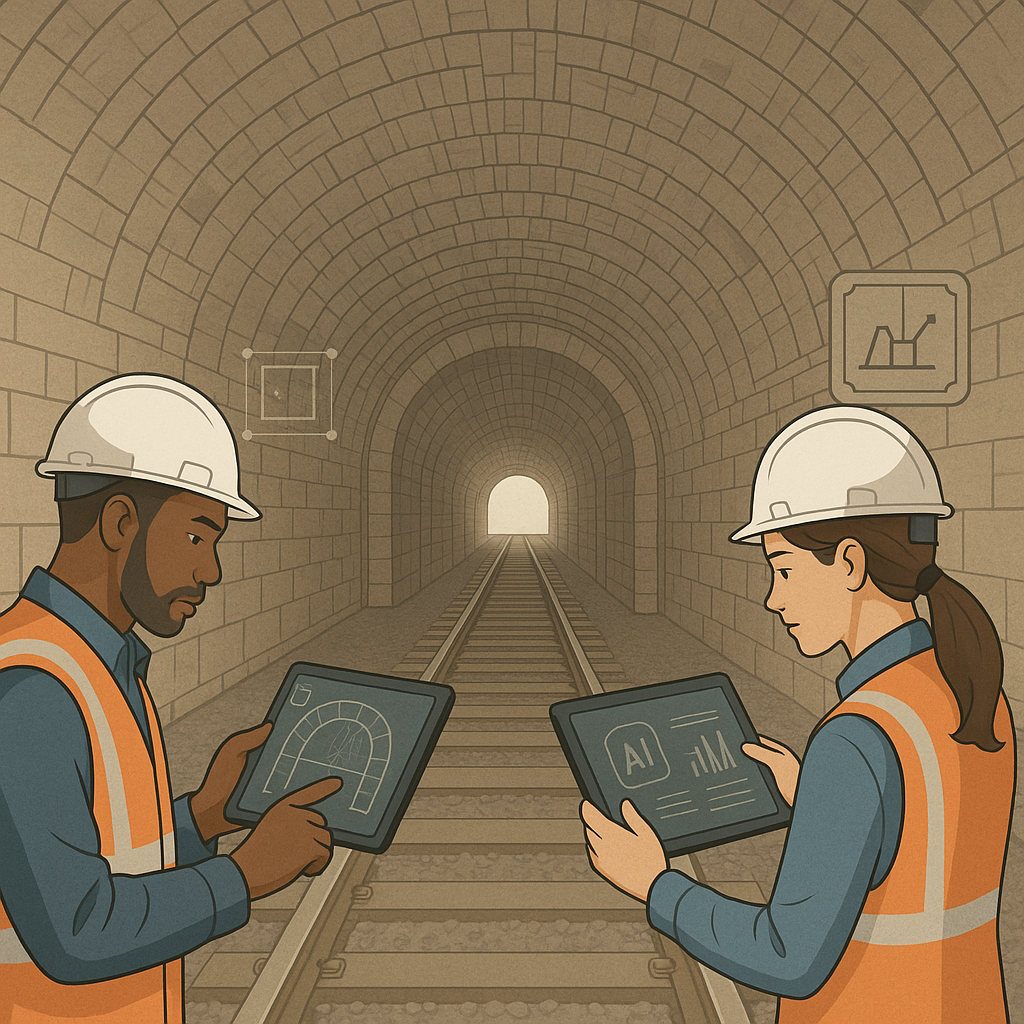
Preconstruction Challenges in Large Infrastructure Projects
Rehabilitating century-old infrastructure is no small task. Large-scale projects, such as tunnel rehabilitations, highlight the critical importance of preconstruction planning. These projects often involve complex logistics, tight budgets, and high stakes for timely delivery.
Let’s be real: these projects live or die in preconstruction. Miss a quantity on a bid and you’re eating the cost later. Misprice a line item and you’re losing the bid outright. The challenges in preconstruction planning reveal inefficiencies that many estimators, contractors, and general contractors (GCs) still face.
The Bottleneck: Manual Takeoffs Are Time-Consuming
Anyone who’s worked on rail or tunnel projects knows how demanding takeoffs can be. For such projects, you’re not just measuring track lengths. You’re also quantifying:
- Utility conduits running through confined spaces.
- Ventilation systems for tunnels.
- Waterproofing and structural rehabilitation for walls damaged by environmental factors.
Traditionally, this means scanning hundreds of oversized PDF drawings, manually tracing measurements in software or on paper, and entering quantities into spreadsheets. For large projects, this process can take significant time and effort just to reach the starting line.
Modern tools can help streamline this process by automating quantity extraction from drawings, reducing the time and effort required for takeoffs. These tools can identify linear measurements, counts, and areas, helping teams focus on higher-value tasks and reducing errors that can ripple through the bid.
The Challenge of Rate Lookup Across Multiple Standards
Estimating for infrastructure projects is complex. Teams often juggle:
- Standard construction rates from published sources.
- Custom vendor quotes for specialized components.
- Labor agreements specific to the project’s location.
Matching rates manually across these fragmented sources can be a time-intensive process. Consolidating rates into a single, searchable system can save time and improve accuracy. This allows teams to compare costs across labor, materials, and equipment more efficiently, providing clarity upfront and reducing the risk of mispricing.
The What-If Problem: Adapting to Changing Scenarios
Preconstruction isn’t static. Owners may change specifications, subcontractors may submit revised bids, and even small adjustments (like modifying a waterproofing spec) can significantly impact an estimate.
Many teams still rely on spreadsheets for these what-if scenarios. However, updating rates or quantities in a spreadsheet can be cumbersome and error-prone. Modern tools can address this by enabling real-time propagation of changes across the entire bill of quantities (BOQ), complete with audit trails. This flexibility is essential for managing the dynamic nature of large infrastructure projects.
Why This Matters: The Cost of Getting It Wrong
Infrastructure projects have little room for error. Yet, reliance on slow, manual workflows creates unnecessary risks:
- Missed timelines: Delayed estimates can push back procurement and the entire schedule.
- Budget overruns: Mispriced bids can lead to change orders and blown contingencies.
- Missed opportunities: Slow bid turnarounds can result in losing out on contracts altogether.
These challenges often stem from outdated tools and processes. Modernizing preconstruction workflows is critical to mitigating these risks.
The Fix: Tools Built for Infrastructure Complexity
Modern tools designed for infrastructure projects offer several advantages:
- Speed: Automated takeoff tools can significantly reduce the time required for quantity extraction.
- Accuracy: Consolidated rate databases minimize manual lookup errors.
- Flexibility: Real-time scenario modeling allows teams to adapt to changing specifications without disrupting workflows.
By adopting these tools, preconstruction teams can focus on strategic tasks like bid strategy and risk assessment, rather than being bogged down by repetitive manual processes.
Conclusion
Large infrastructure projects highlight the need for modernizing preconstruction workflows. Faster takeoffs, smarter rate matching, and real-time adjustments are critical for managing the complexity of these projects. By adopting modern tools, teams can reduce risks, improve accuracy, and deliver projects more efficiently.


