The Brutal Reality of Manual Rate Lookups
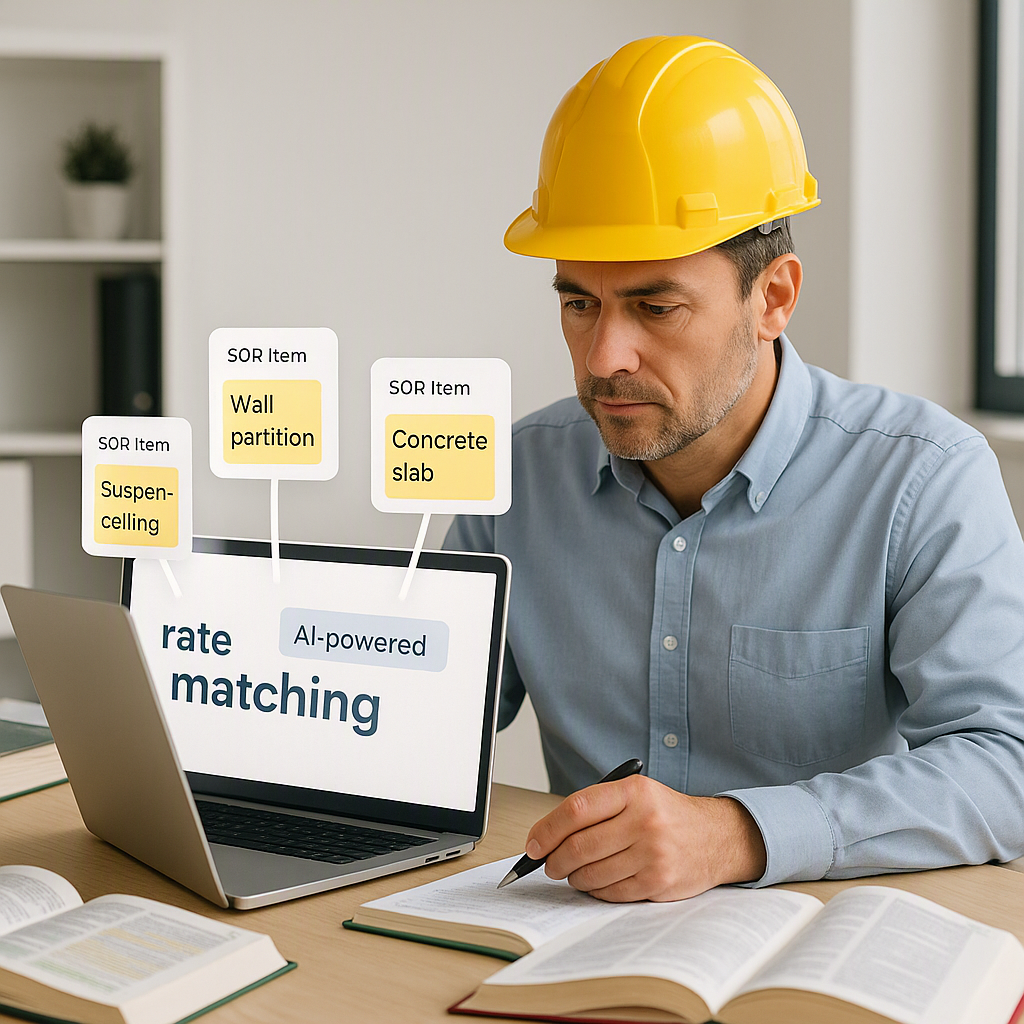
Imagine flipping through a 2,000-page rate book for hours just to find the labor rate for installing pre-stressed concrete girders. It’s tedious, prone to errors, and frankly, a waste of time. Yet, this is still the norm for most estimators.
Why? Because rate books like RSMeans and CPWD DSR are massive, and even Excel spreadsheets can’t keep up when you’re juggling multiple catalogs. For a complex bid, you’re easily sinking 36 hours into rate matching alone. And that’s before you even start pricing alternate scenarios or applying labor adjustments.
The problem isn’t just the time wasted—it’s the ripple effect. Delayed bids, missed opportunities, and the constant pressure to cut corners to hit tight deadlines. It’s frustrating, and it’s costing you money.
Case Study: The Pain of Manual Rate Lookups
Take a mid-sized general contractor (GC) preparing a bid for a $25M municipal road project. They spend two full days cross-referencing rates for asphalt paving, concrete work, and drainage systems across three different catalogs. After submitting the bid, they find out they missed a regional adjustment that inflated the labor cost by 7%, costing them the project. This isn’t an isolated incident—it's a systemic issue across the industry.
AI Rate Matching: The Fix You’ve Been Waiting For
AI changes the game here. Tools like EstimateNext use semantic search to pull rates from 78,000+ SOR items in seconds. Need the cost breakdown for installing concrete girders? Just type it in. The AI scans catalogs, matches rates, and even factors in inflation or regional adjustments automatically.
Real-World Example: A Major Contractor’s Rail Bridge Project
A general contractor working on a large $1B rail bridge project saved 56 hours on rate matching alone by using EstimateNext. Instead of flipping through DOT-approved catalogs manually, their team relied on AI to find rates for rail ties, structural steel, and concrete decks—all while eliminating human error. This time savings allowed the team to prepare alternate bids and optimize labor schedules, ultimately winning the contract.
How Does AI Rate Matching Actually Work?
- Semantic Search: Unlike keyword-based searches, semantic search understands context. For example, if you type "concrete girder installation," it knows to look for related labor, material, and equipment rates.
- Integration with Catalogs: AI tools pull data from standard catalogs like RSMeans and regional databases like CPWD DSR, ensuring the rates are accurate and up-to-date.
- Automation of Adjustments: Inflation, regional labor costs, and project-specific nuances are factored in automatically, saving you hours of manual calculations.
But AI doesn’t stop at speed. It learns. Feedback loops improve accuracy on every project, so by your third bid, the system knows your preferences and adjusts accordingly. It’s like having a virtual estimator who never forgets.
The Obvious Objection: “AI Doesn’t Understand Construction”
You might be thinking, “Sure, AI is fast, but it doesn’t know the nuances of construction.” That’s partially true. AI doesn’t replace your expertise—it amplifies it.
Why AI Complements, Not Replaces, Human Expertise
Think of it this way: AI handles the grunt work—rate lookups, matching, inflation calculations—while you focus on high-value tasks like negotiating with subcontractors and deciding on markup. It’s a tool, not a replacement.
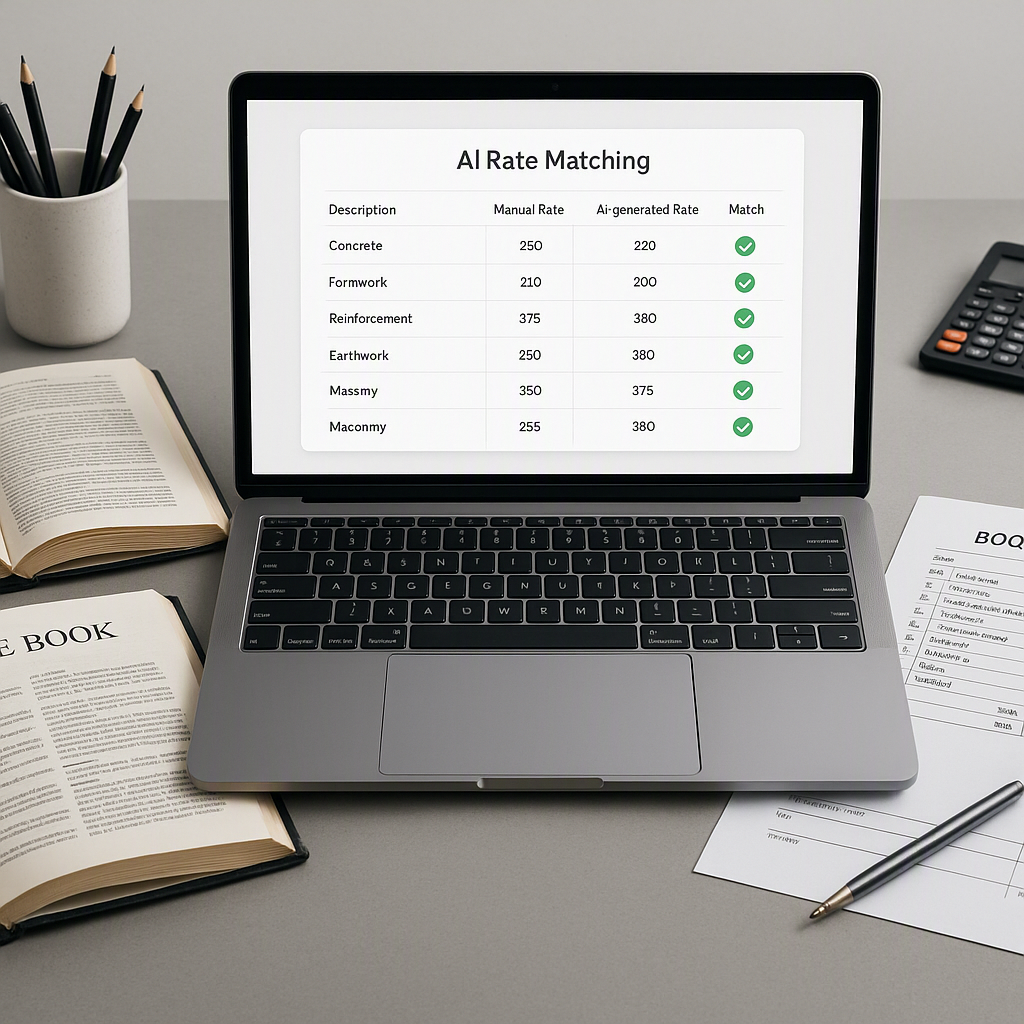
And if you’re worried about accuracy, here’s the kicker: AI-powered rate matching reduces discrepancies by up to 80%, according to EstimateNext case studies. Plus, manual overrides are built into the system for edge cases. You stay in control.
Actionable Steps to Ensure AI Works for You
- Define Your Custom Rates: Upload your own catalogs and define specific rates for unique tasks. This ensures the AI aligns with your company’s standards.
- Double-Check High-Impact Items: Use manual overrides for critical line items that could make or break your bid.
- Train Your Team: Spend time getting your estimators up to speed on the system’s capabilities. Most tools like EstimateNext include tutorials for quick onboarding.
What This Means for Your Bottom Line
Let’s do the math. Say your team spends 36 hours per bid on rate matching. At $130/hour (a typical GC estimator rate), that’s $4,680 wasted every time. Multiply that by five GMP pursuits per year, and you’re looking at $23,400 in sunk costs.
Now, compare that to EstimateNext’s $99/month subscription. For less than $1,200/year, you’re saving 180 hours annually—time you can reinvest into more bids or better project planning. That’s a 20X ROI.
Comparison Table: Manual vs AI Rate Matching
| Factor | Manual Rate Matching | AI Rate Matching |
|---|---|---|
| Time Spent | 36 hours per bid | Under 1 hour |
| Error Rate | High (human error) | Low (99% accuracy with feedback) |
| Cost Per Bid | $4,680 | $99/month subscription |
| Flexibility | Limited (static catalogs) | Dynamic (custom rates + adjustments) |
| Learning Curve | None | 1-2 weeks |
Call to Action
If you’re tired of wasting hours on manual rate lookups, EstimateNext can help. Upload your first BOQ today and get a priced estimate in minutes. Start Free →