Stop Losing Time: Use AI to Decode CPWD Plinth Area Rates Instantly
If you've ever worked on a government project in India, you know the drill. The CPWD Plinth Area Rates PDFs are massive, confusing, and often outdated by the time you find the right section. Estimating costs for civil works should be straightforward, but with these PDFs? Forget it. You're stuck flipping through 2,000-page documents, trying not to miss an inflation adjustment buried on page 1,273.
Sound familiar? You're not alone. Most contractors and estimators I’ve spoken to hate this process. And for good reason: it’s slow, error-prone, and downright exhausting.
But what if you didn’t have to do it manually anymore? What if you could match rates in seconds instead of hours? Let’s talk about how AI tools like EstimateNext change the game.
What Are CPWD Plinth Area Rates, and Why Do They Matter?
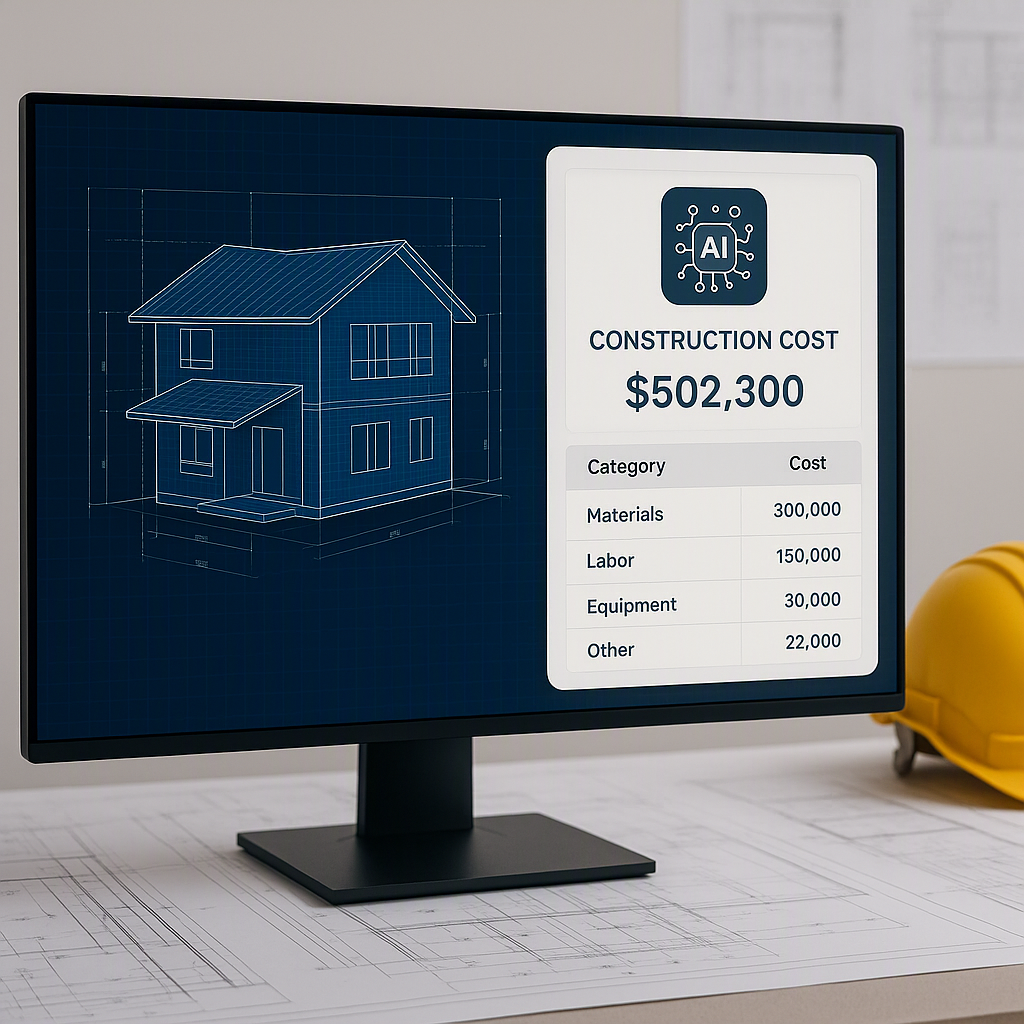
Plinth Area Rates (PAR) are standardized costs per square meter for different types of buildings. CPWD (Central Public Works Department) uses them to estimate construction costs for government projects. These rates cover everything — from basic civil works to more specialized tasks like plumbing or electrical installations.
The catch? They’re buried in dense PDFs and circulars. Want to estimate a ₹10-crore hospital project in Madhubani, Bihar? You’ll need to:
- Find the right CPWD DSR (Delhi Schedule of Rates) volume.
- Look up the relevant Plinth Area Rate.
- Manually adjust for inflation, location, and labor costs.
- Cross-check against the latest Cost Index circulars.
Each step eats up time. One misstep, and your entire estimate could be off by lakhs — or worse, disqualified for non-compliance.
A Practical Example
Imagine you’re bidding on a ₹20-crore government hospital in Assam. The location adjustment alone can vary by 20-30% depending on the terrain and labor availability. If you pick the wrong adjustment factor from the CPWD circulars, your cost estimate could be completely invalid. Worse, this mistake might only be discovered after tender submission, damaging your credibility.
The Reality of Manual Rate Lookups
Here’s a real-world example. A client was bidding on a ₹15-crore school project in Uttar Pradesh. They spent two full days updating their BOQ (Bill of Quantities) after CPWD released a new Cost Index circular. Two estimators. 16 hours each. That’s 32 hours of work — just to ensure compliance.
And this isn’t rare. CPWD typically updates its Cost Index once or twice a year. Every update means combing through PDFs, recalculating rates, and hoping you didn’t miss anything. For mid-sized contractors, this process eats up 12-16 hours per estimate. Multiply that by 30-60 tenders a year, and you’re losing weeks of productivity.
Hidden Costs of Manual Labor
Beyond time, manual rate lookups increase the risk of:
- Calculation Errors: Missing inflation adjustments or applying incorrect location factors.
- Missed Deadlines: Spending extra time on rate matching delays tender submissions.
- Rejection Risks: Incorrect rates or non-compliance can lead to outright rejection.
How AI Tools Like EstimateNext Solve This
Let’s get practical. EstimateNext simplifies CPWD rate analysis by automating three key steps:
-
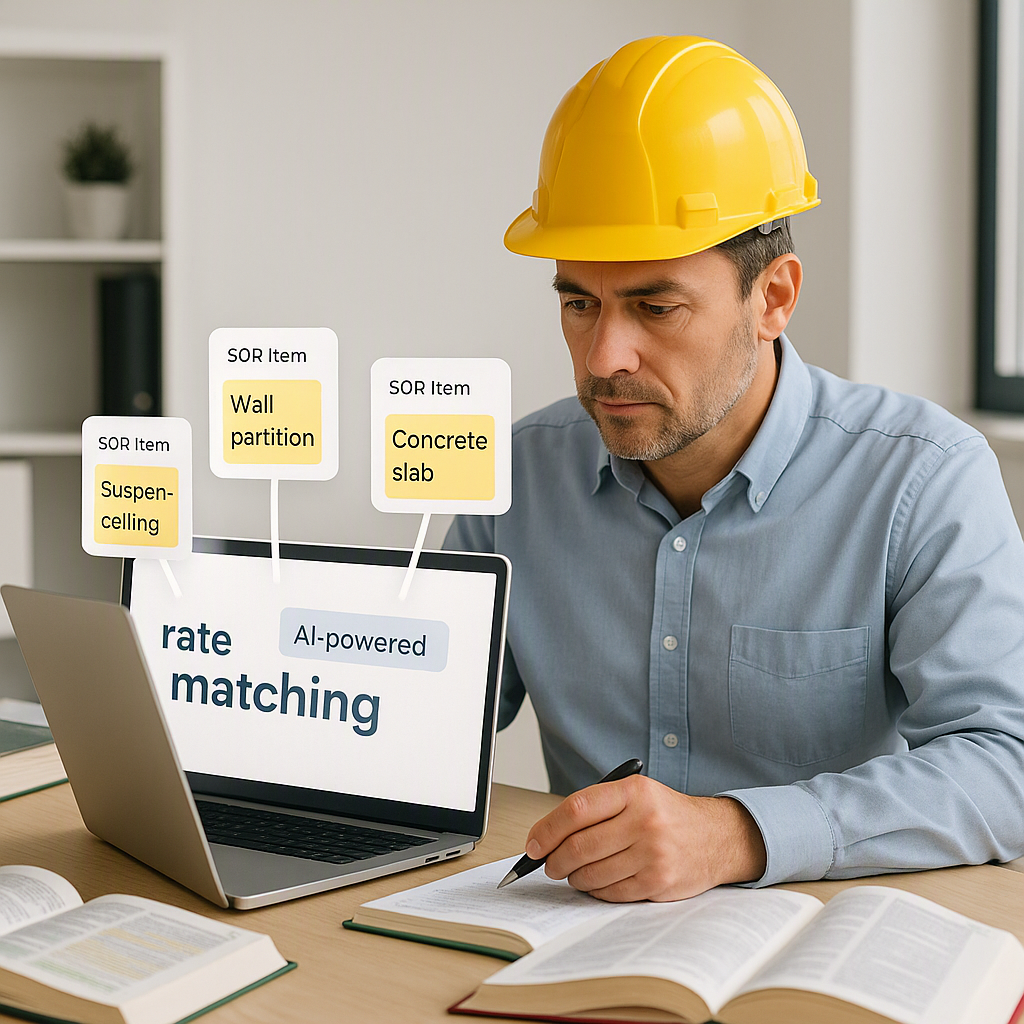
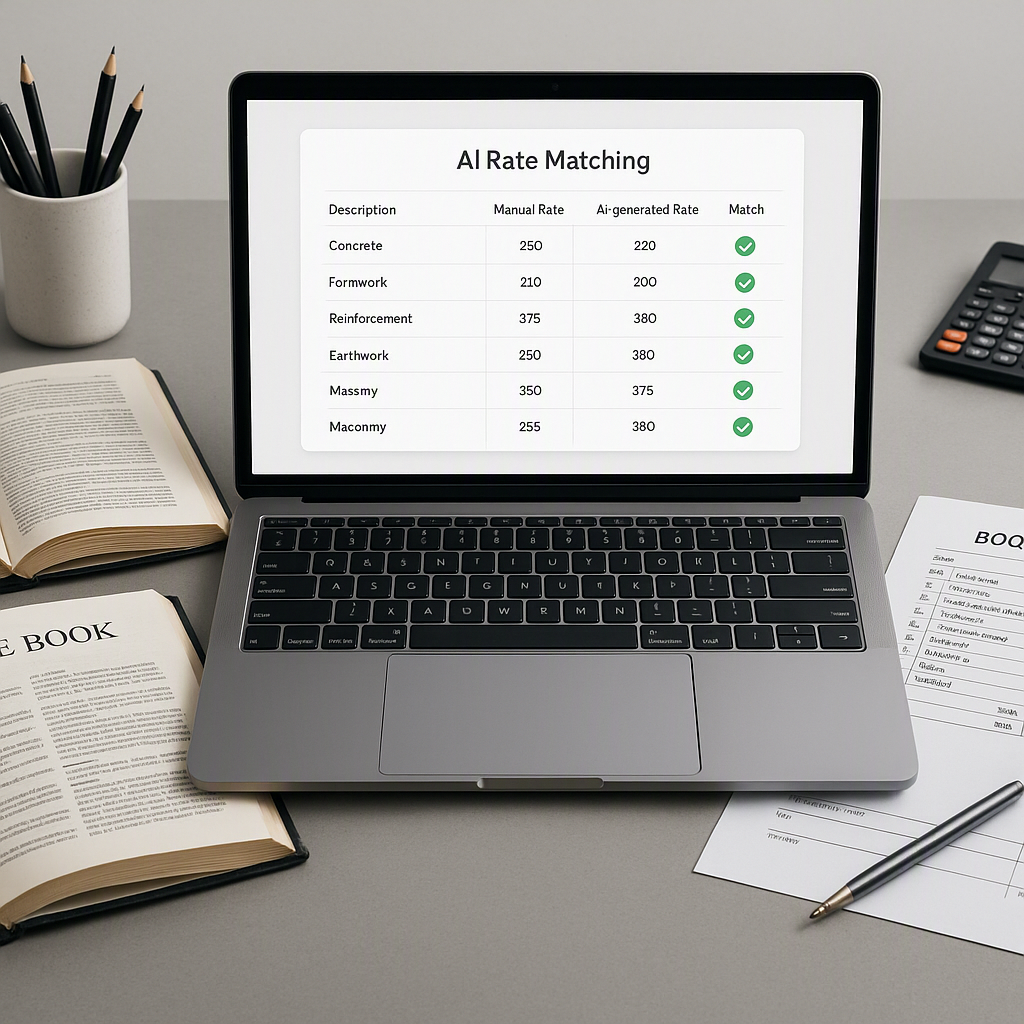
Rate Lookup: Instead of flipping through PDFs, you upload your BOQ. The AI matches items against 78,000+ rates, including CPWD DSR catalogs, in seconds.
-
Cost Index Adjustments: The tool automatically applies the latest inflation and location factors from CPWD circulars. No manual math, no missed updates.
-
Rate Analysis: EstimateNext breaks down each rate into material, labor, and equipment costs, giving you a full audit trail.
Case Study: Uttar Pradesh School Project
Using EstimateNext, the team processed their BOQ in under 20 minutes. Inflation adjustments? Done automatically. Rate mismatches? Flagged instantly. They saved 30+ hours and submitted their bid three days early. The result? Their tender was approved without a single compliance issue.
Why Accuracy Matters as Much as Speed
Speed is great, but accuracy is critical — especially for government tenders. CPWD projects are notorious for their strict compliance requirements. Submitting a bid with outdated rates or missing circular adjustments isn’t just risky; it’s a guaranteed rejection.
AI tools don’t just save time; they also reduce human error. EstimateNext cross-references your BOQ against CPWD’s latest guidelines, so you can bid confidently knowing your rates are accurate and compliant.
Data-Driven Validation
According to a study by the Indian Institute of Cost Engineers, over 25% of rejected tenders fail due to rate discrepancies. With AI-powered validation, you minimize this risk while ensuring your bids remain competitive.
You Might Be Thinking: Can’t I Just Use Excel?
Sure, you can. But Excel has limits. Here’s why:
| Feature | Excel | AI Tools (EstimateNext) |
|---|---|---|
| Manual Updates | Required for every circular | Automated updates |
| Rate Matching | Not available | Matches 78,000+ rates |
| Audit Trails | Limited | Full transparency |
| Speed | Slow | Instant |
| Error Reduction | High error risk | Significantly reduced |
In my view, Excel is fine for simple projects. But for ₹10-crore+ tenders? It’s too risky.
Final Thoughts
Manually flipping through CPWD Plinth Area Rates PDFs is a waste of time and talent. Tools like EstimateNext automate the grunt work, letting you focus on pricing smarter, not working harder. If you’re still stuck in the PDF grind, it’s time to upgrade.