The Hidden Drain in Estimation: Manual Rate Lookups
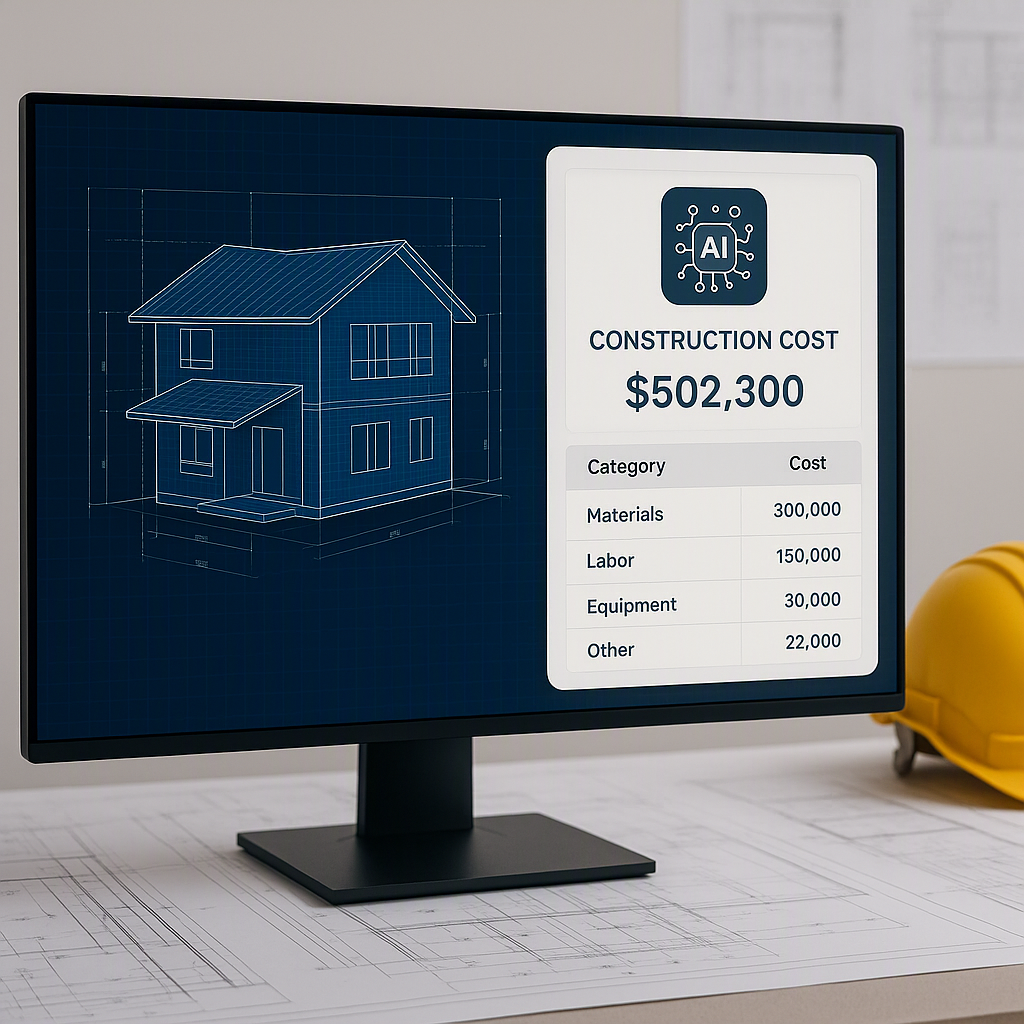
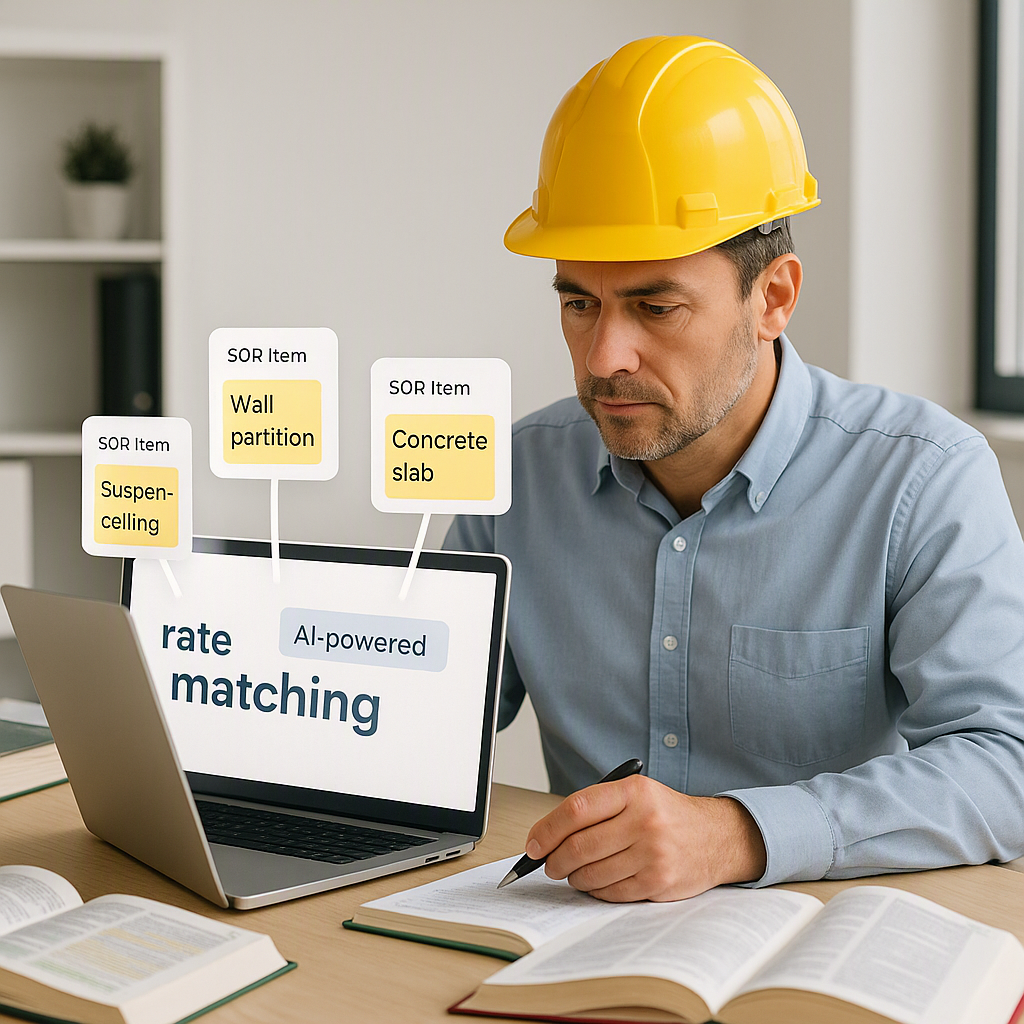
Ask any estimator what their least favorite task is, and rate lookups will likely top the list. Why? Because it’s tedious, error-prone, and burns way more time than it should. Flipping through 2,000-page rate books or scrolling through PDFs to find a specific SOR (Schedule of Rates) item isn’t just mind-numbing—it’s expensive. If you’re paying an estimator $130 per hour, wasting 36 hours per bid on this process can cost you nearly $4,700. Multiply that by the 5-8 GMP (Guaranteed Maximum Price) pursuits most GCs (General Contractors) handle per year, and you’re bleeding cash.
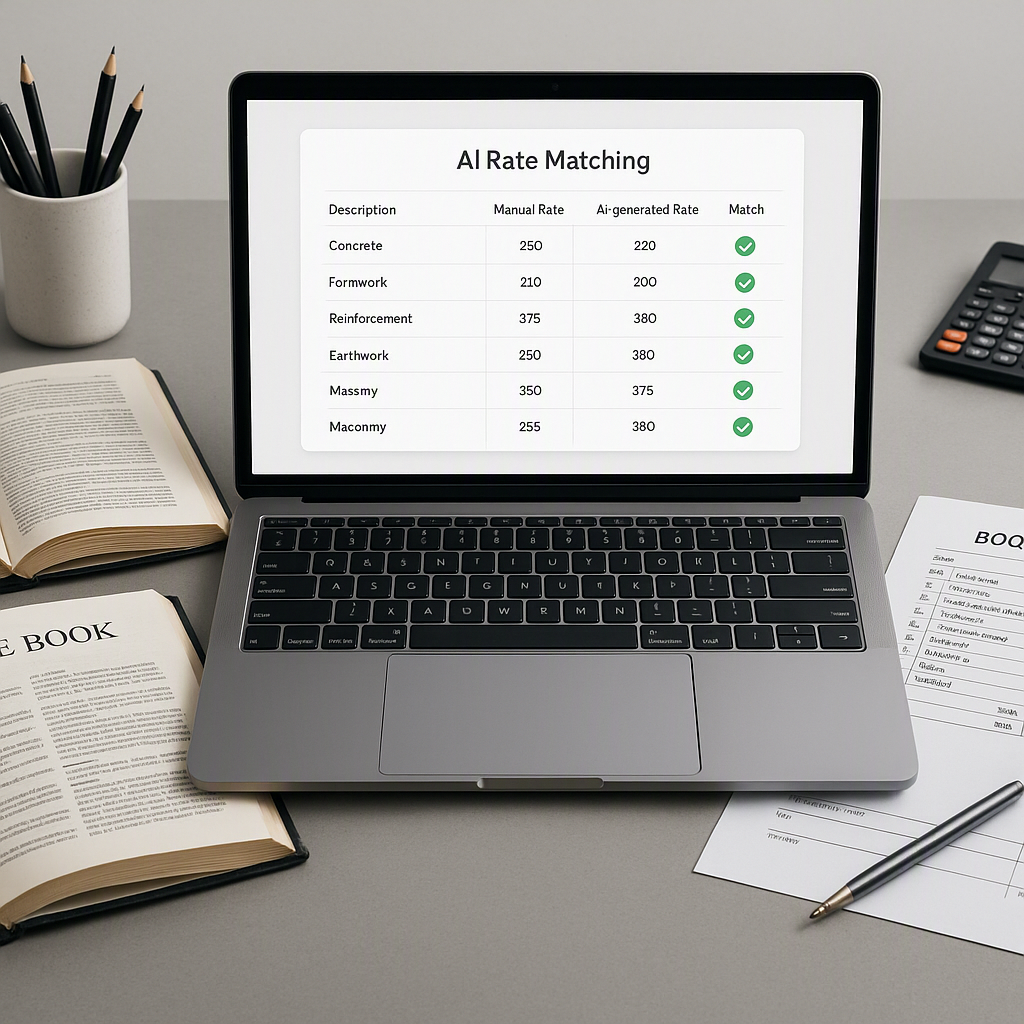
But here’s the kicker: the problem isn’t just time. It’s accuracy. Human estimators are prone to mismatches, especially when rate descriptions get technical or when you’re dealing with custom materials. One misstep can lead to underpricing a bid or overpaying a sub—both of which kill margins. For instance, an estimator might accidentally apply a material rate from an outdated catalog, leading to a 5% underbid. On a $10M project, that’s a $500,000 mistake.
So, how do you fix it? AI-powered rate matching.
How AI-Powered Rate Matching Works
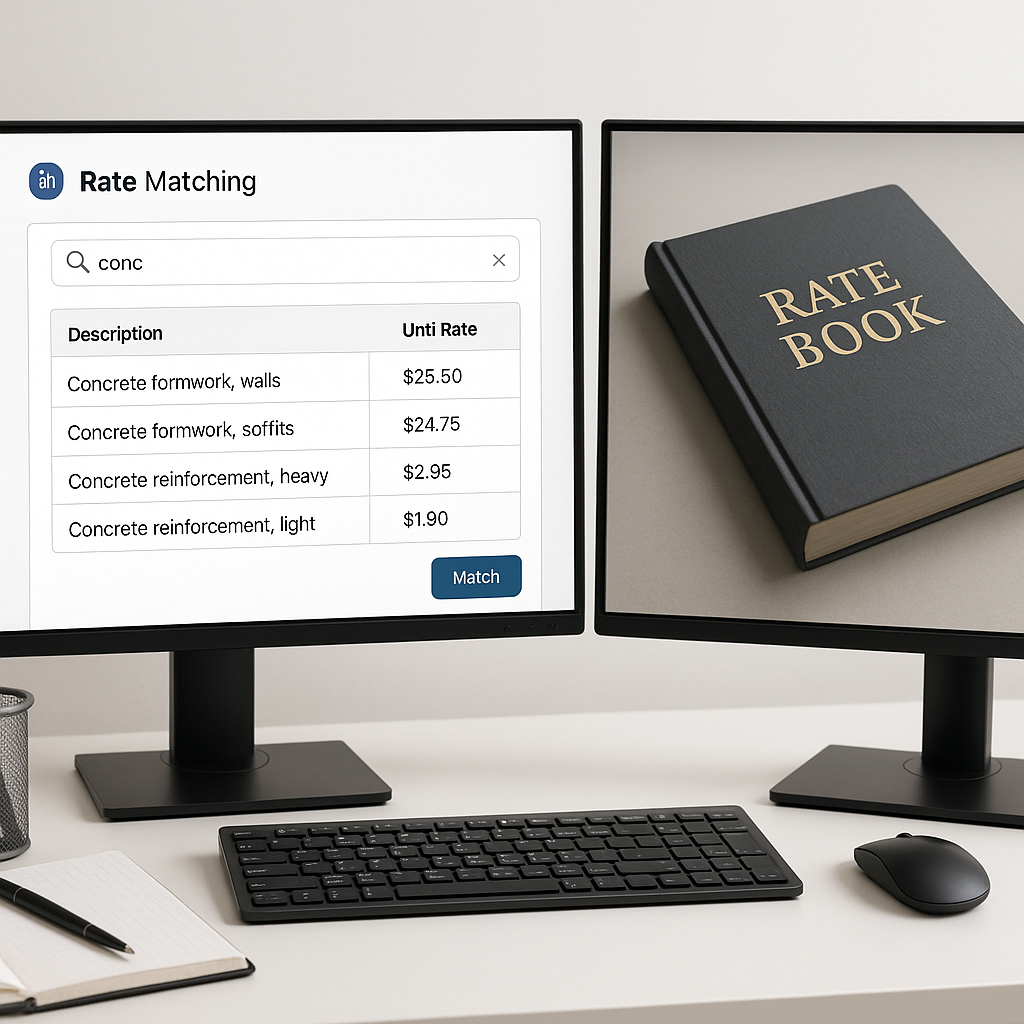
Instead of flipping through thousands of catalog pages, AI lets you type in what you need. For example, searching for "install pre-stressed concrete girders" in a tool like EstimateNext instantly pulls up the closest matches from a database of 78,000+ SOR items. The AI understands intent, so it’s not just looking for exact keyword matches; it’s interpreting what you’re asking for and returning the best options.
Here’s how the process works in practice:
-
Smart BOQ Parsing: You upload your Bill of Quantities (BOQ) into the system. It detects merged cells, section headers, and hierarchies automatically—no manual cleanup needed. For example, if your BOQ includes a section titled "Floor Finishes" with sub-items like "ceramic tiling" and "epoxy coatings," the AI recognizes these as separate tasks and organizes them accordingly.
-
Semantic Search: When you search for a rate, the AI engine uses natural language processing (NLP) to find relevant matches. It’s not just matching words—it understands context. For example, if you’re looking for "wall plaster," it knows to include rates for labor, materials, and equipment. It also differentiates between terms like "cement plaster" and "gypsum plaster," ensuring you get precise results.
-
Custom Catalog Integration: Have your own rates? No problem. You can upload your custom catalog, and the AI will prioritize those over generic SOR items. For example, if your company negotiated a 15% discount on structural steel with a supplier, the AI will automatically factor that into its recommendations.
-
Audit Trail: Every rate suggestion comes with a full breakdown—material costs, labor, equipment, and overhead percentages. If a suggestion looks off, you can dig into the details and adjust. This transparency is particularly useful during client negotiations or when justifying costs to stakeholders.
Real-World Example: Saving Time on a High-Rise Bid
Let’s take a real-world scenario. A mid-sized contractor bidding on a $100M high-rise project needed to price out complex MEP (Mechanical, Electrical, and Plumbing) systems. Using traditional methods, their team would’ve spent 18-20 hours just flipping through rate books and Excel sheets. With EstimateNext, they ran their BOQ through the platform. The AI matched 92% of the items in under 3 minutes. The remaining 8% were flagged for manual review, saving the team over 15 hours.
In their words: “It’s not just about the time saved—it’s about confidence. We know every rate is accurate and traceable.”
Another example comes from a civil contractor working on a $25M bridge project. They reported that AI-powered rate matching reduced their preconstruction timeline by 20%, allowing them to submit bids faster and win more contracts. The estimator noted that the AI even flagged discrepancies in their historical rates, helping them avoid a potential underbid.
The ROI of AI Rate Matching
Still not sold? Let’s talk numbers. According to a 2023 McKinsey report, early adopters of AI in construction save an average of 10-20% per project. For a $50M project, that’s $5M-$10M in savings. Even if you’re only saving on preconstruction costs, the ROI is undeniable. Here’s the math:
- Time Savings: 36 hours saved per estimate x $130/hr = $4,680 per bid
- Improved Accuracy: Reducing bid errors by even 1% on a $10M project saves $100K
- Tool Cost: EstimateNext costs $99/month per user—about the price of one pizza lunch for the team
Now, let’s expand on these numbers with a case study. A general contractor specializing in healthcare facilities adopted AI-powered rate matching for their bids. Over a 12-month period, they saved approximately 540 hours across 15 projects. At an average rate of $120/hour for their estimating team, that’s $64,800 in direct labor savings. They also reported a 2% improvement in bid accuracy, which contributed to an additional $400,000 in profit margins across their portfolio.
Common Objections to AI-Powered Rate Matching
Objection 1: “AI doesn’t understand my custom rates.”
That’s fair—off-the-shelf AI won’t know your specific needs. But tools like EstimateNext allow you to upload custom rate catalogs. The AI learns from your adjustments, getting smarter with each project. By the third bid, most users report over 95% accuracy.
Objection 2: “What if the AI recommends the wrong rate?”
No system is perfect. That’s why EstimateNext includes confidence scoring and manual override. If the AI isn’t sure, it flags the item for review, so you’re always in control. Additionally, every rate suggestion is backed by an audit trail, allowing you to verify sources and calculations.
Objection 3: “My team doesn’t have time to learn new tools.”
We get it—construction teams are already stretched thin. But platforms like EstimateNext are designed to be intuitive. Training typically takes less than two weeks, and the time savings on the first project alone make up for it. Plus, the platform offers 24/7 support and video tutorials to ease the learning curve.
Why This Matters Now
The construction industry is under pressure. Inflation is driving up material costs, labor shortages are delaying projects, and clients are demanding faster turnarounds. In this environment, inefficiencies in preconstruction can’t be ignored. Manual rate lookups might’ve been acceptable five years ago, but today, they’re a liability.
AI-powered rate matching isn’t just a “nice-to-have” anymore. It’s the difference between winning bids and losing them. More importantly, it’s a way to future-proof your operations against rising costs and tighter margins.
Ready to Stop Wasting Time?
If you’re tired of wasting 36 hours per bid on manual rate lookups, EstimateNext can help. Our AI-powered platform matches 78,000+ rate items in seconds, saving you time and boosting accuracy. Get started free →