Why Construction Estimation Is Still Stuck in the Past
Let’s be real—construction estimation hasn’t changed much in decades. You’ve got estimators flipping through 2,000-page rate books, manually entering labor costs, and double-checking material prices. It’s tedious, error-prone, and, frankly, outdated.
Here’s the kicker: rate lookup alone eats up an average of 36 hours per bid. That’s almost a week of full-time work for one person. Multiply that across multiple bids per month, and you’re looking at hundreds of wasted hours every year.
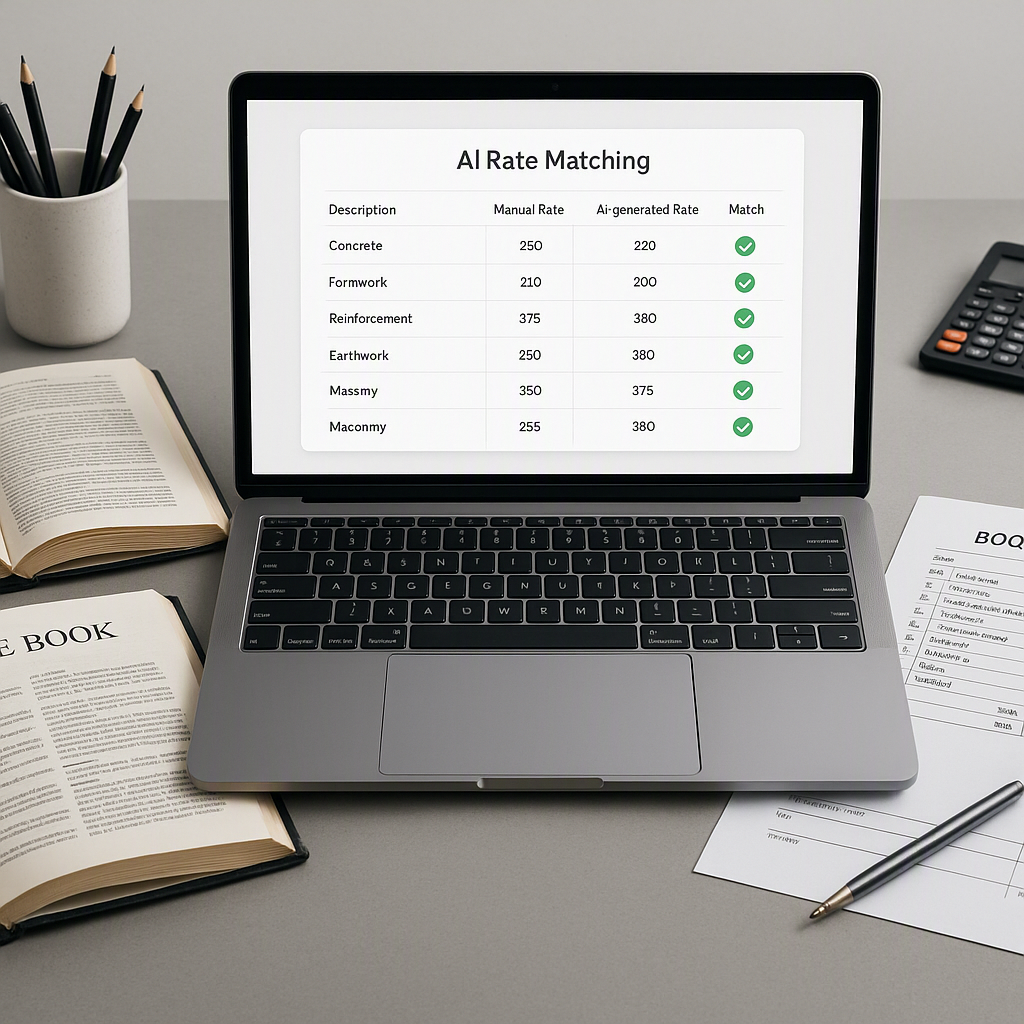
But it doesn’t have to be this way. AI-powered tools like EstimateNext are flipping the script. They use semantic search to match rates across catalogs instantly. Need to find the labor cost for installing pre-stressed concrete girders? Type it in, and you’ll get a match in seconds. Done.
How AI Rate Matching Works
Traditional Rate Matching: The Old Way
Let’s break it down. Traditional rate matching involves:
- Opening massive rate books (RSMeans, CPWD DSR, or similar).
- Manually flipping pages to find the right rate.
- Entering the data into an Excel sheet or proprietary software.
- Cross-checking for errors.
This process is not only slow but also highly susceptible to calculation mistakes. For example, in a 2020 survey of construction firms by Dodge Data & Analytics, 35% reported losing bids due to errors in cost estimation.
AI-Powered Rate Matching: The New Way
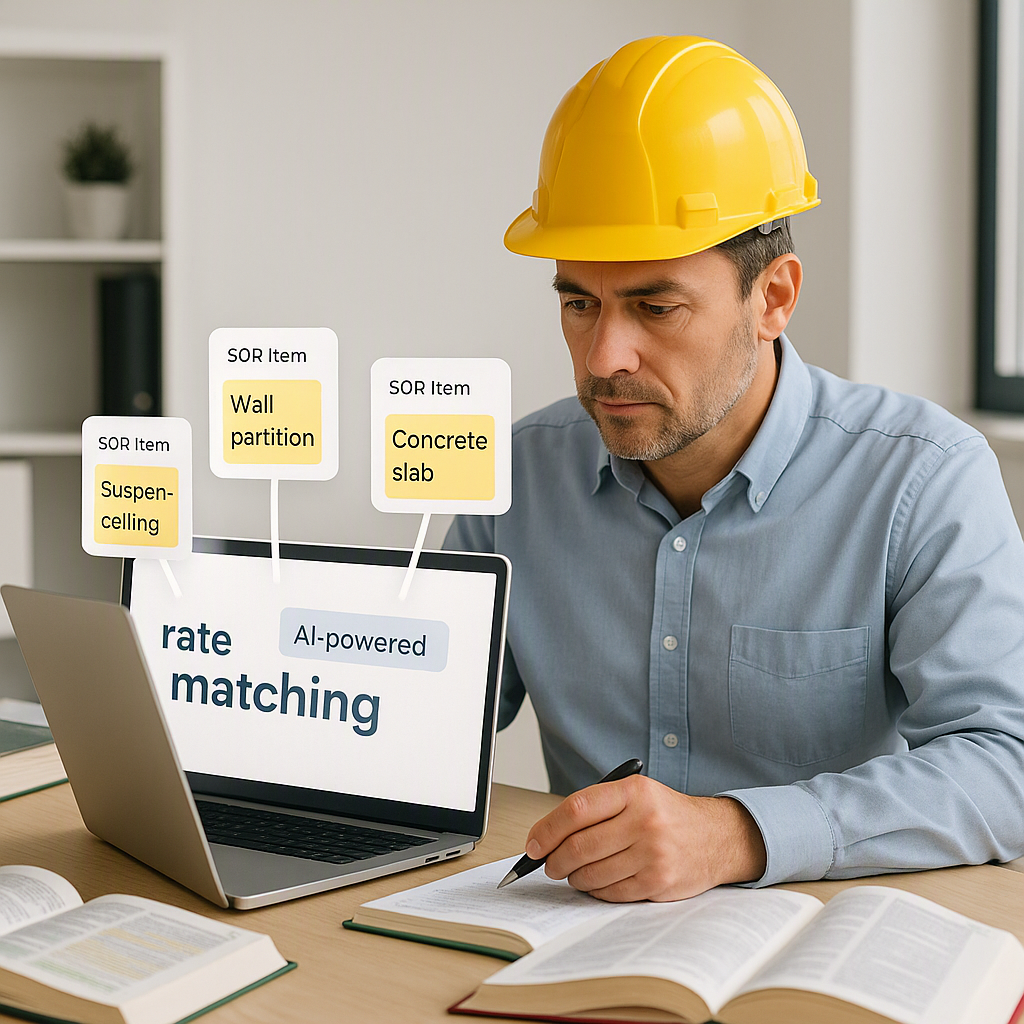
EstimateNext skips all of that. Its AI-powered system uses semantic search to scan 78,000+ SOR (Schedule of Rates) items across 135+ catalogs. Here’s a practical example:
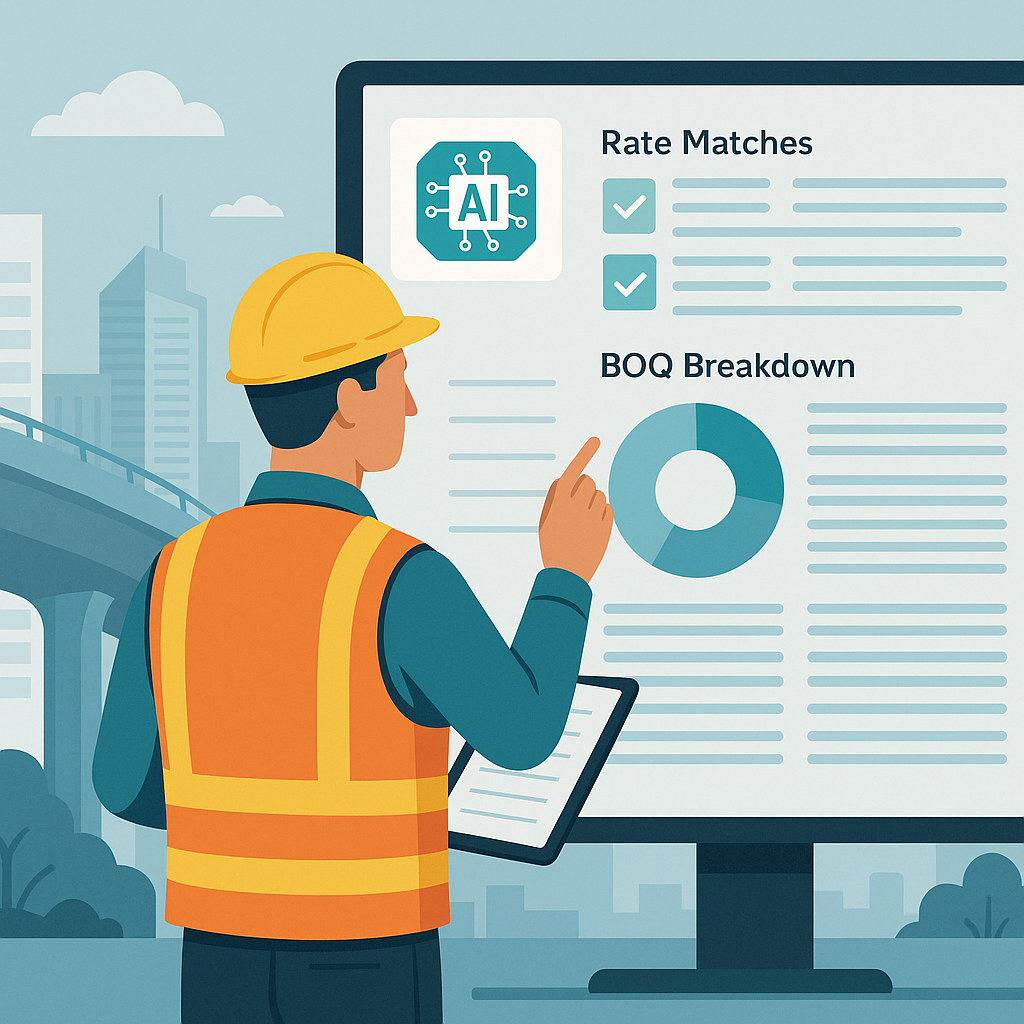
Imagine you’re estimating costs for a $1B rail project. You need rates for concrete columns, beams, and rail ties. With the old method, this could take hours (or days). With AI, you upload your BOQ (Bill of Quantities), and the system instantly matches rates from DOT-approved catalogs. It even suggests inflation adjustments and labor breakdowns.
No manual lookup. No guesswork. Just accurate rates in seconds.
Actionable Steps to Get Started with AI Rate Matching:
- Audit Your Current Process: Identify how much time your team spends on rate lookup and estimation. Start tracking it if you don’t already.
- Choose the Right Tool: Evaluate AI-powered tools like EstimateNext based on your project size, catalog compatibility, and budget.
- Test with a Small Project: Start with a smaller bid to validate the tool’s accuracy and ease of use.
- Train Your Team: Ensure your estimators are comfortable with the software. Most tools offer onboarding support and tutorials.
- Review Results: Compare AI-powered estimates against manually prepared bids to gauge accuracy and time savings.
The ROI of AI Rate Matching
You might be thinking, “Sure, it’s fast. But does it really save that much money?” Let’s do the math.
Traditional Methods
- Average rate lookup time per bid: 36 hours
- Average estimator hourly rate: $130/hr
- Cost per bid using traditional methods: $4,680
AI-Powered Methods
- Rate lookup time per bid: Seconds
- Monthly subscription cost for EstimateNext: $99
That’s a 52X ROI for general contractors. And it’s not just about cost savings—it’s about bidding on more projects, faster. For firms handling 10 bids a month, the savings could exceed $500,000 annually.
Case Study: A Large GC’s Rail Bridge Bid
Let’s apply this to a real-world scenario. A major national general contractor used AI rate matching on a rail bridge project. Their team needed rates for structural steel, rail decks, and concrete. Normally, this would take days. With AI, they completed the rate matching in under 30 minutes.
The result? The team freed up their estimators to focus on negotiation and margin strategies. And they submitted their bid three days ahead of schedule. That’s the kind of efficiency that wins projects.
Actionable Takeaway:
Think beyond cost. The time savings from AI tools allow your team to focus on high-value activities like refining bid strategies or negotiating with subcontractors. Early submissions can also give you a competitive edge.
The Obvious Objection: “AI Can’t Replace Human Expertise”
I hear this all the time. You might think, “Sure, AI is fast, but it doesn’t understand the nuances of construction.” And you’re right—AI isn’t a replacement for your expertise. It’s a tool that amplifies it.
What AI Does Well:
- Semantic rate matching
- Inflation adjustments
- Error detection
What Humans Do Better:
- Negotiating with subcontractors
- Adjusting for site-specific conditions
- Making final judgment calls
You’re still the one making judgment calls, deciding on markups, and managing project risks. The AI just handles the grunt work—like rate matching and takeoffs. It’s a time-saver, not a decision-maker.
What If Your Rates Are Custom?
Another concern I hear: “My rates are project-specific. How can AI handle that?” Good question. Tools like EstimateNext let you upload your own rate catalogs. You can define custom materials, finishes, and labor rates.
Example: Customizing Rates for a High-End Residential Project
Say you’re working on a luxury home renovation. Your labor rates are higher due to specialized skills, and material costs are above market averages. With AI, you can:
- Upload your custom rate catalog.
- Tag specific items (e.g., “imported Italian marble”).
- Use historical data to guide pricing adjustments.
The system learns from every adjustment. By your third project, it’s already smarter, suggesting rates that match your historical data. It’s like having an estimator who gets better with every bid.
FAQ
Q: How accurate are AI rate matches? A: Highly accurate—99% after user feedback. Manual overrides are available for edge cases.
Q: Can AI help with inflation adjustments? A: Yes, tools like EstimateNext suggest CPI adjustments for catalog years, ensuring your rates are aligned with market conditions.
Q: What if I’m already using tools like Bluebeam or Procore? A: EstimateNext integrates seamlessly with existing software. You can export rates directly into your workflows, eliminating compatibility issues.
Q: Is it worth it for smaller projects? A: Absolutely. AI scales to any project size, from $1M renovations to $1B infrastructure builds. Smaller projects benefit from faster turnaround and reduced overhead.
Q: How long does it take to learn the system? A: Most users pick it up within two weeks. The interface is designed for ease of use, with minimal technical expertise required.
Decision Framework: Is AI Right for Your Estimation Process?
| Criteria | Traditional Methods | AI-Powered Methods |
|---|---|---|
| Time per rate lookup | 36 hours per bid | Seconds per bid |
| Error rate | High (manual entry errors) | Low (AI-assisted detection) |
| Cost per bid | ~$4,680 | ~$99/month |
| Scalability | Limited by team size | Scales with project volume |
| Customization | Manual adjustments required | Automated learning |
| Integration with tools | Limited | Seamless (e.g., Bluebeam) |
Call to Action
If you’re tired of wasting 36 hours on rate lookups, EstimateNext can help. Upload your first BOQ and get a priced bid package in minutes. Get started free →