The Problem: Manual Takeoffs Are Killing Your Time
Let’s face it: manual drawing takeoffs are a time sink. Two estimators, two full days, 40 hours gone. And for what? Measuring wall lengths, counting fixtures, and extracting quantities from PDFs? It’s grunt work no one enjoys, but without it, your bid falls apart.
The obvious objection is, “We’ve always done it this way.” Sure, but at what cost? Those 40 hours could be spent improving sub bid negotiations, refining your margin strategy, or working on additional bids. Instead, you’re stuck clicking through drawings like it’s 1999. Not ideal.
Let’s break this down further with an example. Take a mid-sized contractor bidding on a $5M commercial project. If two estimators spend 40 hours on takeoffs, at an average labor cost of $50/hour, that’s $2,000 sunk into just one bid. Multiply this by 30 bids in a year, and you’re looking at $60,000 in labor costs just for takeoffs. What’s worse, manual takeoffs are prone to errors—one missed item can cost tens of thousands of dollars if underbid or result in losing the job altogether if overbid. It’s a lose-lose scenario.
The Solution: AI-Powered Takeoffs
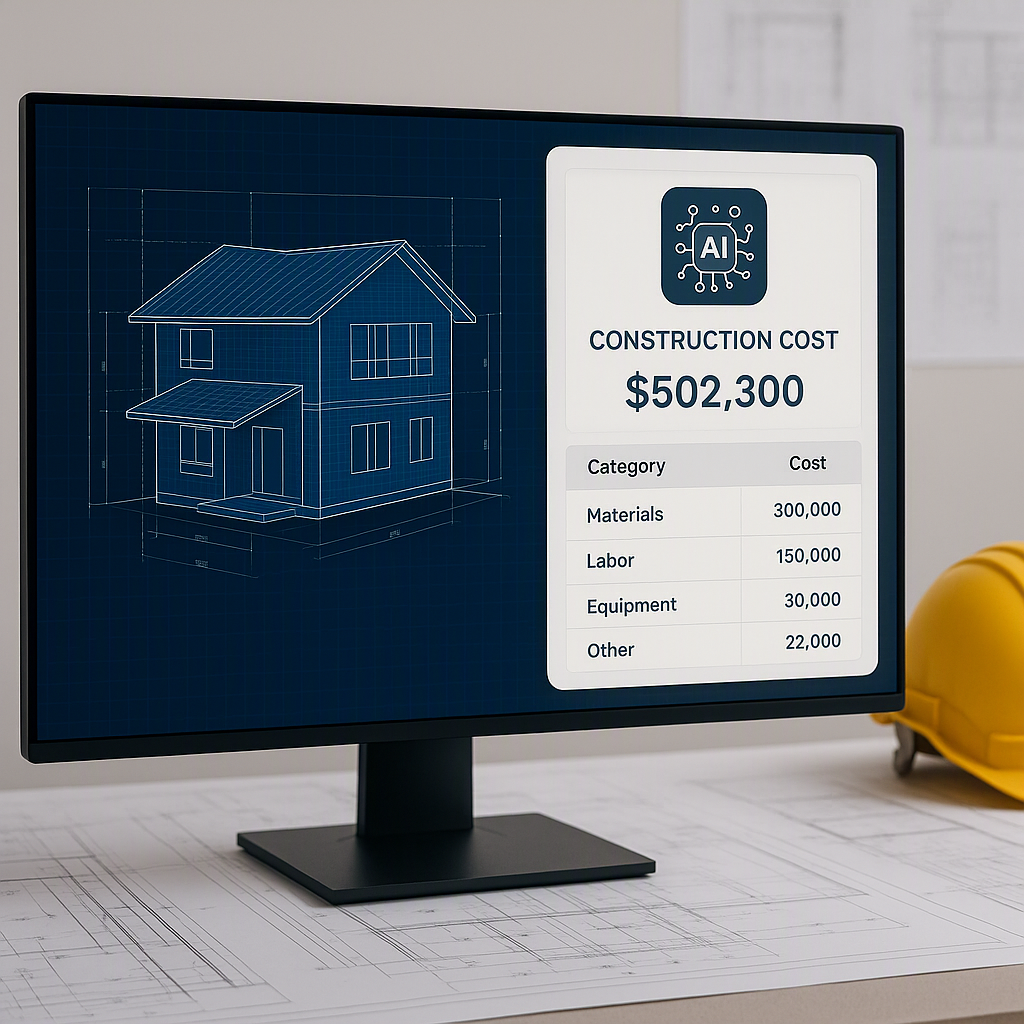
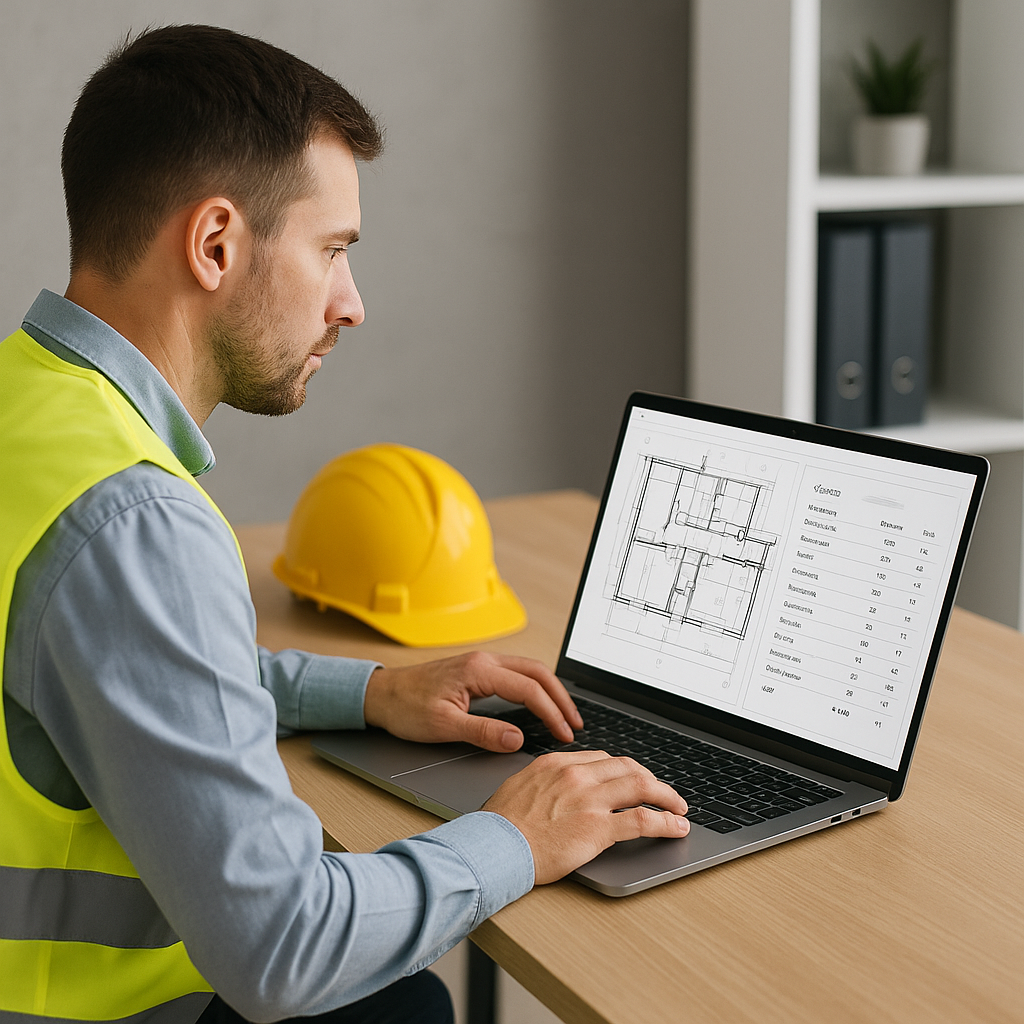
This is where tools like EstimateNext come in. Vision AI reads your PDF drawings and extracts quantities in 10 minutes. That’s not a typo—10 minutes. Whether you’re dealing with concrete beams, door counts, or sprinkler layouts, the AI scans, measures, and compiles the data for you.
Real-world Example: Saving Time and Money
Consider a mid-sized general contractor (GC) bidding on a high-rise project with 12 floors. Typically, manual takeoffs for this project would take two estimators 60 hours. Using AI-powered takeoff software, the same task was completed in under 2 hours. Not only did they save 58 hours of labor—equating to $2,900—but they also avoided potential errors in counting repetitive elements like windows and fixtures. With the extra time, the estimating team was able to refine their bid strategy and land the $8M contract, a win directly linked to time saved.
How It Works
AI-powered tools like EstimateNext use advanced image recognition and machine learning algorithms to:
- Automatically Detect Elements: Identify walls, beams, doors, and fixtures directly from PDF drawings.
- Measure Quantities: Calculate dimensions and quantities without manual input.
- Flag Uncertainty: Highlight items with low confidence scores for human review.
This hybrid approach ensures that while the heavy lifting is automated, critical oversight remains in human hands.
Why Speed Matters
Here’s the math: saving 36 hours per bid means you can pursue 50% more bids in the same timeframe. More bids = more wins. And let’s not forget the financial impact. If every pursuit saves $5,200 in labor costs, that’s a 52X ROI for a $100/month tool.
Subcontractor Impact
The impact is even bigger for subcontractors. For example, an electrical subcontractor responding to 60 bid packages a year can cut their quote turnaround from 3 days to 4 hours. That’s 18X faster, with the potential for 8 more project wins annually. At an average project value of $200K per win, that’s an additional $1.6M in revenue potential.
Case Study: MEP Firm Boosts Productivity
An MEP (mechanical, electrical, plumbing) firm in Texas used AI-powered takeoff tools to handle a surge in bid requests during a busy season. Previously, their team of 5 estimators could barely manage 10 bids per week. With AI, they scaled up to 20 bids per week without adding staff. Over three months, they landed 6 additional contracts worth $4.5M in total, all thanks to faster, more accurate takeoffs.
What About Multi-Market Complexity?
One of the biggest headaches in preconstruction is dealing with different measurement standards, currencies, and tax regimes. If you’re working across multiple regions, this can turn into a logistical nightmare.
EstimateNext solves this with MarketProfile architecture. Whether it’s CSI in the US, CPWD in India, or CESMM3 in the UK, the platform adapts to your specific market. You don’t have to spend hours converting units or adjusting for local labor rules. The AI handles it.
Example: International Contractor Success
A global construction firm bidding on projects across the US, UK, and the Middle East used MarketProfile to standardize their takeoff process. Before, their estimators spent days adjusting measurements for regional standards. With AI, they completed takeoffs for three bids in the time it previously took to finish one, saving over 100 hours per month.
The ROI Is Clear
A 2023 McKinsey report notes that AI adoption in construction saves 10-20% per project on average. For large-scale bids, this can mean millions. But even smaller contractors see significant gains. Imagine cutting your bid prep time in half while improving accuracy.
ROI Breakdown
| Metric | Manual Takeoffs | AI-Powered Takeoffs |
|---|---|---|
| Time per Bid | 40 hours | 4 hours |
| Cost per Bid (Labor) | $2,000 | $200 |
| Annual Bids (30) | $60,000 labor costs | $6,000 labor costs |
| Potential Savings | — | $54,000 |
This table illustrates a direct, measurable benefit. Even for small firms, the savings add up quickly. At just $100/month, the ROI speaks for itself.
Call to Action
If you’re tired of wasting 40 hours on manual takeoffs, EstimateNext can help. Get started free →