Why Modular Construction Is the Future for Data Centers
Data centers aren’t just growing—they’re exploding. By 2027, global spending on data center construction is projected to hit $62 billion, according to Research and Markets. But here’s the problem: hyperscale providers like AWS, Microsoft, and Google want facilities operational yesterday. A six-month delay could cost millions in lost cloud revenue.
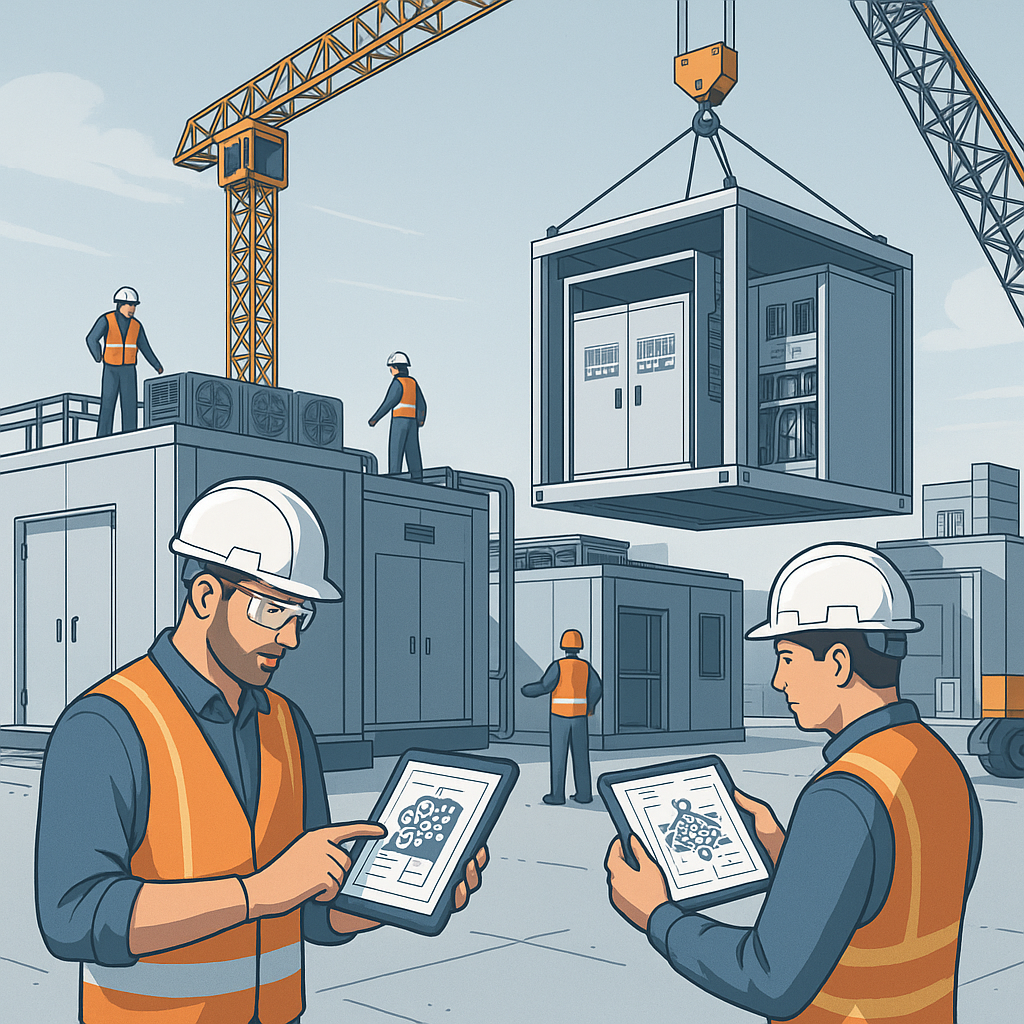
Modular construction, with its prefabricated components, promises to slash timelines by up to 30%. Instead of building everything on-site, larger chunks—like electrical rooms, HVAC modules, or server racks—are pre-assembled offsite and shipped in. Think of it as Lego bricks for industrial-scale projects.
But speed isn’t the only selling point. Modular designs also reduce waste, improve quality control, and make scalability easier. Need to double capacity? Add another module. It’s that simple. Yet, modular builds come with unique planning challenges that traditional estimation tools struggle to handle.
The Preconstruction Bottleneck No One Talks About
Here’s a scenario we’ve seen too often: A general contractor (GC) receives a 200-page Bill of Quantities (BOQ) for a 25 MW data center project. It includes thousands of line items—everything from copper wires to fire suppression systems. The project demands insane precision because even a tiny mistake (like specifying the wrong cable gland) can lead to costly change orders.
And the kicker? The BOQ isn’t static. Cloud providers frequently tweak specs midway through the bid process—swapping copper cables for aluminum or changing HVAC redundancy requirements. This means the entire BOQ needs to be reworked. If you’re still using Excel and manual rate lookups, you’re in trouble.
Actionable Steps to Solve the Bottleneck
- Invest in Automated Tools: AI-powered platforms like EstimateNext can parse complex BOQs in minutes, match rates from massive item catalogs, and propagate changes across the bid instantly.
- Standardize Vendor Quotes: Normalize vendor pricing with tools that flag scope mismatches and exclusions to avoid surprises during execution.
- Collaborate Early: Bring subcontractors and suppliers into the estimation process early to manage design changes proactively.
For modular builds, this flexibility is crucial. Every module has interconnected systems—change one rate, and you’ll need to update the rest. Traditional tools can’t keep up.
Real-World Example: Prefabricated Electrical Modules
Let’s talk specifics. A 25 MW data center typically requires over 1,000 line items just for electrical systems—switchgear, conduits, cable trays, and more. Modular construction groups these components into prefabricated electrical rooms that are built offsite and shipped in.
Sounds simple, right? It’s not. These modules involve layers of redundancy to meet uptime guarantees. Estimators need to price backup systems, cooling integrations, and fire suppression—all while juggling tight timelines.
Case Study: Electrical Module Estimation
A large general contractor bidding on a hyperscale data center project used EstimateNext to handle its electrical module pricing. Here’s how it played out:
- Manual Takeoff vs. AI: Manual takeoffs took two estimators 40 hours. EstimateNext’s Vision AI extracted quantities directly from PDF drawings in just 10 minutes.
- Quote Normalization: Vendor quotes were normalized automatically, flagging mismatched exclusions that could have caused scope gaps.
- Time Savings: Sub bid leveling time dropped from 6 hours to 30 minutes, freeing up critical resources for other tasks.
The result? The GC delivered a highly competitive bid while reducing labor costs and improving accuracy.
Why Modular Builds Demand Smarter Estimation
Modular construction isn’t just faster. It’s smarter—if you plan it right. Here’s what modular projects demand:
Key Challenges:
- Interdisciplinary Coordination: Each module integrates multiple systems—HVAC, electrical, plumbing. Estimators need tools that account for these overlaps.
- Scope Flexibility: Modular designs are scalable, but frequent design changes mean your BOQ needs to adapt in real-time.
- Speed: Hyperscale providers aren’t waiting. AI tools can cut preconstruction timelines by 50%, giving you a competitive edge.
Comparison Table: Traditional vs. AI-Powered Estimation
| Criteria | Traditional Tools (Excel) | AI-Powered Tools (EstimateNext) |
|---|---|---|
| BOQ Parsing Speed | 10-20 hours | 10-30 minutes |
| Handling Design Changes | Manual Rework | Instant Propagation |
| Vendor Quote Normalization | Manual | Automated |
| Interdisciplinary Coordination | Limited | Advanced |
| ROI on Time Savings | Low | High |
Without flexible estimation tools, modular builds lose their speed advantage. Excel isn’t built for this level of complexity. AI-powered platforms like EstimateNext handle modular project demands effortlessly, delivering precision at scale.
The ROI Math for GCs
Let’s do the math. A typical data center bid involves 80 hours of preconstruction labor. AI tools cut that by 50%, saving 40 hours per bid. At an average labor rate of $130/hour, that’s $5,200 saved. Multiply this by 5-8 bids per year, and you’re looking at $26,000-$41,000 saved annually per estimator.
EstimateNext costs $99/month per seat—or $1,188/year. The ROI? 52X. And that’s just for time savings. Faster bids mean more wins, especially in the hyperscale data center market where speed is everything.
Call to Action
If you’re dealing with complex modular projects like data centers, EstimateNext can help. Get started free →


