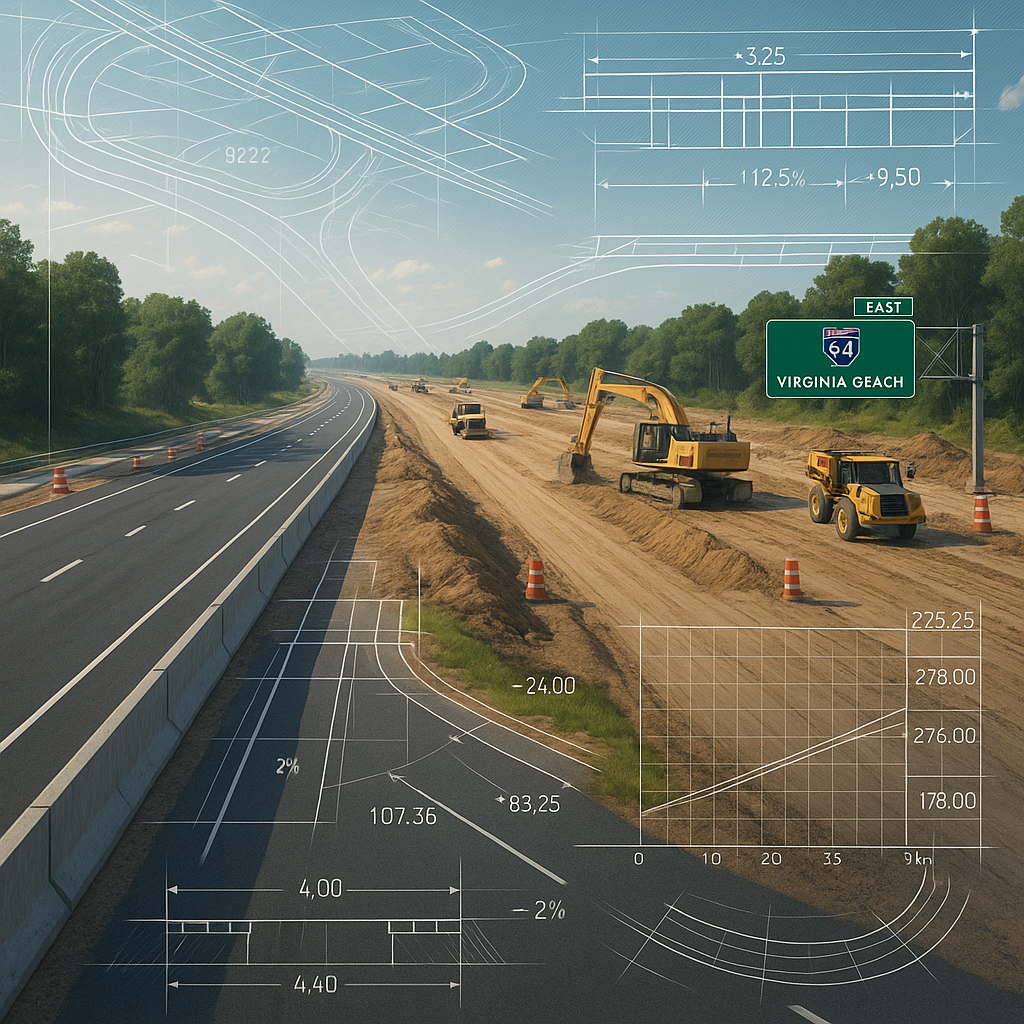
Virginia’s $28.5B Infrastructure Plan: The Hidden Risk for Estimators
When Virginia approved its $28.5 billion, 6-year infrastructure plan, it promised a construction boom: new highways, rail expansions, floodwater management, and rural broadband. Contractors are salivating. But for estimators? This is a minefield. One bad bid—underpriced or overbid—can cost you millions.
Let’s talk about the risks hiding in plain sight and how smarter estimation workflows, like AI-powered tools, can help.
The Problem: Infrastructure Projects Are a Scope Nightmare
If you’ve worked on federally funded projects, you’ve seen it: scope creep, complex compliance requirements, and insane cost volatility. Take a large floodwater management project, for example. The contractor had to deal with not just traditional civil works but also new tech for flood control, environmental reports, and community engagement.
On paper, it’s a dream project. In reality? A single miscalculation on quantities or rates could blow the budget and send the contractor scrambling for change orders.
Why Estimators Struggle
-
Manual BOQs Are Slow: Building a Bill of Quantities (BOQ) from a 300-page spec book with hundreds of line items takes days. For example, the rural broadband expansion project under Virginia’s plan involves estimating miles of fiber-optic cable, trenching, and even small-scale civil works for signal towers. If you’re stuck manually tallying quantities, you’re losing valuable time.
-
Rate Lookups Are Tedious: Flipping through RSMeans or CPWD DSR for the right rate is a bottleneck. Worse, if you pick the wrong rate index (say, a rural rate for an urban project), your costs are instantly off. Case in point: Virginia’s urban rail expansion. Labor rates in urban hubs like Alexandria are often 15-20% higher than rural areas like Pulaski County. Mistakes here have major repercussions.
-
Scope Normalization Eats Time: On big projects like this, you’re not just estimating your scope. You’re also leveling sub-bids across multiple trades. For example, a subcontractor bidding on floodwater pumps might include outdated equipment specs, forcing you to manually adjust their numbers. Doing this manually? It’s a 6-hour time sink.
Now, multiply this by the sheer volume of Virginia’s infrastructure plan. You’re looking at dozens of bids in parallel, each with its own quirks.
The Fix: AI-Powered Rate Matching
Here’s where AI comes in. Tools like EstimateNext are designed to solve exactly these bottlenecks. For example, their 4-step SOR matching engine:
- Step 1: Upload your BOQ in Excel (yes, even the messy ones with merged cells).
- Step 2: The AI parses your BOQ and matches it against 78,000+ Standard Operating Rates (SORs) across catalogs like RSMeans or CPWD DSR.
- Step 3: It prioritizes rates based on your project’s history, location, and scope.
- Step 4: If no match is found, the AI widens its search to suggest alternatives with cost breakdowns (e.g., labor vs. material).
Instead of spending hours flipping through PDFs or Excel sheets, you get accurate rates in seconds. A large flood management project? One contractor used this exact approach to shave weeks off their preconstruction timeline. Their AI-driven workflow even flagged low-confidence matches for manual review, so nothing got missed.
Case Study: Rural Broadband Expansion
Consider the broadband expansion project in Virginia’s infrastructure plan. Estimating fiber-optic cable costs requires precision. One contractor used EstimateNext to account for variables like terrain type (e.g., rocky soil that increases trenching costs) and cable installation labor rates specific to rural areas. The AI flagged discrepancies in subcontractor bids, saving them approximately $250,000 in potential cost overruns.
How Virginia’s Plan Complicates Estimation
Virginia’s infrastructure plan isn’t just about pouring concrete. It’s a mix of urban rail, rural road expansions, and climate resilience projects. Each comes with unique challenges:
-
Urban Projects: Higher labor costs, stricter compliance, and limited laydown areas. For instance, staging materials in urban rail projects often requires renting temporary storage yards, which can add tens of thousands of dollars to costs.
-
Rural Projects: Longer material transport distances, fewer local subcontractors, and unpredictable access roads. The $3 billion rural road expansion segment of Virginia’s plan includes several counties where aggregate supply is limited, forcing contractors to transport materials from neighboring states.
-
Climate Resilience: Specialized materials like flood barriers, pump stations, and permeable concrete. These items often aren’t in standard catalogs, requiring bespoke quotes from niche suppliers. For example, flood barriers with advanced hydrodynamic technology can cost up to 30% more than traditional models.
An AI tool like EstimateNext doesn’t just pull rates. It adjusts for these factors using market profiles. For example, it knows that a cubic yard of concrete in Charlottesville might cost 8% more than in Richmond due to labor shortages.
What Happens Without AI?
Let’s be blunt. Without AI, you’re stuck with:
- Missed Deadlines: Manual takeoffs and rate lookups mean you risk turning in your bid late—or worse, sloppy.
- Overpricing: To play it safe, you pad your bid with high contingencies. Great for your margin, until the client picks someone cheaper.
- Underpricing: You win the bid but discover halfway through that your labor assumptions were wrong. Now, you’re bleeding cash.
Real-World Example
A contractor bidding on a rural road project in Virginia underestimated asphalt transport costs, assuming local suppliers would meet demand. When those suppliers fell short, the contractor had to source asphalt from over 200 miles away, adding $1.2 million to their expenses. AI tools could have flagged this risk upfront.
Comparison Table: Manual vs. AI-Powered Estimation
| Feature | Manual Workflows | AI-Powered Tools |
|---|---|---|
| BOQ Creation Time | 3-5 days | 3-5 hours |
| Rate Lookup Accuracy | 85% (prone to errors) | 98% (self-learning engine) |
| Scope Normalization | 6-10 hours per trade | 1-3 hours |
| Risk Flagging | No proactive alerts | Automated risk detection |
| Subcontractor Bid Analysis | Manual adjustments required | AI-assisted comparisons |
The Bottom Line
Virginia’s $28.5B plan is a gold rush for contractors. But only if you can bid accurately and fast. AI-powered estimation tools like EstimateNext are no longer “nice-to-have.” They’re essential. Whether you’re a GC chasing a $200M urban rail contract or a subcontractor bidding on a $10M drainage scope, speed and precision win.
If you’re dealing with estimation bottlenecks, EstimateNext can help. Get started free →


